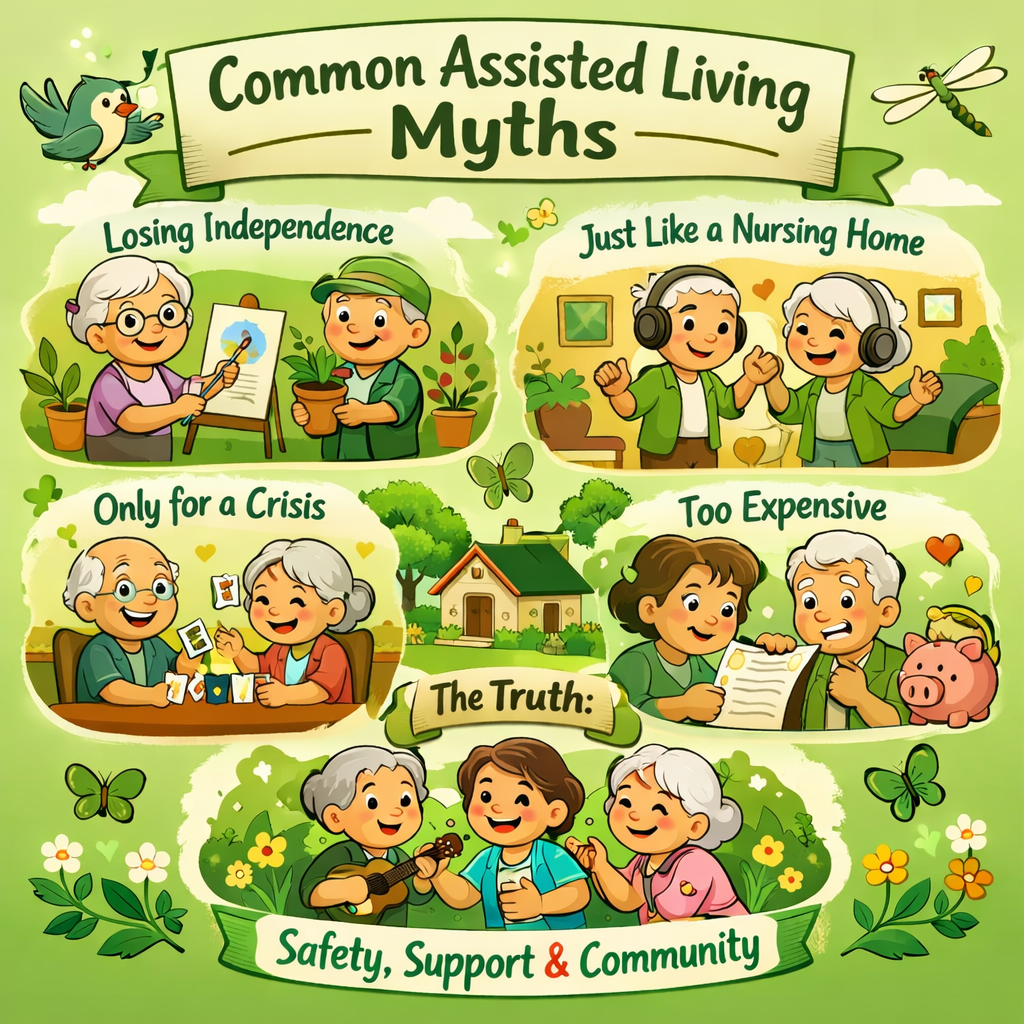
Assisted living is one of the most misunderstood senior care options in the aging continuum. Despite decades of evolution in care standards, environment design, and resident autonomy, outdated beliefs continue to shape how families view assisted living—and those misconceptions often delay necessary support. For adult children and spouses navigating care decisions, these myths can create unnecessary fear, guilt, and resistance, even when assisted living may be the safest and most supportive option available.
Understanding what assisted living truly is—and what it is not—is critical. At communities like Evergreen Cottages, families frequently arrive carrying assumptions that no longer reflect modern assisted living realities. Addressing these myths head-on allows families to make informed, confident decisions rooted in facts rather than fear.
Myth #1: Assisted Living Means Losing Independence
One of the most persistent myths is that moving into assisted living strips an older adult of their independence. Many families worry that a move signals the end of personal choice, privacy, or control over daily life. In reality, assisted living is designed to preserve independence, not eliminate it.
Assisted living communities support residents with tasks that have become difficult—such as medication management, bathing, or housekeeping—while encouraging autonomy in all other areas. Residents maintain control over:
Daily schedules and routines
What they wear and when they wake up
Which activities they participate in
How they furnish and personalize their living space
Social engagement on their own terms
At Evergreen Cottages, care plans are built around the individual—not the diagnosis. The goal is to remove obstacles that limit independence, allowing residents to focus their energy on living fully rather than struggling through tasks that no longer feel manageable.
Myth #2: Assisted Living Is the Same as a Nursing Home
Another deeply ingrained misconception is that assisted living and nursing homes are interchangeable. This confusion often stems from outdated institutional models that no longer represent modern senior living environments.
Assisted living is not skilled nursing. Key differences include:
Private or semi-private apartments instead of hospital-style rooms
A residential, home-like atmosphere rather than a clinical setting
Social, recreational, and lifestyle-focused programming
Personal care support without 24/7 medical intervention
An emphasis on community, dignity, and choice
While nursing homes are designed for individuals requiring constant medical supervision, assisted living supports those who need help with daily activities but do not require intensive clinical care. Evergreen Cottages bridges this gap by offering attentive, relationship-based support within a calm, residential environment that feels familiar and safe.
Myth #3: Assisted Living Is Only for People in Crisis
Many families delay exploring assisted living until a major event occurs—such as a fall, hospitalization, or sudden health decline—believing that assisted living is a “last resort.” This crisis-driven mindset often results in rushed decisions made under stress.
In reality, assisted living is most beneficial before a crisis occurs. Early transitions allow residents to:
Adjust emotionally and socially at their own pace
Build relationships with staff and neighbors
Establish routines without pressure
Maintain better physical and cognitive health longer
Families at Evergreen Cottages often express regret that they waited too long, noting that their loved one would have thrived sooner with the added structure, safety, and social connection assisted living provides.
Myth #4: Assisted Living Is Too Expensive for Most Families
Cost is one of the most intimidating factors for families considering assisted living. Many assume it is automatically unaffordable or far more expensive than other care options. This belief often stems from a lack of clarity around what assisted living actually includes—and how those costs compare to aging at home.
When families evaluate the true cost of remaining at home, they often overlook expenses such as:
In-home caregiving services
Home maintenance and emergency repairs
Medication mismanagement or medical complications
Transportation services
Caregiver burnout and lost work productivity
Safety modifications to the home
Assisted living typically bundles housing, meals, personal care, social programming, transportation, and safety oversight into one predictable monthly cost. At Evergreen Cottages, families are guided through a transparent breakdown of pricing, helping them understand not only what they are paying for—but what risks and hidden costs they may be avoiding.
Myth #5: Assisted Living Means Constant Medical Care
Another common misunderstanding is that assisted living functions like a medical facility, with residents receiving frequent clinical interventions throughout the day. This misconception can create anxiety for older adults who fear losing a sense of normalcy or being treated as “patients.”
Assisted living is care-supported living, not medicalized care. While staff assist with medications and monitor well-being, daily life centers around:
Meals shared in communal dining spaces
Social activities and recreational programming
Personal hobbies and interests
Family visits and community engagement
Respectful assistance only when needed
At Evergreen Cottages, medical care is coordinated—not imposed. Residents receive support while maintaining a lifestyle that feels familiar, dignified, and grounded in daily routines rather than clinical schedules.
Myth #6: Assisted Living Separates Families
Some families worry that moving a loved one into assisted living will weaken family bonds or reduce meaningful time together. In reality, assisted living often strengthens relationships by removing the strain of caregiving stress.
When families are no longer responsible for daily care tasks, visits shift from obligation to connection. Adult children and spouses can focus on:
Quality conversations
Shared meals and celebrations
Participating in activities together
Being present emotionally rather than physically exhausted
Evergreen Cottages encourages family involvement, open visitation, and ongoing communication. Families remain an integral part of residents’ lives—supported by a care team that ensures loved ones are safe, comfortable, and well cared for.
Myth #7: Assisted Living Residents Are Lonely or Isolated
Loneliness is one of the greatest health risks facing older adults, yet many families assume assisted living increases isolation rather than alleviates it. This myth often arises from outdated images of inactive, disengaged communities.
Modern assisted living environments prioritize social connection through:
Structured group activities and events
Casual, organic daily interactions
Shared meals and communal spaces
Opportunities for purposeful engagement
At Evergreen Cottages, socialization is woven naturally into daily life—not forced or artificial. Residents engage at their own comfort level, building relationships that reduce isolation and foster a sense of belonging.
Myth #4: Assisted Living Is Too Expensive for Most Families
Cost is one of the most intimidating factors for families considering assisted living. Many assume it is automatically unaffordable or far more expensive than other care options. This belief often stems from a lack of clarity around what assisted living actually includes—and how those costs compare to aging at home.
When families evaluate the true cost of remaining at home, they often overlook expenses such as:
In-home caregiving services
Home maintenance and emergency repairs
Medication mismanagement or medical complications
Transportation services
Caregiver burnout and lost work productivity
Safety modifications to the home
Assisted living typically bundles housing, meals, personal care, social programming, transportation, and safety oversight into one predictable monthly cost. At Evergreen Cottages, families are guided through a transparent breakdown of pricing, helping them understand not only what they are paying for—but what risks and hidden costs they may be avoiding.
Myth #5: Assisted Living Means Constant Medical Care
Another common misunderstanding is that assisted living functions like a medical facility, with residents receiving frequent clinical interventions throughout the day. This misconception can create anxiety for older adults who fear losing a sense of normalcy or being treated as “patients.”
Assisted living is care-supported living, not medicalized care. While staff assist with medications and monitor well-being, daily life centers around:
Meals shared in communal dining spaces
Social activities and recreational programming
Personal hobbies and interests
Family visits and community engagement
Respectful assistance only when needed
At Evergreen Cottages, medical care is coordinated—not imposed. Residents receive support while maintaining a lifestyle that feels familiar, dignified, and grounded in daily routines rather than clinical schedules.
Myth #6: Assisted Living Separates Families
Some families worry that moving a loved one into assisted living will weaken family bonds or reduce meaningful time together. In reality, assisted living often strengthens relationships by removing the strain of caregiving stress.
When families are no longer responsible for daily care tasks, visits shift from obligation to connection. Adult children and spouses can focus on:
Quality conversations
Shared meals and celebrations
Participating in activities together
Being present emotionally rather than physically exhausted
Evergreen Cottages encourages family involvement, open visitation, and ongoing communication. Families remain an integral part of residents’ lives—supported by a care team that ensures loved ones are safe, comfortable, and well cared for.
Myth #7: Assisted Living Residents Are Lonely or Isolated
Loneliness is one of the greatest health risks facing older adults, yet many families assume assisted living increases isolation rather than alleviates it. This myth often arises from outdated images of inactive, disengaged communities.
Modern assisted living environments prioritize social connection through:
Structured group activities and events
Casual, organic daily interactions
Shared meals and communal spaces
Opportunities for purposeful engagement
At Evergreen Cottages, socialization is woven naturally into daily life—not forced or artificial. Residents engage at their own comfort level, building relationships that reduce isolation and foster a sense of belonging.
Stop here.
Say next when you’re ready to continue.
next
Myth #8: Moving Into Assisted Living Means Giving Up on a Loved One
Perhaps the most emotionally damaging myth is the belief that choosing assisted living is an act of abandonment. Many adult children and spouses carry deep guilt, feeling as though they are “giving up” or failing their loved one by seeking outside support.
In reality, assisted living is an act of responsible care, not resignation. It reflects an honest assessment of needs and a commitment to safety, dignity, and quality of life. Choosing assisted living often means recognizing that love alone cannot replace:
24-hour supervision
Fall prevention and emergency response
Medication oversight
Consistent nutrition and hydration
Social engagement and mental stimulation
At Evergreen Cottages, families are reminded that asking for help is not a failure—it is a proactive decision rooted in compassion and foresight.
Myth #9: People Decline Faster After Moving Into Assisted Living
Some families fear that a move into assisted living will accelerate physical or cognitive decline. This belief is often based on anecdotal stories rather than clinical observation or lived experience.
In many cases, the opposite occurs. With proper nutrition, routine, socialization, and reduced stress, residents often experience:
Improved appetite and hydration
Better sleep patterns
Fewer medical emergencies
Increased engagement and alertness
Stabilization of cognitive function
Evergreen Cottages frequently sees residents regain confidence and vitality once the burdens of isolation, home safety concerns, and unmanaged health issues are removed.
Myth #10: Assisted Living Is a Permanent, One-Way Decision
Families often hesitate because they believe moving into assisted living is irreversible. This fear can create decision paralysis, even when current circumstances are unsustainable.
Assisted living is not a one-size-fits-all or one-way path. Care plans can evolve as needs change. Residents may:
Transition in with minimal assistance
Adjust services over time
Move to different levels of care if needed
Reevaluate living arrangements as circumstances shift
At Evergreen Cottages, flexibility is built into the care model, allowing residents and families to reassess and adapt without pressure or permanence.
Why These Myths Persist—and Why They Matter
Many of these misconceptions persist because families rely on outdated narratives, secondhand experiences, or fear-driven assumptions. Unfortunately, these myths often delay support until crisis moments—when choices are limited and stress is high.
By addressing these beliefs early, families can approach assisted living with clarity rather than guilt, and confidence rather than fear.
Reframing Assisted Living as Support, Not Loss
Assisted living is not about what someone loses—it’s about what they gain. Safety without isolation. Support without dependence. Community without compromise.
At Evergreen Cottages, assisted living is viewed as a partnership between residents, families, and caregivers. When myths are replaced with understanding, families can move forward knowing they are making a thoughtful, informed decision that prioritizes well-being, dignity, and peace of mind.
How These Myths Delay Care and Increase Risk
The real danger of assisted living myths is not misunderstanding—it’s delay. When families postpone care decisions based on fear or misinformation, small issues often grow into preventable crises. What begins as mild forgetfulness, occasional falls, or social withdrawal can escalate into emergency hospitalizations, caregiver burnout, or rapid health decline.
Common risks associated with delayed support include:
Increased fall risk due to unsafe home environments
Medication errors or missed doses
Poor nutrition and dehydration
Undetected health changes
Chronic loneliness and depression
Emotional exhaustion among family caregivers
At Evergreen Cottages, many families reflect that their greatest regret was waiting until a breaking point. Early transitions allow for gradual adjustment and proactive care, rather than reactive decisions made under pressure.
The Emotional Cost of Believing the Myths
Beyond physical risk, these myths carry a heavy emotional toll. Adult children often shoulder intense guilt, feeling responsible for doing “everything themselves.” Spouses may push past their own physical limits, believing that outside help signifies failure or abandonment.
This emotional strain often results in:
Caregiver burnout and resentment
Fractured family relationships
Chronic anxiety and decision paralysis
Feelings of isolation for both caregiver and loved one
Assisted living does not remove love from the equation—it restores balance. By sharing responsibility with trained caregivers, families can return to their primary role: being a daughter, son, or spouse, rather than a full-time care manager.
What Assisted Living Looks Like When the Myths Are Removed
When families let go of outdated assumptions, assisted living is no longer viewed as a loss—but as a transition into a more supported chapter of life. Residents gain safety without isolation, structure without rigidity, and care without constant intrusion.
A modern assisted living experience typically includes:
Personalized care plans that evolve over time
Consistent routines that reduce stress and confusion
Access to social connection without obligation
Supportive staff who build meaningful relationships
A home-like environment designed for comfort and dignity
At Evergreen Cottages, residents are not defined by what they need help with—but by who they are, what they value, and how they want to live.
How Families Can Move Forward With Clarity
Letting go of assisted living myths begins with asking better questions and seeking firsthand understanding. Touring communities, speaking with staff, and observing daily life provide a clearer picture than assumptions ever could.
Families considering assisted living benefit from:
Touring before a crisis occurs
Asking how independence is supported—not restricted
Understanding care flexibility and progression
Observing staff interactions and resident engagement
Including loved ones in the conversation early
When families approach assisted living with openness rather than fear, decisions become grounded, thoughtful, and far less overwhelming.
Replacing Fear With Informed Compassion
Assisted living myths persist because aging is emotional, complex, and deeply personal. But clarity brings relief. When families replace fear with understanding, assisted living becomes what it was always meant to be: a supportive environment that enhances quality of life for both residents and those who love them.
At Evergreen Cottages, families are guided through this process with transparency, patience, and respect—helping them move forward with confidence, compassion, and peace of mind.