📖 Series Guide: Finding the Right Path to Assisted Living
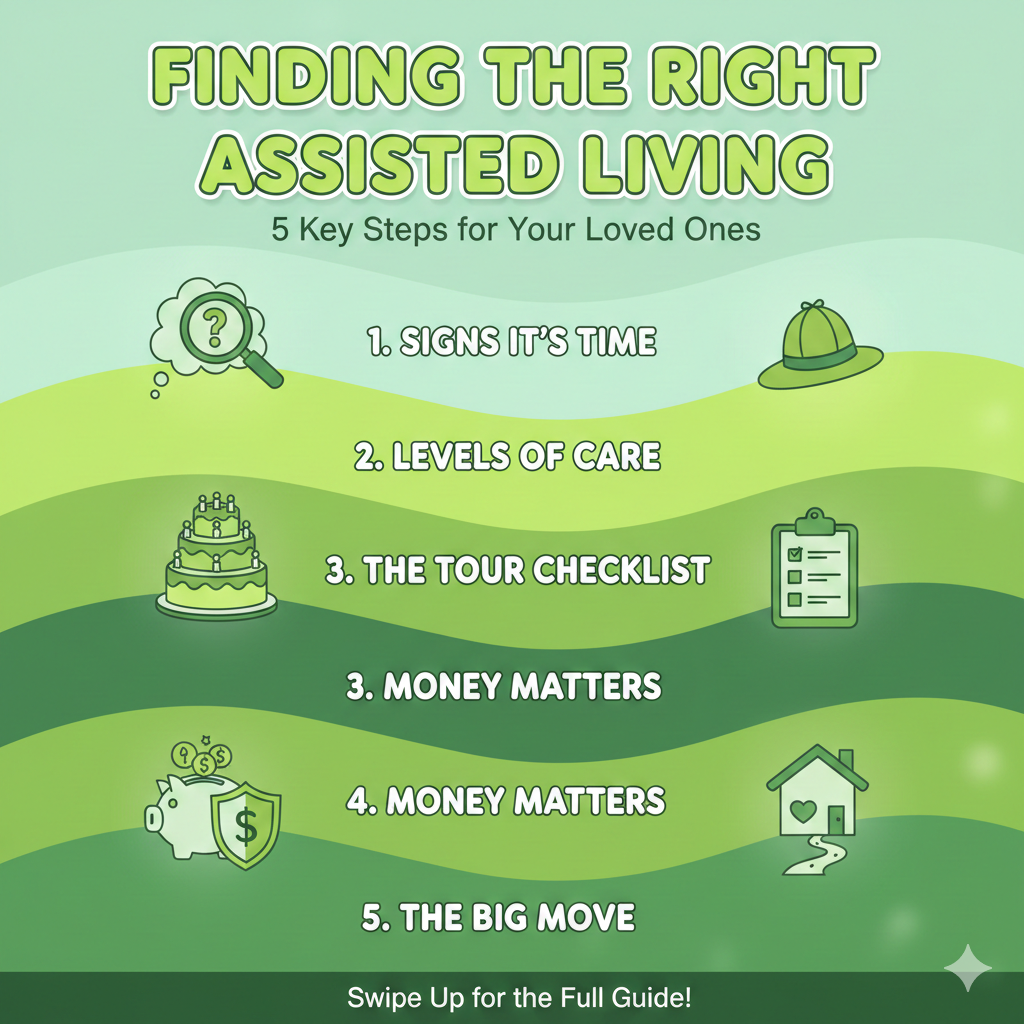
| Part | Title | Focus |
| Part 1 | The “Aha!” Moment: Recognizing the Signs | Identifying red flags, ADLs, and the “Big Three” care tiers. |
| Part 2 | Decoding the Levels of Care | Understanding tiered pricing, nurse assessments, and budgeting. |
| Part 3 | The Secret Inspection: Touring Like a Pro | The “Nose Test,” mealtime audits, and questions for directors. |
| Part 4 | The Money Talk: Navigating Costs & Benefits | VA benefits, tax deductions, and avoiding hidden fees. |
| Part 5 | The Final Transition: From House to Home | Downsizing strategies, the first 30 days, and emotional support. |
Part 1: The "Aha!" Moment—Recognizing the Signs
Choosing the right care for a parent or spouse isn’t a decision that happens overnight. Usually, it starts with a feeling in your gut—a small worry that grows every time you visit. You notice the mail piling up, or maybe the fridge looks a little emptier than usual.
The truth is, Assisted Living isn’t a “one-size-fits-all” solution. It’s a spectrum of care designed to balance independence with safety. But before we dive into the “where,” we have to understand the “why.”
How do you know it’s actually time to start the search?
🚩 Red Flags: Is It Time for a Change?
It’s easy to brush off small lapses as “just getting older,” but for SEO and safety purposes, it’s vital to categorize these signs into Activities of Daily Living (ADLs). If your loved one is struggling with two or more of the following, it’s time to explore your options:
- Physical Safety: Unexplained bruises (from “near-miss” falls) or difficulty navigating stairs.
- Nutrition & Hygiene: Noticeable weight loss, wearing the same clothes for days, or an unkempt home that was once spotless.
- Medication Mishaps: Forgetting doses or taking double—a leading cause of ER visits for seniors.
- Social Isolation: Withdrawing from hobbies, friends, or family. Loneliness can be as damaging to health as smoking 15 cigarettes a day.
Pro Tip: Keep a “Care Journal” for one week. Note down every time you have to step in to help. You might be surprised to see how much “incidental care” you’re already providing.
The “Big Three” of Senior Care
To find the right fit, you first need to know what’s on the menu. While we will go deep into each in the coming parts, here is a quick snapshot of the primary tiers of care:
| Feature | Independent Living | Assisted Living | Memory Care |
| Best For | Active seniors wanting a social life without chores. | Seniors needing help with ADLs (bathing, meds). | Those with Alzheimer’s or Dementia. |
| Medical Care | Minimal/Emergency only. | 24/7 support & medication management. | Specialized cognitive therapy & high security. |
| Environment | Apartment-style; very private. | Private or semi-private; social focus. | Secured units; high staff-to-resident ratio. |
🧭 Moving Forward: The Emotional Compass
This journey is as much about the heart as it is about the logistics. It’s okay to feel guilty, and it’s okay to feel overwhelmed. Finding the “right” place isn’t about “putting them away”—it’s about giving them a environment where they can thrive, not just survive.
In the next part, we’ll break down the 5 Levels of Care within Assisted Living so you can pinpoint exactly how much help your loved one actually needs.
Part 2: Decoding the “Levels of Care”—What Are You Actually Paying For?
One of the biggest surprises for families is realizing that “Assisted Living” isn’t a flat-rate service. Most communities use a tiered pricing model. This ensures that someone who just needs help with laundry isn’t paying the same rate as someone who needs two-person assistance for bathing and dressing.
Understanding these levels is the key to both budgeting and longevity—you want a place that can grow with your loved one’s needs so they don’t have to move again in six months.
📊 The 5 Standard Levels of Care
While every community names them differently, care usually falls into these five buckets. Knowing where your loved one sits will help you filter out facilities that may be “too light” or “too clinical.”
- Level 1: Low Assistance (The “Hand-Off” Phase)
- Focus: Convenience.
- Services: Housekeeping, meal service, and basic reminders. The resident is mostly independent but wants to retire from “homeowner” chores.
- Level 2: Moderate Assistance
- Focus: Daily Routine.
- Services: Help with one or two ADLs (like putting on compression socks or managing medications).
- Level 3: High Assistance
- Focus: Safety & Hygiene.
- Services: Regular help with bathing, dressing, and “escorting” (walking them to the dining room so they don’t get lost or fall).
- Level 4: Extensive Care
- Focus: High-Touch Support.
- Services: Incontinence care and physical assistance with “transferring” (getting from a bed to a wheelchair).
- Level 5: Specialized Care (Memory Care)
- Focus: Cognitive Security.
- Services: Secured exits to prevent wandering and specialized programming for those with mid-to-late stage dementia.
How Communities Determine the Level (The Assessment)
Before a contract is signed, a Registered Nurse (RN) from the community will perform a “Functional Assessment.” They aren’t just checking boxes; they are looking at the “whole person.”
Warning: Don’t coach your loved one during the assessment! Many seniors “show-time”—they rally their energy to act more independent than they actually are. If you hide their needs now, they won’t get the care they require later.
The Cost Factor: A Quick Calculation
In assisted living, your monthly bill usually looks like this:
$$\text{Base Rent} + \text{Care Level Fee} + \text{Add-ons} = \text{Total Monthly Cost}$$
- Base Rent: Covers the “roof over their head,” utilities, and basic meals.
- Care Level Fee: This is the price for the levels we discussed above.
- Add-ons: Think beauty salon visits, specialized physical therapy, or guest meals.
🔍 Looking Ahead
Now that you know what care level you’re looking for, how do you find a building that actually delivers on its promises? Not all “luxury” lobbies lead to luxury care.
In Part 3, we’re going to get our hands dirty with the Ultimate Touring Checklist. I’ll tell you exactly what to look for (and what to smell for) when you walk through those front doors.
Part 3: The Secret Inspection—How to Tour Like a Pro
The lobby smells like fresh cookies, the chandeliers are sparkling, and the marketing director is incredibly charming. It feels like a five-star hotel. But here’s the reality: You aren’t moving into the lobby.
When you tour an assisted living community, you have to look past the “curb appeal” to see the actual quality of life your loved one will experience. This is the “boots on the ground” phase of your search.
🕵️ The “Hidden” Checklist: What to Look For
Beyond the floor plans and the activity calendar, keep your senses sharp for these subtle indicators of quality:
- The “Nose Test”: Does the facility smell like heavy perfume or bleach? They might be masking odors. A high-quality facility should simply smell clean or neutral.
- The Staff Interaction: Don’t just watch the person giving you the tour. Watch the caregivers in the hallway. Do they make eye contact with residents? Do they call them by name, or do they walk past them like they’re part of the furniture?
- The Resident Vibe: Are people out of their rooms? Are they engaged in conversation, or are they mostly sitting in front of a TV in the common area?
- Safety Specifics: Look for grab bars that are sturdy, non-slip flooring (no thick rugs!), and well-lit hallways. Check if the emergency pull cords are within reach of the floor—because that’s where someone will be if they fall.
🍴 The Mealtime Audit
Food is often the highlight of a senior’s day. If the food is poor, their morale will be too.
Pro Tip: Always schedule your tour during lunch. Ask to taste the food. Better yet, ask a resident at a nearby table what they think of the kitchen. They will almost always give you the unvarnished truth!
❓ 5 Questions the Brochure Won’t Answer
Ask these specific, pointed questions to the Executive Director or the Nursing Lead:
- “What is your staff-to-resident ratio at night?” (Daytime staffing is always better; the night shift reveals the true support level.)
- “What is the staff turnover rate?” (High turnover often means poor management and inconsistent care for your loved one.)
- “How do you handle a medical emergency at 3:00 AM?” (Is there an RN on-site, or do they just call 911?)
- “Can my loved one ‘age in place’?” (If their health declines, will they be forced to move again, or can the care level be adjusted?)
- “How often do you communicate with families?” (Is there a portal? Monthly calls? Or only when something goes wrong?)
📝 The Comparison Table
Use a simple scoring system (1-5) for every facility you visit to keep them from blurring together:
| Community Name | Cleanliness | Staff Warmth | Food Quality | Safety Features |
| Facility A | ||||
| Facility B |
🌉 Transitioning to the “Money Talk”
You’ve found a place that feels like home. The staff is smiling, and the residents are active. Now, the heavy hitter: How do we pay for this?
In Part 4, we’re going to tackle the financial maze. We’ll look at Veterans’ benefits, Long-Term Care insurance, and the “Hidden Costs” that catch families off guard.
Part 4: The Money Talk—Navigating Costs and Hidden Benefits
By now, you’ve likely realized that assisted living is a significant investment. As of 2026, the national median cost for assisted living has climbed to approximately $6,313 per month.
While that number might cause some sticker shock, it’s important to remember that this “all-in” price covers housing, utilities, food, 24/7 security, and care—expenses that often cost significantly more when managed piecemeal at home. The goal of this stage isn’t just to find out what it costs, but to find the “hidden” buckets of money that can help pay for it.
💰 Funding Your Care: Beyond the Savings Account
Most families use a “patchwork” approach to funding. Here are the four most common non-savings resources available in 2026:
- VA Aid and Attendance (The “Forgotten Benefit”): If your loved one is a wartime veteran or the surviving spouse of one, they may qualify for a tax-free monthly pension.
- Single Veteran: Up to ~$2,424/month
- Married Veteran: Up to ~$2,874/month
- Surviving Spouse: Up to ~$1,558/month
- Long-Term Care Insurance (LTCI):If they have a policy, check the “Elimination Period” (the waiting period, usually 30-90 days, where you pay out of pocket before coverage kicks in). In 2026, many “hybrid” policies also allow you to tap into life insurance death benefits to pay for care.
- The Bridge Loan:If you are waiting for a house to sell but need to move Mom now, a senior living bridge loan can cover the first 6–12 months of expenses. Once the home sells, you pay off the loan in a lump sum.
- Tax Deductibility:The IRS often views the care portion of assisted living as a deductible medical expense. If your loved one is “chronically ill” (needs help with 2+ ADLs), a large chunk of their monthly bill might be tax-deductible once it exceeds 7.5% of their adjusted gross income.
⚠️ Watch Out for the “Hidden” Costs
The monthly rent is rarely the final number on the invoice. When reviewing contracts, look for these common 2026 add-ons:
- Community Fee: A one-time, non-refundable “move-in” fee ranging from $1,000 to $5,000.
- Pharmacy Fees: Some facilities charge an “administrative fee” if you use an outside pharmacy instead of their preferred partner.
- Annual Escalation: Most communities increase rent by 3% to 6% annually to keep up with labor costs.
- The “Level Change” Jump: If your loved one’s health declines, their care tier—and your bill—will increase. Ask for the price sheet for all levels now so you aren’t surprised later.
📑 Financial Reality Check Table
Before you sign, fill this out for your top choice:
| Expense Item | Monthly Cost | One-Time Cost |
| Base Rent (Room & Board) | $ | $0 |
| Level of Care Fee | $ | $0 |
| Community/Move-in Fee | $0 | $ |
| Projected Total | $ | $ |
🏠 The Final Step: The Emotional Move
You’ve done the research, toured the buildings, and crunched the numbers. But the hardest part isn’t the math—it’s the moving day.
In Part 5, we wrap up the series by discussing how to handle “The Move” without the heartbreak. We’ll cover downsizing, managing “The Talk,” and the first 30 days of transition.
Part 5: The Final Transition—From “House” to “Home”
You’ve checked the boxes, crunched the numbers, and signed the papers. Now comes the part that keeps most families up at night: Moving Day. The transition to assisted living is more than just a change of address; it’s a major life pivot. For your loved one, it can feel like a loss of independence. For you, it can feel like a heavy weight of responsibility. But with the right strategy, the first 30 days can move from “surviving” to “thriving.”
📦 The Art of Downsizing (Without the Drama)
You cannot fit 40 years of memories into a 600-square-foot apartment. The goal is to curate, not just discard.
- The “Legacy” Approach: Instead of asking, “What are we throwing away?” ask, “Which pieces tell your story best?”
- Recreate the “Anchor” Spot: If your mom always sits in her favorite recliner next to a specific side table, recreate that exact setup in the new apartment. Visual familiarity reduces Transfer Trauma (the stress associated with moving).
- Photos over Furniture: Digital photo frames are a lifesaver. They save space while keeping hundreds of memories front and center.
🗝️ The First 30 Days: The “Integration” Strategy
Research shows that the first month is the most critical period for long-term success in senior living. Here is how to navigate it:
- The “Slow Fade” Visit: Visit often in the first week to help them unpack, but gradually decrease the frequency. If you are there 24/7, they won’t look to the staff or neighbors for social connection.
- Find the “Ambassador”: Most communities have a resident “ambassador” whose job is to welcome newcomers. Ask the Life Enrichment Director to introduce your loved one to someone with similar interests (e.g., “Mom loves bridge; is there a group she can join?”).
- Eat Together: In the beginning, join them for a few meals in the dining hall. It helps them feel less like the “new kid in the cafeteria” and allows you to meet their peers.
💬 Handling the “I Want to Go Home” Conversation
It’s the call every adult child dreads. When it happens (and it likely will), remember that “home” is often a feeling of safety and comfort, not just a physical place.
The Script: Instead of arguing (“You can’t go home, you aren’t safe there”), try validating: “I know you miss the old house. I miss it too. Tell me what you’re feeling right now.” Often, they just need to be heard.
Give it at least 90 days. It takes that long for a new routine to feel normal.
🏁 Series Conclusion: The Big Picture
Finding the right assisted living isn’t about finding a “facility.” It’s about finding a community that restores the quality of life that was being lost to the struggle of living alone. When you find the right match, you stop being a 24/7 caregiver and go back to being a daughter, a son, or a spouse.
Series Recap Checklist:
- [x] Identified the Red Flags (Part 1)
- [x] Determined the Level of Care (Part 2)
- [x] Conducted the “Nose Test” Tours (Part 3)
- [x] Secured the Funding & Benefits (Part 4)
- [x] Managed the Move with Empathy (Part 5)