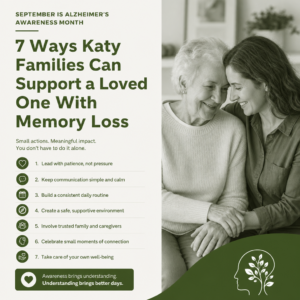

Tips and Resources on Supporting a Loved One with Alzheimer's in Katy, TX (2026 Complete Guide)
By Ivan Urrego | Last Updated: May 2026 | Evergreen Cottages Blog
Table of Contents
- Understanding Alzheimer's Disease in 2026
- Recognizing Early Signs Before a Diagnosis
- Communication Tips That Actually Work
- Home Safety: Practical Modifications for Katy Families
- Building Routines That Reduce Anxiety
- Local Alzheimer's Resources in Katy, TX
- Meaningful Activities That Support Brain Health
- Caregiver Self-Care: You Cannot Pour from an Empty Cup
- Financial Planning and Benefits for Alzheimer's Care
- Tips and Resources: Knowing When to Seek Professional Care
- Memory Care vs. Home Care — What Families in Katy Should Know
- Frequently Asked Questions
- Conclusion: You Are Not Alone
1. Understanding Alzheimer's Disease in 2026
Alzheimer's disease (AD) is a progressive, irreversible brain disorder that slowly destroys memory, reasoning, and the ability to carry out daily tasks. It is not a normal part of aging — it is a disease, and understanding it is the first step toward supporting your loved one well.
According to the Alzheimer's Association 2025 Facts and Figures, an estimated 7 million Americans are currently living with Alzheimer's, and that number is projected to rise to nearly 13 million by 2050. In Texas, Alzheimer's ranks as the sixth leading cause of death — a sobering reality for families throughout the Katy, TX area and the broader Houston metro region.
What Happens in the Brain
Alzheimer's causes abnormal protein deposits — amyloid plaques and tau tangles — that disrupt cell communication. Over time, brain cells die and regions responsible for memory, language, and judgment shrink noticeably.
Stages of Alzheimer's
| Stage | Common Symptoms | Care Level Needed |
|---|---|---|
| Early (Mild) | Forgetfulness, word-finding difficulty, mild disorientation | Supervision, structure |
| Middle (Moderate) | Confusion, wandering, personality changes, help needed with ADLs | Assisted Living / Memory Care |
| Late (Severe) | Loss of speech, physical decline, full-time care needed | Specialized Memory Care |
Why Early Understanding Matters
Families who understand the disease stages make better decisions — earlier — and experience less crisis-driven caregiving. Reading guides like this one is already a meaningful act of love.
2. Recognizing Early Signs Before a Diagnosis
The earlier Alzheimer's is identified, the more time your family has to plan, explore care options, and make decisions together with your loved one while they can still participate. Early signs are frequently dismissed as normal aging — don't make that mistake.
Ten Red Flags to Watch For
The Alzheimer's Association identifies ten warning signs that distinguish AD from typical age-related memory changes. These include: disrupting daily life with memory loss, challenges in planning or solving problems, difficulty completing familiar tasks, confusion with time or place, vision problems, new trouble with words, misplacing items with no ability to retrace steps, decreased judgment, withdrawal from social activities, and mood or personality changes.
What Normal Aging Looks Like — and What It Doesn't
| Normal Aging | Alzheimer's Warning Sign |
|---|---|
| Forgetting a name, then remembering later | Forgetting a close family member's name entirely |
| Making a bad decision occasionally | Consistent, recurring poor judgment |
| Missing a monthly payment | Inability to manage bills or finances at all |
What to Do If You Notice Warning Signs in Katy
Start with a visit to a primary care physician or a geriatrician in the Katy or Houston area. Ask for a formal cognitive evaluation. Early diagnosis opens the door to FDA-approved medications and care planning that can meaningfully improve quality of life.
3. Tips and Resources: Communication Strategies That Actually Work
How you communicate with someone living with Alzheimer's matters as much as what you say. Adjusting your approach can reduce frustration, agitation, and confusion — for both of you.
Use Simple, Direct Language
Speak slowly in short sentences. Ask one question at a time. Instead of "What do you want for breakfast?" try "Would you like eggs?" Giving limited choices reduces overwhelm and maintains your loved one's sense of control.
Never Argue or Correct
If your mother insists it's 1975, correcting her creates distress without benefit. Instead, step into her emotional reality. If she's calling for a parent who passed decades ago, offer comfort: "You're safe. I'm here with you." This approach — called validation therapy — is endorsed by the Alzheimer's Association as an effective communication method.
Nonverbal Communication Is Powerful
Maintain gentle eye contact. Use a calm, reassuring tone. Offer a hand on the shoulder. According to LeadingAge, nonverbal cues remain meaningful even in advanced Alzheimer's when verbal comprehension has declined significantly.
What to Avoid
Avoid speaking about your loved one as if they aren't present. Avoid quizzing them on recent events. Avoid rushing. Patience is not passive — it is the most active form of care you can offer.
4. Home Safety: Practical Modifications for Katy Families
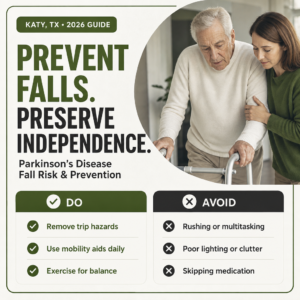
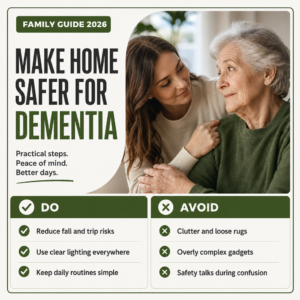
A safe home environment directly reduces accidents, wandering, and medical emergencies. Katy, TX families caring for a loved one with Alzheimer's at home should audit their space with fresh eyes — seeing it as your loved one might.
Wandering Prevention
Wandering affects up to 60% of people with dementia, according to the Alzheimer's Association 2025 Facts and Figures. Install door alarms, use door camouflage (covering handles with cloth can deter exits), and enroll your loved one in the Alzheimer's Association's MedicAlert + Safe Return program — a 24/7 emergency response service.
Kitchen and Bathroom Safety
Remove or lock up cleaning products and medications. Install stove knob covers and automatic shut-off devices. In the bathroom, add grab bars, a walk-in shower seat, and non-slip mats. Set the water heater to 120°F or below to prevent burns.
Key Home Modifications at a Glance
| Area | Recommended Modification |
|---|---|
| Entryways | Door alarms, deadbolts out of sight, motion sensors |
| Kitchen | Stove knob covers, locked cabinets, automatic shut-offs |
| Bathroom | Grab bars, non-slip mats, shower seat |
| Throughout | Remove clutter, improve lighting, remove loose rugs |
5. Building Routines That Reduce Anxiety
Predictable daily routines are one of the most powerful — and underutilized — tools in Alzheimer's care. Structure reduces anxiety, minimizes behavioral symptoms, and helps your loved one feel safer in a world that increasingly doesn't make sense to them.
Why Routine Works
Even when declarative memory (facts and events) deteriorates, procedural memory (habits and sequences) often remains intact longer. A consistent morning ritual — same time, same steps — taps into this preserved memory pathway. Research published by the Alzheimer's Association confirms structured daily routines significantly reduce agitation and sundowning behaviors.
Sample Daily Structure
| Time | Activity | Purpose |
|---|---|---|
| 7:30 AM | Wake, morning hygiene, breakfast | Orientation, nutrition |
| 9:30 AM | Light activity (walk, music, gardening) | Physical engagement |
| 12:00 PM | Lunch, rest period | Energy regulation |
| 2:30 PM | Cognitive activity (puzzles, reminiscence) | Brain stimulation |
| 5:30 PM | Dinner, quiet time | Sundowning prevention |
Adapting Routines as the Disease Progresses
Your loved one's routine will need gentle updates over time. Watch for signs of fatigue, frustration, or disengagement — these signal that an activity needs to be simplified, not eliminated.
6. Local Alzheimer's Resources in Katy, TX
You don't have to navigate this alone. Katy, TX and the greater Houston area have a meaningful network of Alzheimer's and dementia support services that families can access right now.
Key Organizations and Services
| Resource | What It Offers | How to Access |
|---|---|---|
| Alzheimer's Association — Houston Chapter | Support groups, helpline (800-272-3900), care consultations | alz.org |
| Katy Area Adult Literacy Council | Cognitive wellness programs and caregiver support | Local community centers |
| Area Agency on Aging — Harris County | In-home services, respite care, Meals on Wheels | harriscountytx.gov |
| Texas Health and Human Services | Medicaid waiver programs, caregiver support services | hhs.texas.gov |
| Evergreen Cottages Family Resources | Local guidance, care planning support, community tours | evergreencottages.com |
Caregiver Support Groups Near Katy
The Alzheimer's Association Houston Chapter hosts both in-person and virtual support groups specifically for family caregivers. These groups are free and offer a space to share experiences, get advice, and feel less isolated. Ask your Evergreen Cottages care advisor for current local meeting times.
7. Meaningful Activities That Support Brain Health
Engagement is medicine. Purposeful activities reduce anxiety, improve mood, slow functional decline, and give your loved one a sense of identity and dignity beyond their diagnosis.
Best Activities for Alzheimer's Patients
The most effective activities match the person's current abilities — neither too easy (demeaning) nor too hard (frustrating). Music therapy is among the most powerful: the Alzheimer's Association notes that musical memory is stored in a different brain region and often survives longer than other memory types. Familiar songs from your loved one's young adulthood can trigger recall, emotion, and connection.
Activity Categories That Work
| Category | Examples | Benefit |
|---|---|---|
| Creative | Painting, simple crafts, coloring | Self-expression, focus |
| Physical | Walking, chair yoga, gardening | Mobility, mood, sleep |
| Social | Family visits, group games, pet therapy | Reduces isolation, joy |
| Sensory | Music, aromatherapy, textured objects | Calm, grounding |
| Reminiscence | Photo albums, old music, familiar objects | Identity, connection |
At Evergreen Cottages
Our Activities program in Katy, TX is built on these exact principles — individualized, purposeful, and adjusted as each resident's abilities evolve. We don't do activities for the sake of a schedule. We do them for the sake of the person.
8. Caregiver Self-Care: You Cannot Pour from an Empty Cup
This section might be the most important one in this guide for you personally. Family caregivers in the Katy area carry an enormous emotional and physical load — and too often, their own health quietly collapses under the weight of caring for someone else.
The Reality of Caregiver Burnout
According to the Alzheimer's Association 2025 Facts and Figures, more than 11 million Americans provide unpaid care to people with Alzheimer's or other dementias. Approximately 59% of family caregivers rate their emotional stress as high or very high. Burnout is not weakness — it is the predictable result of unsustainable caregiving without support.
Practical Self-Care Strategies
Schedule respite — even a few hours weekly — where another trusted person or professional carer steps in. Attend a caregiver support group. Maintain at least one activity that is entirely yours: a walk, a call with a friend, a hobby. Talk to your doctor about your own health, including any anxiety or depression symptoms.
When Guilt Creeps In
Guilt is nearly universal among caregivers. If you're feeling it, you're in good company — and it usually signals that you care deeply, not that you're doing something wrong. Read our blog post on Is Guilt Preventing You from Placing Your Loved One in Professional Care? for a compassionate, honest look at this emotion.
9. Financial Planning and Benefits for Alzheimer's Care
Understanding how to pay for Alzheimer's care removes one of the greatest sources of family stress. In Texas, several funding pathways are available — and knowing them early gives you more options.
Key Funding Sources in Texas
| Source | Covers | Notes |
|---|---|---|
| Private Pay / Savings | All care types | Most common initial funding source |
| Long-Term Care Insurance | Assisted Living, Memory Care | Review policy language carefully |
| Veterans Aid & Attendance | Assisted Living, Memory Care | Available to eligible veterans and spouses |
| Medicaid STAR+PLUS | Limited Assisted Living coverage | Income/asset limits apply in TX |
| Texas Homestead Exemption (2026) | Property tax savings | New $200K exemption may offset costs |
Veterans Benefits
If your loved one is a veteran or the surviving spouse of a veteran, the VA Aid and Attendance benefit can provide significant monthly financial assistance toward Memory Care costs. Learn more on our Veterans Affairs Aid and Attendance page.
What Does Memory Care Cost in Katy?
The average monthly cost of Memory Care in the Katy, TX area ranges from approximately $4,500 to $7,000 depending on care level and community type, per local market data. Our team at Evergreen Cottages is happy to walk you through our transparent pricing with no pressure.
10. Tips and Resources: Knowing When to Seek Professional Memory Care
One of the most challenging decisions families in Katy face is recognizing when home care is no longer the safest or most compassionate option. There is no universal timeline — but there are clear signals.
Signs It May Be Time for Professional Memory Care
Consider professional care when: your loved one is wandering and getting lost; they are not eating, bathing, or managing medications consistently; they are exhibiting aggressive or unsafe behaviors you cannot manage; you as a caregiver are experiencing serious physical or emotional decline; or falls and medical emergencies are becoming frequent.
This Is Not Giving Up
Families who transition a loved one to a specialized Memory Care community like Evergreen Cottages often describe it not as abandonment, but as finally getting their loved one the expert, around-the-clock care they couldn't provide alone. The NIC 2025 Consumer Research Report found that families who made the transition to professional Memory Care earlier reported significantly higher satisfaction and reduced caregiver stress compared to families who waited until a crisis.
How to Start the Conversation
You don't have to have all the answers before reaching out. Call us, schedule a tour, bring your questions. Our care advisors in Katy, TX are here to guide you — not to pressure you.
11. Tips and Resources: Memory Care vs. Home Care — What Katy Families Should Know
Both Memory Care communities and home-based care can be valid options — but they are not equally suited to every stage of Alzheimer's. Here is an honest comparison to help you think clearly.
Side-by-Side Comparison
| Factor | Home Care | Memory Care Community |
|---|---|---|
| 24/7 Supervision | Requires hiring multiple caregivers | Built-in, around the clock |
| Social Engagement | Limited; can be isolating | Daily peer interaction, activities |
| Safety | Dependent on modifications made | Purpose-built secured environment |
| Specialized Training | Varies widely by agency | Dementia-certified staff required |
| Family Caregiver Burden | High | Significantly reduced |
| Cost (monthly avg.) | $4,000–$8,000+ for full-time care | $4,500–$7,000 in Katy, TX |
What Makes Evergreen Cottages Different
Evergreen Cottages is a small, home-like Memory Care community in Katy, TX — not a large institutional facility. Our cottage model means your loved one receives individualized attention in a warm, residential setting where staff truly know them. Research consistently shows that smaller communities reduce stress and improve quality of life for people living with Alzheimer's. See our approach at Our Care Approach.
12. Frequently Asked Questions About Supporting a Loved One with Alzheimer's
Here are direct answers to the questions Katy families ask us most often.
How do I know if my parent has Alzheimer's or just normal aging?
Normal aging involves occasional forgetfulness that resolves. Alzheimer's causes memory loss that disrupts daily life, confusion with familiar tasks, and personality changes. If you're noticing consistent patterns, schedule a cognitive evaluation with a physician — early assessment is always worthwhile.
Can Alzheimer's be slowed down?
While there is no cure, FDA-approved medications (like lecanemab, approved in 2023) can slow progression in early stages. Lifestyle factors — physical activity, a Mediterranean diet, social engagement, quality sleep, and cognitive stimulation — also show meaningful protective effects when maintained consistently.
How long does Alzheimer's typically last?
The disease typically progresses over 8 to 10 years after diagnosis, though this varies widely. Some individuals live 4 years; others live 20. This variability underscores why proactive planning — including touring Memory Care communities like Evergreen Cottages in Katy, TX — matters so much.
Is it safe for someone with Alzheimer's to stay home alone?
In early stages, limited independence may be possible with monitoring tools and check-ins. However, as the disease progresses, leaving someone with Alzheimer's alone becomes genuinely dangerous — due to wandering, stove hazards, medication errors, and falls. A professional care evaluation can help you assess the right moment to make a change.
Does Medicare cover Alzheimer's care in assisted living in Texas?
Medicare does not typically cover long-term Assisted Living or Memory Care. It may cover short-term skilled nursing or rehabilitation stays. In Texas, Medicaid may assist for qualifying individuals. Veterans benefits, long-term care insurance, and private savings are the primary funding sources for Memory Care. Review our Medicare and Medicaid guide for details.
How do I talk to my parent about moving to Memory Care?
Approach the conversation with empathy, not urgency. Frame the move as gaining support and community, not losing independence. Involve your loved one when cognitive ability allows. Tour communities together. Let them lead as much as possible. Our care advisors at Evergreen Cottages are trained to help facilitate these conversations.
13. Conclusion: You Are Not Alone in Katy, TX
Supporting a loved one with Alzheimer's is one of the most profound things a person can do — and one of the most exhausting. The tips and resources on supporting loved ones with Alzheimer's in this guide are meant to give you not just information, but clarity and courage for the days ahead.
Whether your loved one is in the earliest stages or approaching a transition to professional care, the most important thing you can do right now is take one step forward. Read. Ask. Reach out. Tour. Every step you take is an act of love.
At Evergreen Cottages in Katy, TX, we've dedicated our community to the belief that people with Alzheimer's deserve expert, compassionate, dignified care in a home-like setting — and that families deserve a trusted partner by their side. We would be honored to walk this journey with you.
Explore Evergreen Cottages
📤 Found this guide helpful? Share it with a family member who needs it.
Ivan Urrego — Senior Living Copywriter
Ivan Urrego is an award-winning copywriter and recognized contributor to Argentum, MALA, and leading senior living associations across North America. He writes exclusively for Evergreen Cottages, specializing in Memory Care, Alzheimer's advocacy, and family-centered senior living content that ranks, resonates, and drives action. Every word in this blog was written with one family in mind: yours.
Sources
- Alzheimer's Association. (2025). 2025 Alzheimer's Disease Facts and Figures. alz.org/alzheimers-dementia/facts-figures
- NIC (National Investment Center for Seniors Housing & Care). (2025). 2025 Consumer Research Report: Senior Housing Preferences and Family Decision-Making. nic.org
- LeadingAge. (2024). Person-Centered Dementia Care: Communication and Quality of Life Standards. leadingage.org
- ALFA (Assisted Living Federation of America / Argentum). Best Practices in Memory Care and Dementia-Centered Living. argentum.org
- Texas Health and Human Services Commission. (2025). Medicaid Programs for Older Adults in Texas: STAR+PLUS and Waiver Options. hhs.texas.gov
- U.S. Department of Veterans Affairs. (2025). Aid and Attendance Benefits for Veterans and Surviving Spouses. va.gov/pension/aid-attendance-housebound