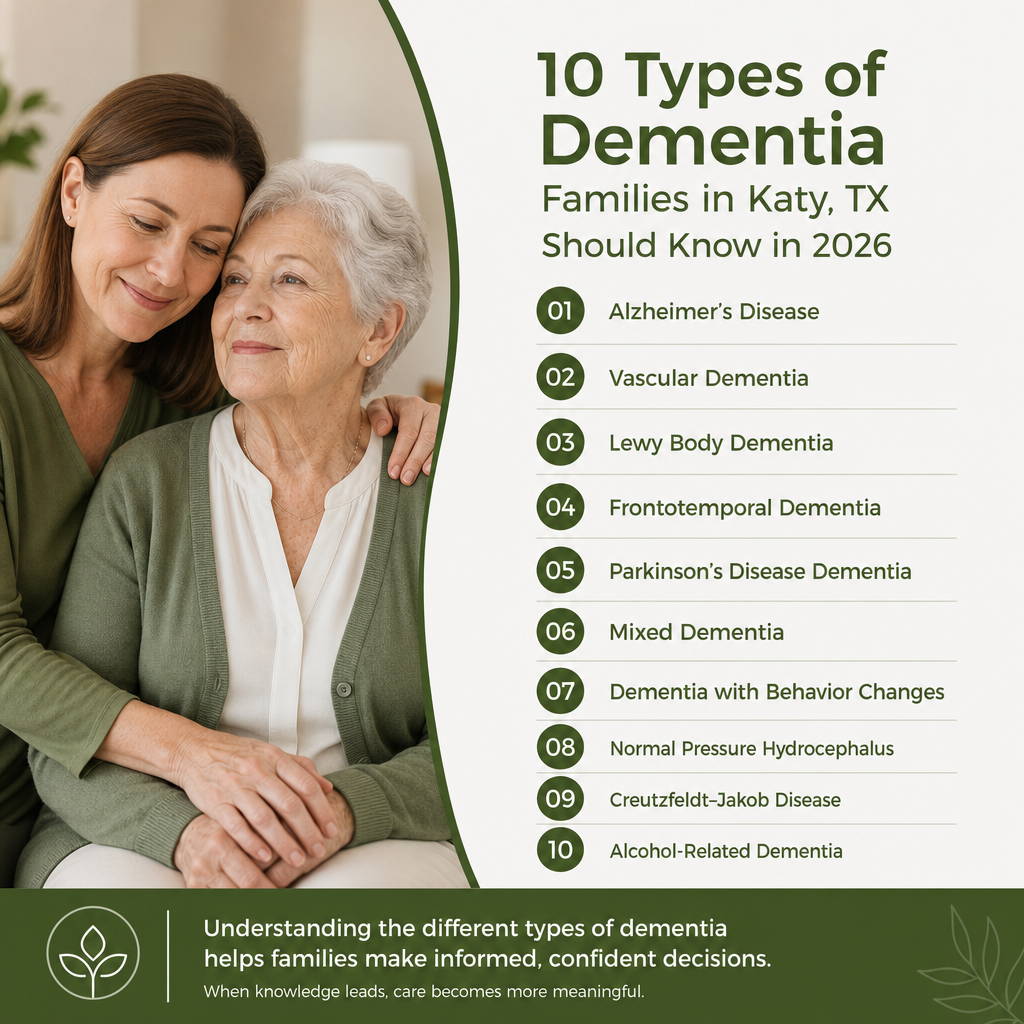
10 Types of Dementia Families in Katy, TX Should Know in 2026
By Ivan Urrego | Last updated: May 2026 | Evergreen Cottages Blog
What Is Dementia? A Clear Definition for Families
Dementia is not a single disease — it is an umbrella term for a group of symptoms affecting memory, thinking, behavior, and the ability to perform everyday activities. Understanding this distinction is critical because the types of dementia each have different causes, different progressions, and — importantly — different care needs.
According to the Alzheimer's Association 2025 Facts and Figures report, an estimated 6.9 million Americans age 65 and older are living with Alzheimer's disease alone — and Alzheimer's represents only one type of dementia. When all forms are counted, the total number of people living with dementia in the United States surpasses 10 million and is expected to grow significantly as baby boomers age through the 2030s.
Why Correct Identification Matters
The type of dementia a person has directly influences the medications that may help, the behavioral symptoms caregivers can expect, and the kind of specialized environment that provides the most dignity and safety. A misidentified diagnosis can lead to incorrect treatments, inappropriate care placements, and unnecessary suffering — for the person living with dementia and for the family members who love them.
Dementia in Katy, TX: A Growing Local Reality
Katy, TX and the broader Houston metropolitan area have experienced rapid population growth over the last decade — which means the number of older adults living in Fort Bend and Harris counties who are affected by cognitive decline is also rising. Local families are increasingly seeking specialized resources, and communities like Evergreen Cottages Memory Care exist specifically to meet that need with professional, compassionate, around-the-clock care.
Reversible vs. Irreversible Causes of Dementia
It's worth noting that not all cognitive symptoms mean irreversible dementia. Some causes — such as thyroid disorders, vitamin B12 deficiencies, urinary tract infections, and certain medications — can mimic dementia and may be reversible with treatment. This is why a full medical evaluation is essential before any diagnosis is finalized. That said, the 10 types described in this guide represent the primary neurodegenerative or structural forms of dementia that are not reversible and require ongoing care planning.
Type 1: Alzheimer's Disease — The Most Common of All Types of Dementia
Alzheimer's disease is the most common of all types of dementia, accounting for 60–80% of all dementia cases worldwide. It is a progressive, irreversible brain disorder caused by the abnormal buildup of amyloid plaques and tau tangles that damage and destroy nerve cells over time.
The Alzheimer's Association 2025 Facts and Figures report confirms that Alzheimer's disease kills more people than breast cancer and prostate cancer combined, and that it is the only cause of death in the top 10 in the United States that cannot currently be prevented, cured, or even meaningfully slowed.
Early Warning Signs
Early-stage Alzheimer's is frequently dismissed as "normal aging." The hallmark early signs include memory loss that disrupts daily life (especially short-term memory), difficulty planning or solving problems, confusion with time or place, and trouble with familiar tasks. If you've noticed these signs in a parent or loved one in Katy, TX, our guide on Recognizing the Early Signs of Dementia at Home can help you understand what to watch for.
How Alzheimer's Progresses
Alzheimer's typically advances through three broad stages — mild (early), moderate (middle), and severe (late). The middle stage is often the longest and most challenging, as behavioral symptoms like agitation, wandering, sleep disturbances, and sundowning become more pronounced. The late stage requires full-time assistance with all activities of daily living.
| Stage | Primary Symptoms | Typical Duration |
|---|---|---|
| Mild (Early) | Memory lapses, word-finding difficulties, mild disorientation | 2–4 years |
| Moderate (Middle) | Increased confusion, personality changes, wandering, sundowning | 2–10 years |
| Severe (Late) | Loss of speech, full dependency for all care, swallowing difficulties | 1–3 years |
Alzheimer's Care at Evergreen Cottages in Katy, TX
Evergreen Cottages provides specialized Alzheimer's Care in Katy, TX within a small, home-like environment designed specifically for people with memory impairment. Rather than large institutional hallways, residents experience familiar, comforting spaces that reduce confusion and promote dignity at every stage.
Type 2: Vascular Dementia — The Second Most Common Type of Dementia
Vascular dementia is the second most common type of dementia, caused by reduced blood flow to the brain — typically following a stroke or a series of small strokes (also known as "silent strokes"). It accounts for approximately 10–15% of all dementia diagnoses, according to the Alzheimer's Association.
Unlike Alzheimer's, which tends to follow a gradual downward trajectory, vascular dementia often appears more suddenly — sometimes immediately after a noticeable stroke — and can progress in a "step-wise" pattern, meaning the person may be relatively stable for a period and then experience a sudden decline after another vascular event.
Distinguishing Symptoms
Vascular dementia symptoms often emphasize executive function — the mental skills that help people plan, focus, remember instructions, and manage multiple tasks. Affected individuals may appear disorganized, struggle with decision-making, walk with a shuffling gait, or experience difficulty following conversations. Memory loss, while present, is often less pronounced than in Alzheimer's, especially in the early stages.
Risk Factors Especially Relevant in Texas
Conditions that damage blood vessels — high blood pressure, high cholesterol, diabetes, smoking, and obesity — significantly raise the risk of vascular dementia. Texas has higher-than-average rates of hypertension and diabetes compared to the national average, making awareness of vascular dementia especially important for Katy, TX families. Managing cardiovascular health aggressively is one of the most direct ways to reduce this type of dementia risk.
Care Approach for Vascular Dementia
Care for vascular dementia focuses on preventing further vascular events through medication management and lifestyle modification, alongside addressing cognitive and behavioral symptoms. Because symptoms can fluctuate, caregivers benefit enormously from professional training — something the team at Evergreen Cottages' dedicated care team brings to every resident relationship.
Type 3: Lewy Body Dementia — One of the Most Misdiagnosed Types of Dementia
Lewy body dementia (LBD) is caused by abnormal protein deposits — called Lewy bodies — that develop inside nerve cells in regions of the brain involved in thinking and movement. It is the third most common type of dementia and is notoriously difficult to diagnose correctly, often being mistaken for Alzheimer's disease or Parkinson's disease — sometimes for years.
The Lewy Body Dementia Association estimates that LBD affects approximately 1.4 million Americans, yet it remains among the least publicly understood types of dementia. This misunderstanding has real consequences: certain antipsychotic medications that are commonly prescribed for dementia-related behavioral symptoms can be severely harmful — even life-threatening — for people with LBD.
The Signature Symptoms of LBD
LBD presents a unique constellation of symptoms that set it apart from other types of dementia. These include:
- Vivid visual hallucinations — often well-formed images of people, animals, or objects that are not there
- Fluctuating cognition — pronounced variations in attention and alertness, sometimes hour to hour
- REM sleep behavior disorder — acting out vivid dreams, sometimes violently, while asleep
- Parkinsonism — movement features similar to Parkinson's disease, including tremor, rigid muscles, and slowed movement
Why Early Diagnosis Is Critical
Because of the medication sensitivity issue and the complex symptom profile of LBD, getting the right diagnosis early — from a neurologist or dementia specialist — can be genuinely life-saving. If you suspect your loved one may have LBD rather than Alzheimer's, advocate strongly for a specialist referral.
LBD in a Memory Care Environment
People with Lewy body dementia thrive in calm, structured, predictable environments where sensory overload is minimized. The intimate, home-like setting of Evergreen Cottages Memory Care in Katy, TX is specifically designed to reduce the environmental triggers that can worsen LBD symptoms.
Type 4: Frontotemporal Dementia — Types of Dementia That Strike Earlier
Frontotemporal dementia (FTD) is a group of brain disorders caused by nerve cell loss in the frontal and temporal lobes — the areas of the brain that govern personality, behavior, and language. It is the most common type of dementia in people under age 60, making it particularly devastating for families who are still in their working years and least prepared for a caregiving crisis.
According to the Association for Frontotemporal Degeneration (AFTD), FTD is estimated to affect approximately 50,000–60,000 Americans. Because it strikes younger adults, the financial, emotional, and family-system implications are often more acute than with late-onset dementias.
Behavioral vs. Language Variants
FTD encompasses several subtypes. The two most common are:
- Behavioral variant FTD (bvFTD): The person undergoes dramatic personality and behavioral changes — becoming socially inappropriate, impulsive, apathetic, or emotionally blunted. Memory is often relatively preserved early on.
- Primary progressive aphasia (PPA): Language abilities deteriorate — difficulty finding words, understanding speech, or reading — while other cognitive functions may be spared for years.
The Emotional Toll on Katy Families
For families in Katy, TX, FTD is often the most emotionally shattering diagnosis because the person's personality changes so profoundly that family members grieve a kind of "living loss." The person they love may become someone who appears indifferent, socially uninhibited, or even hostile — a deeply disorienting experience. Our blog on Guidance for Families Navigating a Loved One's Dementia Diagnosis offers specific support for this kind of grief.
Caregiver Considerations
Professional memory care settings trained in behavioral management — like the team at Evergreen Cottages — are often far better equipped to handle the behavioral symptoms of FTD safely and compassionately than family caregivers working alone at home.
Type 5: Mixed Dementia — When Multiple Types of Dementia Occur Together
Mixed dementia occurs when a person has two or more types of dementia simultaneously — most commonly Alzheimer's disease and vascular dementia, though Lewy body pathology can also be present. Autopsy studies have revealed that mixed dementia is far more common than previously understood, particularly in people over age 80.
Research published in the journal Neurology and referenced in the Alzheimer's Association 2025 Facts and Figures report indicates that mixed pathologies — where more than one type of brain abnormality is present — may account for as many as 45% of all dementia cases in older adults. This means that many people diagnosed simply with "Alzheimer's" may actually have a mixed presentation.
Why Mixed Dementia Is Underdiagnosed
Definitive diagnosis of mixed dementia currently requires autopsy examination of brain tissue. During a person's lifetime, clinicians rely on imaging, cognitive testing, and symptom patterns — which may not clearly reveal co-existing pathologies. This makes it important for families to have ongoing conversations with neurologists who are open to evolving diagnoses as symptoms change.
The Care Challenge of Mixed Presentations
Because mixed dementia involves the symptom profiles of multiple conditions, care can be especially complex. A person may show the memory impairment of Alzheimer's alongside the executive dysfunction of vascular dementia and the hallucinations of Lewy body dementia. Professional care teams who understand these overlapping patterns — like those at Evergreen Cottages — are best positioned to adapt care dynamically as the condition evolves.
Practical Implications for Care Planning
Families in Katy, TX should not wait for a "perfect" diagnosis before beginning care planning. Even if the exact subtype is unclear, the functional needs of the person — safety, supervision, medication management, structured daily routine — are real and present now. Early placement in a thoughtfully designed memory care environment can meaningfully slow functional decline, even when the underlying pathology is mixed.
Type 6: Parkinson's Disease Dementia — Movement First, Memory Later
Parkinson's disease dementia (PDD) develops in people who are first diagnosed with Parkinson's disease — a movement disorder — and later develop significant cognitive impairment, typically a year or more after the Parkinson's motor symptoms appear. It is closely related to Lewy body dementia and shares many of the same brain pathologies.
The Parkinson's Foundation reports that approximately 50–80% of people with Parkinson's disease will eventually develop dementia as the disease progresses. This transition from movement-focused challenges to cognitive challenges represents a profound shift in caregiving demands that many families are not prepared for.
How PDD Differs From LBD
The primary distinction between Parkinson's disease dementia and Lewy body dementia is essentially one of timing and sequence. In LBD, cognitive symptoms appear within a year of motor symptoms (or before them). In PDD, established Parkinson's motor symptoms precede cognitive decline by more than a year. The clinical experience for families can look quite similar — and both require highly specialized care.
Dual Care Needs: Movement and Cognition
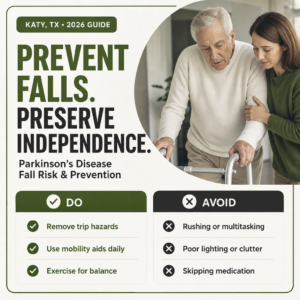
People with PDD have a unique dual-care burden. They need support with the physical challenges of Parkinson's — tremor, rigidity, balance problems, fall prevention — at the same time they need support with memory, behavior, and daily living tasks. This combination makes home caregiving extremely demanding and often unsustainable without professional support.
What Families in Katy, TX Should Know
If your parent or spouse was first diagnosed with Parkinson's disease years ago and is now showing signs of memory loss, confusion, or behavioral changes, it's time to speak with their neurologist about a formal cognitive evaluation. Evergreen Cottages in Katy, TX has experience supporting residents with complex neurological presentations, including Parkinson's disease dementia.
Type 7: Huntington's Disease Dementia — A Genetic Form of Dementia
Huntington's disease is a rare, inherited neurological disorder caused by a mutation in the HTT gene, and it invariably leads to dementia as part of its progression. Unlike most other types of dementia, Huntington's is entirely determined by genetics: if you carry the mutation, you will develop the disease. Each child of a parent with Huntington's has a 50% chance of inheriting the gene.
The Huntington's Disease Society of America estimates that approximately 30,000 Americans currently have Huntington's disease, with another 200,000 at risk of inheriting it. While rare compared to Alzheimer's, its genetic certainty and its impact on multiple generations of a family make it a uniquely devastating condition.
Cognitive and Behavioral Features
Huntington's disease dementia involves a combination of cognitive impairment, psychiatric symptoms (particularly depression, obsessive-compulsive behavior, and irritability), and the signature movement disorder — chorea — which causes involuntary, jerking muscle movements. Cognitive symptoms typically include difficulties with concentration, organization, and speed of thought, rather than the memory-first pattern of Alzheimer's.
Onset and Age Considerations
Huntington's most commonly appears between the ages of 30 and 50, though juvenile-onset cases do occur. This younger age of onset means that families are often simultaneously caring for affected parents and raising their own children — a profoundly stressful situation that underscores the importance of professional care support.
Genetic Counseling Is Essential
Families dealing with Huntington's disease are strongly encouraged to seek genetic counseling — both to understand their own risk and to access the growing body of emerging research on treatments. For care needs in Katy, TX, please explore our family resources to find guidance on navigating long-term care planning.
Type 8: Creutzfeldt-Jakob Disease — The Rarest and Most Rapid Type of Dementia
Creutzfeldt-Jakob disease (CJD) is a rare, rapidly progressive, and uniformly fatal prion disease — meaning it is caused by abnormally folded proteins called prions that trigger normal brain proteins to also fold abnormally, leading to rapid brain destruction. It is the rarest of the major types of dementia, affecting approximately 1 in 1 million people per year worldwide, according to the Centers for Disease Control and Prevention (CDC).
CJD is notable — and frightening — because of its extremely rapid progression. Most people with CJD die within 6–12 months of symptom onset, and about 90% die within one year. This makes it profoundly different from Alzheimer's or vascular dementia in terms of timeline and the acuity of care needed.
Forms of CJD
CJD occurs in several forms:
- Sporadic CJD: The most common form (~85% of cases), with no known cause.
- Familial/Genetic CJD: Caused by an inherited mutation in the prion protein gene.
- Acquired CJD: Results from exposure to infected tissue (e.g., through certain medical procedures). Variant CJD (vCJD), linked to "mad cow disease," is a specific form of acquired CJD.
Symptoms and Rapid Decline
Early CJD symptoms include rapidly progressive memory problems, behavioral changes, and loss of coordination. Within weeks, these may progress to blindness, weakness in limbs, and involuntary muscle jerks (myoclonus). The rapid deterioration is often alarming and deeply traumatic for families who are unprepared for the speed of decline.
Care Planning in a Short Time Frame
Because of CJD's rapid course, families must make difficult decisions about professional care placement, palliative care, and hospice very quickly. Families in the Katy, TX area facing this situation can contact Evergreen Cottages directly to discuss whether our care environment is the right fit and to access guidance on next steps.
Type 9: Normal Pressure Hydrocephalus — A Potentially Treatable Type of Dementia
Normal pressure hydrocephalus (NPH) is a brain condition in which excess cerebrospinal fluid (CSF) accumulates in the brain's ventricles, causing them to enlarge and press on surrounding brain tissue — producing dementia-like symptoms that can sometimes be reversed or significantly improved with treatment. NPH is one of the few types of dementia where meaningful intervention is possible.
NPH affects an estimated 700,000 Americans, according to the Hydrocephalus Association, yet it is frequently undiagnosed or misdiagnosed as Alzheimer's disease, Parkinson's disease, or age-related cognitive decline. This misidentification matters enormously because the right treatment — surgical insertion of a shunt to drain excess fluid — can dramatically improve quality of life.
The Classic Triad of NPH Symptoms
Clinicians look for three characteristic symptoms that occur together in NPH — often described as "wet, wacky, and wobbly":
- Gait disturbance ("wobbly"): A wide-based, shuffling, magnetic gait — as if feet are stuck to the floor
- Cognitive impairment ("wacky"): Mental slowing, forgetfulness, difficulty with reasoning
- Urinary incontinence ("wet"): Loss of bladder control that appears alongside the other symptoms
Why This Diagnosis Should Not Be Missed
Unlike the other types of dementia in this guide, NPH offers the possibility of substantial improvement. For families in Katy, TX who are noticing this triad of symptoms, advocating for a neurology referral and brain MRI is urgent — not because the prognosis is necessarily grim, but because acting quickly maximizes the potential for improvement.
After Treatment: Ongoing Care Needs
Even when shunt surgery is successful, many patients with NPH have ongoing cognitive care needs. The Assisted Living program at Evergreen Cottages provides a supportive bridge for individuals who need help with daily tasks but have not progressed to the point of requiring full memory care.
Type 10: Wernicke-Korsakoff Syndrome — A Preventable Type of Dementia
Wernicke-Korsakoff syndrome (WKS) is a brain disorder caused by a severe deficiency of thiamine (vitamin B1), most commonly associated with chronic alcohol use disorder, though it can also result from malnutrition, prolonged vomiting, or malabsorption conditions. It represents a unique type of dementia because it is, in many cases, entirely preventable.
WKS is actually two related conditions that often occur together. Wernicke encephalopathy is the acute phase — a medical emergency — characterized by confusion, loss of muscle coordination, and abnormal eye movements. If untreated, it can progress to Korsakoff syndrome, the chronic phase that involves severe, irreversible memory impairment.
The Distinctive Memory Pattern
Korsakoff syndrome produces a very specific type of memory damage: profound difficulty forming new memories (anterograde amnesia), combined with gaps in memory for past events (retrograde amnesia). People with Korsakoff's often confabulate — unconsciously making up stories to fill memory gaps — without realizing they are doing so. This can seem like dishonesty to families who don't understand the neurological basis of confabulation.
Prevention and Early Intervention
Wernicke encephalopathy is treated with high-dose intravenous thiamine — and when caught early, can prevent progression to the permanent Korsakoff state. For individuals in recovery from alcohol use disorder, thiamine supplementation and nutritional support are ongoing preventive priorities. Our post on vitamins that may delay dementia touches on the broader role of nutritional support in brain health.
Long-Term Care for Wernicke-Korsakoff Syndrome
People with established Korsakoff syndrome typically require long-term residential care because of their profound memory impairment and associated behavioral needs. For families in Katy, TX navigating this situation, our care team at Evergreen Cottages welcomes a conversation about whether our environment is the right fit.
Side-by-Side Comparison of All 10 Types of Dementia
Understanding the key differences between all 10 types of dementia in one view can help families and care partners communicate more effectively with physicians, social workers, and memory care teams. Use the table below as a reference guide — and feel free to print it or share it before a medical appointment.
| Type of Dementia | Primary Cause | Key Distinguishing Features | % of All Dementia | Reversible? |
|---|---|---|---|---|
| Alzheimer's Disease | Amyloid plaques & tau tangles | Progressive short-term memory loss, language difficulty | 60–80% | No |
| Vascular Dementia | Reduced cerebral blood flow / stroke | Step-wise decline, executive dysfunction, gait problems | 10–15% | No (manageable) |
| Lewy Body Dementia | Lewy body protein deposits | Visual hallucinations, fluctuating alertness, REM disorder | 5–10% | No |
| Frontotemporal Dementia | Frontal/temporal lobe neurodegeneration | Personality changes, language loss; younger onset (<65) | 5–10% | No |
| Mixed Dementia | Multiple co-existing pathologies | Combined symptoms of 2+ dementia types | Up to 45%* | No |
| Parkinson's Disease Dementia | Lewy bodies; Parkinson's progression | Motor symptoms precede cognitive decline by 1+ year | ~3–5% | No |
| Huntington's Disease | HTT gene mutation (inherited) | Chorea (involuntary movement), psychiatric symptoms, younger onset | <1% | No |
| Creutzfeldt-Jakob Disease | Prion protein misfolding | Extremely rapid progression; death within months | <1% | No |
| Normal Pressure Hydrocephalus | Excess CSF accumulation | Gait disturbance, incontinence, cognitive slowing | ~5% | Partially (with shunt) |
| Wernicke-Korsakoff Syndrome | Thiamine (B1) deficiency | Severe memory gaps, confabulation, often alcohol-related | ~1–2% | Partially (if early) |
*Mixed dementia percentage reflects autopsy studies; many cases are not diagnosed during a person's lifetime. Sources: Alzheimer's Association 2025 Facts and Figures; Lewy Body Dementia Association; Huntington's Disease Society of America; CDC.
Frequently Asked Questions About Types of Dementia
These are the questions families in Katy, TX most frequently ask about the types of dementia — answered directly and compassionately. Each answer is crafted to give you real clarity, not vague generalities.
Is Alzheimer's disease the same as dementia?
No. Alzheimer's disease is a specific type of dementia — the most common one, accounting for 60–80% of all cases. Dementia itself is the broader umbrella term for a cluster of symptoms affecting memory, thinking, and daily function. All Alzheimer's is dementia, but not all dementia is Alzheimer's. Understanding this distinction helps families seek the right diagnosis and care plan from the start.
Can a person have more than one type of dementia at the same time?
Yes — this is called mixed dementia, and it is more common than most people realize. Autopsy studies suggest that up to 45% of older adults with dementia have multiple types of brain pathology present simultaneously. The most frequent combination is Alzheimer's disease and vascular dementia. Mixed dementia often makes symptoms harder to predict and care more complex.
How do I know which type of dementia my loved one has?
A definitive diagnosis requires a comprehensive medical evaluation that includes cognitive and neuropsychological testing, brain imaging (MRI or CT scan), laboratory blood tests, and a detailed clinical history. A neurologist or geriatric psychiatrist is best positioned to provide this evaluation. Some types of dementia — like mixed dementia — can only be definitively confirmed through autopsy. If you're unsure, ask for a specialist referral.
What types of dementia qualify for memory care in Katy, TX?
All of the 10 types described in this guide — including Alzheimer's, vascular dementia, Lewy body dementia, frontotemporal dementia, and others — may qualify a person for memory care depending on the severity of their cognitive impairment and functional needs. At Evergreen Cottages in Katy, TX, our care team assesses each resident individually to ensure the environment and staffing match their specific needs.
Are any types of dementia preventable or curable?
Currently, none of the primary neurodegenerative types of dementia — including Alzheimer's, LBD, and FTD — can be cured. However, some types can be partially prevented or improved: vascular dementia risk can be reduced through cardiovascular health management, Wernicke-Korsakoff syndrome is preventable with adequate thiamine, and normal pressure hydrocephalus can improve significantly with shunt surgery. Research into disease-modifying treatments for Alzheimer's is accelerating.
When is the right time to consider memory care for a loved one with dementia?
The right time is typically when safety at home can no longer be reliably maintained — whether due to wandering, medication errors, falls, caregiver burnout, or significant behavioral changes. Many families wait longer than is ideal, often out of guilt or uncertainty. Our blog post on when procrastination isn't appropriate addresses this difficult moment with compassion and honesty.
How does Evergreen Cottages in Katy, TX care for different types of dementia?
Evergreen Cottages provides individualized care plans for each resident based on their specific diagnosis, behavioral profile, and functional needs. Our small, home-like environment minimizes the sensory overload that worsens many dementia symptoms. Our trained care team is experienced in the behavioral nuances of multiple dementia types and uses person-centered approaches that honor each resident's unique history and preferences.
Conclusion: Knowledge Is the Beginning of Better Care
If you've read this far, you've done something remarkable: you've educated yourself on one of the most complex, emotionally heavy topics a family can face. Understanding the types of dementia — not just Alzheimer's, but all 10 forms — means you are now better equipped to advocate for your loved one, communicate with their medical team, and make informed decisions about their care.
We know how hard this is. At Evergreen Cottages in Katy, TX, we've sat across from hundreds of families who felt exactly what you may be feeling right now — overwhelmed, uncertain, and afraid of making the wrong choice. What we've seen, again and again, is that the families who act on knowledge rather than fear give their loved ones far better outcomes than those who wait.
Whether your loved one has been diagnosed with Alzheimer's disease, vascular dementia, Lewy body dementia, frontotemporal dementia, or any other type of dementia, we are here to help. Our community is designed from the ground up to honor the dignity of each person — and to offer families in Katy,