Independent Living vs. Assisted Living vs. Memory Care: Understanding the Full Spectrum of Senior Living Options
A complete, plain-language guide to help families in Katy, TX understand the real differences between every level of senior care — so the right decision feels clear, not overwhelming.

Why These Distinctions Matter More Than Ever
One of the most common calls senior living advisors receive goes something like this: “We’re not sure what my mother needs. Is she assisted living? Memory care? Is there a difference? We just thought she’d go to a retirement home.”
That confusion is not a failure of the family. It is a failure of an industry that has used terms loosely for decades — and it has real consequences. Families who don’t understand the levels of care often move a loved one into the wrong environment: either under-resourced for the support they need, or over-placed in a higher-acuity setting that diminishes their independence unnecessarily.
“In Texas, the senior population is projected to grow by 79% between 2020 and 2040. Getting these distinctions right is increasingly urgent for every family in Katy and the greater Houston area.”
This guide exists to remove the confusion entirely. By the end, you will understand exactly what each care type means, how they differ in staffing, licensing, and daily life, and what signals suggest a loved one is ready for each level.
What Is Independent Living?
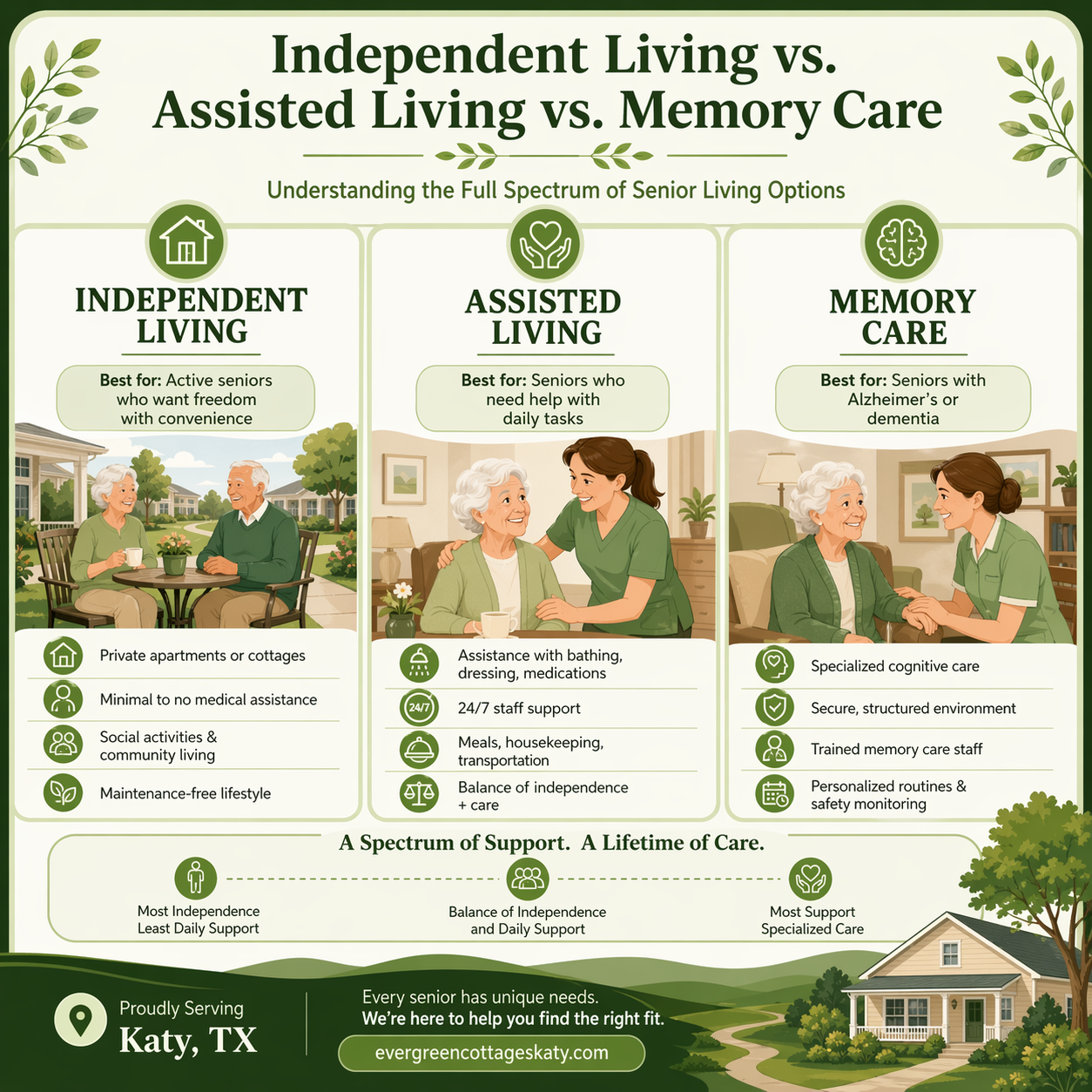
Independent living is exactly what it sounds like: a residential community designed for older adults who are largely self-sufficient and do not require daily medical assistance or hands-on personal care.
Independent living communities — sometimes called active adult communities, senior apartments, or retirement communities — offer private residences alongside shared amenities: dining, fitness centers, social programming, and transportation. The emphasis is on lifestyle enrichment, not caregiving.
Who it’s designed for
Adults typically 55 and older who are physically and cognitively capable of managing their own activities of daily living — bathing, dressing, medications, and mobility — but who want the convenience of maintenance-free living and the social engagement of a community setting.
What it includes
- Private apartments or cottages with full or partial kitchens
- Restaurant-style dining or meal plan options
- Scheduled social activities, fitness classes, and outings
- Housekeeping and linen services
- On-site management for building needs
What it does not include
- Personal care assistance (bathing, dressing, grooming)
- Medication management or administration
- 24-hour nursing staff oversight
- Dementia or memory care programming
Licensing in Texas
Independent living communities in Texas are generally not licensed by the state as healthcare facilities because they do not provide personal care or medical services — a critical distinction from assisted living and memory care, which are licensed and regulated by the Texas Health and Human Services Commission (HHSC).
Cost range in Texas
What Is Assisted Living?

Assisted living bridges the gap between fully independent living and skilled nursing care. It is a licensed residential setting that provides personal care assistance alongside housing and hospitality services — but in a home-like environment that preserves dignity and autonomy.
The defining feature of assisted living is that residents receive help with activities of daily living (ADLs): bathing, dressing, grooming, toileting, mobility, and meals. They may also receive medication management and coordination with healthcare providers. The care is consistent and available around the clock, but it is not skilled medical care delivered by nurses.
Who it’s designed for
Older adults who need support with some or all of their daily activities but who do not require 24-hour skilled nursing or a hospital-level environment. Many assisted living residents have chronic health conditions — arthritis, diabetes, mild heart failure — that require monitoring but not clinical-level intervention on a daily basis.
What assisted living includes
- Assistance with bathing, dressing, grooming, and toileting
- Medication administration and management
- Three meals daily, plus snacks
- 24-hour staff on site
- Social programming and recreational activities
- Housekeeping and laundry services
- Transportation to medical appointments
- Coordination with physicians and specialists
What assisted living does not include
Assisted living is not skilled nursing. It does not provide IV therapy, wound care management, or 24-hour licensed nurse oversight on a clinical level. When a resident’s needs exceed what assisted living can safely manage, a transfer to skilled nursing may be necessary.
Licensing in Texas
Assisted living facilities in Texas are licensed by the Texas Health and Human Services Commission. Type A communities serve residents who can self-evacuate in emergencies. Type B communities serve residents who may need assistance evacuating. Both types are inspected regularly and must meet specific staff training, care planning, and safety standards.
Cost range in Texas
What Is Memory Care?
Memory care is a specialized form of assisted living designed specifically for individuals living with Alzheimer’s disease, other forms of dementia, or significant cognitive impairment.
The critical difference between memory care and standard assisted living is not just the care tasks performed — it is the environment, the training philosophy, and the structure of daily life. Memory care communities are purpose-built to meet the unique behavioral, emotional, and physical safety needs of individuals whose cognition is declining.
Who it’s designed for
Individuals diagnosed with Alzheimer’s disease, vascular dementia, Lewy body dementia, frontotemporal dementia, or other progressive cognitive conditions. Memory care is also appropriate for individuals who have experienced significant confusion, wandering behaviors, or are no longer safe in a traditional assisted living environment.
What makes memory care different
Environment
Memory care neighborhoods are typically secured — door alarms, secured perimeters, or controlled-access entry — to prevent wandering, one of the most dangerous behaviors associated with mid-to-late dementia. Layouts are often loop-based, allowing residents to walk freely without dead ends. Lighting, signage, and room design are all adapted to support orientation and reduce agitation.
Staffing
Staff in memory care units receive specialized dementia care training beyond what is required in standard assisted living — including training in non-pharmacological behavior interventions, validation therapy, communication strategies for cognitive decline, and de-escalation techniques.
Programming
Activities in memory care are designed around cognitive engagement, sensory stimulation, and emotional connection — not standard recreation. Music therapy, reminiscence programs, art therapy, and structured sensory activities play central roles. The goal is not productivity but dignity and presence.
“At Evergreen Cottages, our memory care philosophy is built on a heart-centered approach — creating environments that nourish residents, their families, and the caregivers who work so tirelessly alongside them.”
Cost range in Texas
Independent Living vs. Assisted Living vs. Memory Care: Side-by-Side
| Feature | Independent Living | Assisted Living | Memory Care |
|---|---|---|---|
| Primary purpose | Lifestyle & social engagement | Personal care assistance | Cognitive & behavioral support |
| ADL assistance | None | Yes | Yes (dementia-adapted) |
| Medication management | No | Yes | Yes |
| 24-hour staffing | Typically no | Yes | Yes |
| Secured environment | No | No | Yes |
| Dementia programming | No | Limited | Central focus |
| TX state license required | No | Yes (HHSC Type A or B) | Yes (HHSC Alzheimer’s certified) |
| Typical cost (Katy, TX) | $1,800–$4,500/mo | $3,000–$6,500/mo | $4,500–$8,500/mo |
What Is Skilled Nursing — and How Is It Different?

Skilled nursing facilities (SNFs) — often still called nursing homes — represent the highest level of long-term residential care below a hospital. They are licensed to provide 24-hour nursing oversight, complex medical care, and rehabilitative services that cannot legally or practically be delivered in an assisted living setting.
The word “skilled” is the critical distinction. Skilled nursing care refers to services that must be performed by or under the supervision of a licensed nurse: wound care, IV therapy, catheter care, complex medication management, post-surgical recovery monitoring, and more.
Who skilled nursing is designed for
- Short-term rehabilitation after hospitalization (hip replacement, stroke, cardiac events)
- Complex, medically unstable conditions requiring daily nursing intervention
- 24-hour licensed nurse oversight that assisted living cannot provide
- Late-stage dementia with clinical complications
- IV therapy, wound care, or post-surgical recovery monitoring
How skilled nursing differs from assisted living
The clinical intensity is the defining factor. Assisted living communities are not equipped or licensed to manage unstable medical conditions or administer IV medications. When a resident’s needs exceed what assisted living can safely manage, a transfer to skilled nursing may be necessary — either temporarily for rehabilitation, or permanently if medical complexity cannot be managed at a lower level of care.
Cost range in Texas
What Does “Retirement Home” Actually Mean?
The term “retirement home” is an umbrella phrase — not a regulated care category — that families commonly use to describe any senior living community. It can refer to independent living, assisted living, memory care, continuing care retirement communities (CCRCs), or any combination of the above.
When you see the term “retirement home” or “retirement community” in advertising or casual conversation, it tells you very little about the actual services provided. Two communities that both call themselves “retirement homes” might be delivering fundamentally different levels of care.
What families should ask instead
- Is this facility licensed by the state — and under what license type?
- What care services are included? (Ask for a detailed list, not marketing language.)
- What is the staff-to-resident ratio, by shift?
- What happens if my loved one’s needs increase? Can they age in place?
- How is the facility rated on state inspection reports? (HHSC reports are public.)
Continuing Care Retirement Communities (CCRCs)
A CCRC — also called a life plan community — is a campus-based model that offers multiple levels of care on the same property: independent living, assisted living, memory care, and often skilled nursing. The promise is that residents can move through the continuum of care without leaving the community. CCRCs typically require an entrance fee (often $100,000–$500,000+) in addition to monthly fees, though structures vary considerably.
Have Questions? We Have Answers — With No Pressure.
Our team at Evergreen Cottages in Katy, TX is available to walk you through every option, at whatever pace feels right for your family.
How Families in Katy, TX Navigate This Decision
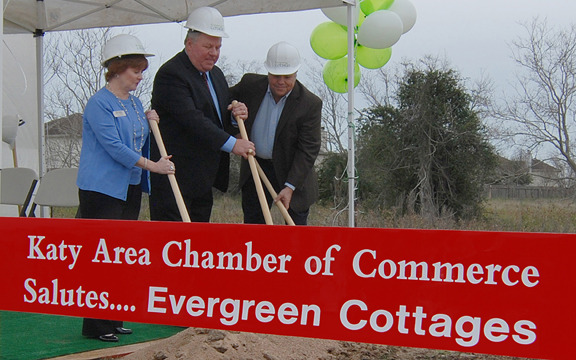
The Katy area has grown into one of the most dynamic suburban communities in the Houston metro — and with that growth comes a senior population that increasingly needs thoughtful options for aging well.
For families in Katy, Cinco Ranch, Cypress, and the surrounding areas, the senior living landscape can feel overwhelming: large national operators, independent communities, continuing care campuses, and everything in between. The names and branding vary widely, but the care frameworks described in this guide apply universally.
A few realities specific to this market
The urgency factor. Many families in the Katy area begin researching senior living options after a health event: a fall, a hospitalization, a dementia diagnosis, or a caregiver reaching a breaking point. Research conducted under pressure often leads to decisions made in haste. This guide exists to give you a foundation so that when urgency arrives, you already understand the landscape.
Distance from family. The Houston metro’s suburban sprawl means families are often navigating the logistics of checking in on parents who may live 20–40 minutes away. Assisted living and memory care communities within Katy provide proximity and peace of mind for family caregivers without requiring a parent to relocate to an unfamiliar part of the city.
Texas climate considerations. The Gulf Coast heat and humidity make outdoor programming, climate-controlled amenities, and thoughtful community design especially relevant for older adults. Communities designed with these realities in mind offer a meaningfully different daily experience than those built without them.
Signs Your Loved One Is Ready for Each Level of Care
Independent Living
- Managing daily activities but increasingly isolated
- Home maintenance has become a burden
- Seeking social engagement and community
- Wants maintenance-free living without losing autonomy
Assisted Living
- Struggles with bathing, dressing, or grooming
- Missed or mismanaged medications
- Unexplained weight loss or poor nutrition
- Falls or near-falls in the home
- Primary caregiver reaching burnout
Memory Care
- Wandering or getting lost in familiar environments
- Significant short-term memory loss affecting safety
- No longer recognizing family consistently
- Behavioral changes: aggression, sundowning, paranoia
- No longer safe in assisted living without 1:1 supervision
Skilled Nursing
- Post-hospitalization requiring daily nursing oversight
- Complex wound care or IV therapy needs
- Medically unstable conditions
- Late-stage dementia with clinical complications
- Physician-recommended higher level of care
What Evergreen Cottages Offers

Evergreen Cottages is a senior living community located in Katy, TX, built around a simple but deeply held belief: that aging well is not about what you give up — it is about what you gain when you are truly supported.
Our community is designed for residents who value privacy, connection, and a care team that knows them by name — not by room number. We specialize in memory care and assisted living, providing a purpose-built, dementia-safe environment staffed by specially trained nurses and caregivers.
- 24/7 nursing and dementia-trained staff on site
- Personalized care plans built around each resident
- Medication management and health monitoring
- Secure, dementia-friendly environment — Never Lost, Dementia Safe, Dementia Smart
- Nutritious home-cooked meals tailored to dietary needs
- Life enrichment: music therapy, gardening, pet therapy, reminiscing programs
- Housekeeping, laundry, and daily living support included
- 5.0 stars — rated by 46+ verified Google reviews
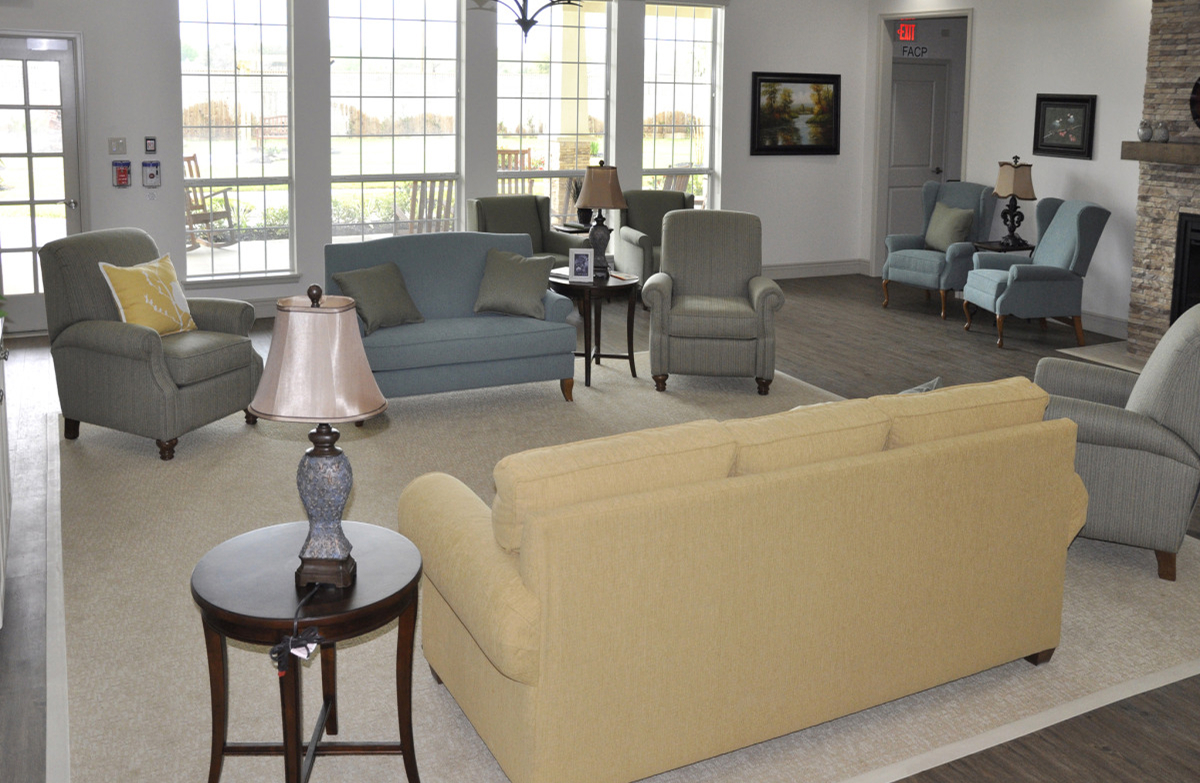
We invite you to experience it in person. Our team is available to answer every question you have — with no pressure, no sales scripts, and no rush.
Your Questions, Answered
Assisted living provides personal care support — bathing, dressing, medication management, meals — in a residential, home-like environment. A nursing home (skilled nursing facility) provides 24-hour licensed nursing oversight and complex medical care for individuals with medically unstable conditions. Assisted living is designed for daily living support; skilled nursing is designed for clinical medical management.
In the early stages of dementia, many individuals do well in traditional assisted living with appropriate support. As dementia progresses and behavioral symptoms emerge — particularly wandering, significant confusion, or safety concerns — a dedicated memory care environment becomes necessary. The determining factor is safety and appropriate supervision, not the diagnosis itself.
If your parent is struggling with any activities of daily living — bathing, dressing, meal preparation, medication management — or if you are concerned about their safety when alone, they likely need more than independent living provides. A care needs assessment, typically offered at no charge by assisted living communities, can provide clarity.
Medicare does not pay for assisted living or memory care. These are considered custodial care — not medically skilled care — and are therefore excluded from Medicare coverage. Medicaid may provide some assistance depending on eligibility. Most assisted living and memory care costs are covered through private pay, long-term care insurance, or veterans’ benefits for eligible individuals.
Texas licenses assisted living communities as either Type A or Type B. Type A communities serve residents who are capable of self-evacuating in an emergency without physical assistance. Type B communities serve residents who may need staff assistance to evacuate. Memory care communities are typically licensed as Type B.
Ask about staff-to-resident ratios by shift, staff turnover rates, how care plans are developed and updated, what happens if a resident’s needs change, how the community handles medical emergencies, and whether you can speak with current family members. Request to see the most recent HHSC state inspection report.
Ideally, begin researching senior living options before a crisis forces the decision. Touring communities, understanding costs, and identifying preferences while your loved one can actively participate in the conversation leads to far better outcomes than decisions made under emergency pressure. Starting 6–12 months before anticipated need is reasonable; starting earlier is always better.
Ready to See Evergreen Cottages in Person?
Schedule a private tour at your convenience. Our team in Katy, TX is here to walk you through our community — and answer every question, at your pace.
Texas Health and Human Services Commission (HHSC) — Assisted Living Facility Licensing Standards and Regulations.
Texas Department of Aging and Disability Services — Texas Population Projections 2020–2040.
Centers for Medicare and Medicaid Services (CMS) — Nursing Home Care Coverage Guidelines.
National Institute on Aging — Alzheimer’s Disease and Related Dementias Resource Guide.
Alzheimer’s Association — 2025 Alzheimer’s Disease Facts and Figures Report.