By Ivan Urrego, Professional Copywriter Agent for the Senior Living Industry | Last updated: April 2026
Ivan Urrego is an award-winning copywriter specializing in senior living communities across the United States. Recognized by Argentum, MALA, and multiple senior living associations for excellence in content strategy and community storytelling.
Quick summary: This guide breaks down the full range of activities available in assisted living communities — from daily wellness programming and social events to creative arts, spiritual enrichment, and cognitive engagement. Based on real programming data, resident feedback trends, and the lived experience of families navigating the assisted living decision.
Table of Contents
- Why Activities Matter More Than You Think in Assisted Living
- How Families Evaluate Activity Programs When Choosing a Community
- Physical Wellness and Fitness Activities
- Social and Community Events
- Creative Arts and Lifelong Learning
- Cognitive and Memory-Supportive Programming
- Spiritual, Cultural, and Purposeful Activities
- Outdoor and Nature-Based Activities
- Technology and Connection Activities
- How Evergreen Cottages Approaches Activities in Katy, TX
- What to Ask When Touring an Assisted Living Community
- How to Match Activities to Your Loved One’s Personality
- Frequently Asked Questions
Why Activities Matter More Than You Think in Assisted Living
When families begin researching assisted living, the first questions are usually about safety, staffing ratios, and medication management. Activities tend to come up later — sometimes as an afterthought. That’s understandable. But it’s also a mistake that costs residents their quality of life.
Here’s the reality: clinical care keeps residents safe. Activities keep residents alive in the fullest sense of that word.
The research is unambiguous on this. According to a 2024 study published by the National Institute on Aging, older adults who engage in regular structured social and physical activities experience significantly slower cognitive decline, lower rates of depression, and higher self-reported life satisfaction than those who are socially isolated — even when controlling for health status. In assisted living specifically, activity engagement has been directly linked to reduced hospitalizations and longer community tenure before needing a higher level of care.
This matters for families beyond just quality of life. It matters financially. Every month a loved one thrives in assisted living — engaged, mobile, and socially connected — is a month that avoids the far greater cost of skilled nursing or memory care.
The mistake families make
Most families tour an assisted living community and ask to see the activity calendar. That’s a start. But a calendar is a menu, not a meal. The real question is whether that programming is designed with intention — matched to resident preferences, led by trained staff, and structured to promote genuine participation rather than passive attendance.
A community with 40 items on a weekly calendar where residents sit in the back of the room watching a movie alone is not an active community. A community with 15 deeply engaging, resident-driven programs where people show up voluntarily and leave energized — that’s what activity excellence actually looks like.
At Evergreen Cottages in Katy, TX, the philosophy has always been person-first programming. Every resident arrives with a history, a set of passions, and a personality. The activity program should meet them there — not ask them to become someone else.
How Families Evaluate Activity Programs When Choosing a Community
The 2025 Senior Living Consumer Preference Survey conducted by Argentum found that activity programming ranked as the third most important factor for families when choosing an assisted living community, behind only safety and staffing quality — and ahead of price in many markets.
That same survey found that 68% of adult children said they would eliminate a community from consideration if the activity program felt generic or underdeveloped during a tour.
The three-phase evaluation families go through
Phase 1 — Initial research (weeks 1–3): Families search broadly. “What do assisted living residents do all day?” “Are assisted living activities good?” “What activities are available in assisted living?” These searches are often driven by worry — a family member imagining their parent sitting alone, bored, and disconnected. This is the information stage.
Phase 2 — Community comparison (weeks 2–5): Families have narrowed their list. They’re now asking about specific communities: “Does Evergreen Cottages have fitness classes?” “What is the activity program like at senior living in Katy TX?” They’re looking for differentiation and specifics.
Phase 3 — Tour and decision (final 1–2 weeks): Families visit. They watch residents. They look at faces. They notice whether the common areas are alive or empty. They ask the activity director pointed questions. This is where programming either closes or loses the decision.
What families are really asking underneath all of this
When a family asks “what activities do you have?” they’re really asking: “Will my mom be okay here? Will she have a reason to get out of bed? Will she find people who know her name and care that she showed up?” That emotional subtext should shape how communities answer — and how they build programs from the ground up.
Physical Wellness and Fitness Activities
Physical activity is foundational in any quality assisted living program — not as an optional add-on, but as a core daily offering. The Centers for Disease Control and Prevention recommends that older adults engage in at least 150 minutes of moderate-intensity aerobic activity per week, plus muscle-strengthening activities on two or more days. Assisted living communities play a direct role in helping residents meet these guidelines safely.
Chair yoga and gentle stretching
Chair yoga has become one of the most widely adopted fitness programs in assisted living for good reason. It’s accessible to residents at nearly any mobility level, it reduces fall risk by improving balance and core strength, and it has strong evidence supporting mood improvement and anxiety reduction. Classes are typically offered two to four times per week and last between 30 and 45 minutes.
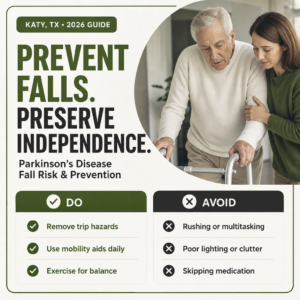
Balance and fall prevention classes
Falls are the leading cause of injury-related death among adults 65 and older, according to the CDC. Dedicated balance programming — often delivered as standing exercise classes, resistance band workouts, or supervised walking groups — addresses this risk directly. Many communities partner with licensed physical therapists to lead or consult on these programs.
Walking clubs and nature walks
Structured walking programs give residents both physical activity and social connection simultaneously. A morning walking club — even a short loop around a courtyard — builds routine, provides gentle cardiovascular benefit, and creates natural opportunities for conversation. At communities with access to walking paths or green space, these programs often become residents’ favorite part of the week.
Fitness rooms and one-on-one exercise support
Many assisted living communities maintain dedicated fitness spaces equipped with senior-adapted equipment: low-impact cardio machines, resistance training tools, and flexibility aids. Staff or contracted fitness professionals often offer one-on-one sessions for residents who need personalized guidance or who are recovering from surgery or illness.
Aquatic therapy and pool programming
Communities with aquatic facilities offer water aerobics, hydrotherapy, and pool walking — all of which provide resistance-based exercise with dramatically reduced joint impact. For residents managing arthritis, joint replacements, or chronic pain, aquatic programming can be the difference between being physically active and being sedentary.
Dance and movement classes
Line dancing, ballroom basics, and movement-to-music classes have exploded in senior living programming over the past decade — and the research supports the enthusiasm. A 2023 study in the Journal of Aging and Physical Activity found that dance programs in senior living improved balance, increased social connection, and produced measurable improvements in mood compared to standard exercise classes.
Social and Community Events
Human connection is not a luxury in older adulthood. It is a health necessity. Research from Brigham Young University found that social isolation carries health risks equivalent to smoking 15 cigarettes per day. Assisted living communities designed with active social programming are directly responding to one of the most significant health risks their residents face.
Community dining experiences
Shared meals are the most consistent social touchpoint in any assisted living community. When dining is designed as a community experience — with flexible seating, restaurant-style service, and a welcoming atmosphere — it becomes far more than nutrition. It becomes the twice- or three-times-daily opportunity for residents to build friendships, maintain routine, and feel part of something larger.
Happy hours and social mixers
Structured social events — whether a Friday afternoon happy hour with mocktails and live music or a casual welcome mixer for new residents — give community members low-pressure opportunities to meet and connect. These events are particularly important for newer residents in their first 30 to 90 days, when social integration most significantly predicts long-term wellbeing.
Birthday and holiday celebrations
Milestone recognition matters deeply to older adults. A community that celebrates birthdays with personalized attention, decorates thoughtfully for holidays, and creates seasonal programming signals to residents that they are seen and valued as individuals — not just occupants of a room.
Game nights and tournaments
Card games, board games, bingo, trivia nights, and friendly competitions create consistent weekly social anchors for residents. These events often develop into informal social clusters — the Tuesday card group, the Friday trivia regulars — that become genuine community within the community.
Guest speakers and educational events
Hosting local speakers on topics ranging from local history to financial wellness to current events gives residents ongoing intellectual stimulation and connection to the outside world. When these events bring in community members from outside the building, they also serve as a bridge between assisted living residents and the broader Katy community.
Intergenerational programming
Some of the most powerful programming in assisted living connects residents with younger generations — school visits, mentorship programs, holiday events with families, or volunteer partnerships with local youth organizations. Research consistently shows that intergenerational contact improves mood and sense of purpose for older adults while challenging age-related stereotypes for younger participants.
Creative Arts and Lifelong Learning
Creative expression is not just enriching — it is therapeutic. Art-making, music, writing, and craft have all demonstrated measurable health benefits in older adults, including reduced cortisol levels, improved fine motor function, and significant reductions in symptoms of depression and anxiety.
Visual arts and painting classes
Watercolor painting, acrylic art, sketching, and mixed media classes give residents a structured creative outlet with tangible results they can share with family. Many communities display resident artwork throughout common areas, creating a lived-in, personalized environment that reinforces pride of place.
Music programming
Music’s impact on older adults is among the most well-documented phenomena in gerontology. Whether participating in a resident choir, attending live music performances, or simply engaging in music listening programs, older adults show measurable responses — memory activation, mood elevation, and even improvements in language fluency among those with cognitive impairment. Quality assisted living communities invest heavily in music programming because the ROI in resident wellbeing is simply too strong to ignore.
Pottery, crafts, and textile arts
Knitting circles, quilting groups, ceramics classes, and seasonal craft projects offer both creative satisfaction and fine motor maintenance. These programs also tend to be highly social — shared projects create natural conversation and collaboration among residents who might otherwise not interact.
Writing and memoir groups
Facilitated writing groups — including memoir workshops, poetry circles, and journaling programs — help residents process life experience, preserve personal history, and find continuing voice and identity. For family members, the written records these groups produce often become treasured documents of a loved one’s life.
Book clubs and reading programs
A well-run book club is more than a literary exercise. It’s a weekly anchor of intellectual engagement, debate, shared perspective, and social connection. Many assisted living communities offer both in-person book discussions and access to large-print libraries, audiobooks, and e-reader programs for residents with visual impairments.
Cooking and baking demonstrations
Food-centered programming taps into some of the deepest wells of personal history and sensory pleasure. Cooking demonstrations, baking projects, and cultural food events let residents engage with the kitchen in a supported, social environment — preserving skills, sharing recipes, and enjoying the simple pleasure of making something delicious together.
Language classes and lifelong learning courses
Communities partnering with local universities, community colleges, or online learning platforms offer residents ongoing intellectual challenge — language learning, history courses, technology workshops, and more. Learning new things at any age has been linked to cognitive resilience and a stronger sense of self-efficacy.
Cognitive and Memory-Supportive Programming
Cognitive engagement is among the most important dimensions of activity programming in assisted living — and the most frequently underserved. A robust cognitive program does more than keep residents “busy.” It challenges the brain, builds neurological reserve, and can meaningfully slow the progression of age-related cognitive changes.
Brain fitness programs
Dedicated cognitive training — whether through digital platforms, facilitated group exercises, or evidence-based curricula like TimeSlips or BrainHQ — gives residents structured mental exercise designed to maintain processing speed, working memory, and attention. These programs work best when offered consistently and adapted to individual ability levels.
Memory boxes and life story programming
Memory-based programming like reminiscence therapy uses personal history as both a cognitive tool and a pathway to emotional wellbeing. Structured reminiscence sessions — where residents share stories from their past with the support of facilitators — have demonstrated benefits for mood, sense of identity, and social connection, including among residents in early-stage memory impairment.
Word games, puzzles, and trivia
Daily puzzles, crosswords, Sudoku, trivia competitions, and word games provide accessible cognitive stimulation that residents can engage with individually or in groups. When these are embedded into daily programming rather than offered as passive room activities, participation rates and benefits increase significantly.
Music and cognitive programming
For residents experiencing early cognitive decline, music-based programming has shown particular promise. The neurological pathways activated by familiar music are among the most resilient in the aging brain — meaning music can reach residents who may not respond to other forms of engagement. Programs like Music & Memory, which uses personalized playlists, have shown dramatic results in reducing anxiety and agitation among residents with dementia.
Spiritual, Cultural, and Purposeful Activities
Whole-person wellness in assisted living must address spiritual and existential needs alongside physical and cognitive ones. For many older adults, faith, meaning, cultural identity, and a sense of continuing purpose are central to wellbeing — and to a good death, when that time comes.
Interfaith worship and spiritual support
Quality assisted living communities offer non-denominational spiritual programming as well as support for residents wishing to maintain their specific faith traditions. This might include on-site chapel services, transportation to local houses of worship, access to chaplaincy services, or facilitated prayer and meditation groups.
Cultural celebrations and heritage programming
Celebrating the cultural backgrounds of residents — through food, music, holiday traditions, and storytelling — honors the full identities of the people who live in the community. In diverse communities like those in Katy, TX and the greater Houston area, this kind of cultural responsiveness is not optional. It is a mark of genuine person-centered care.
Volunteer opportunities and community service
Continuing to contribute matters enormously to older adults. Assisted living communities that build in structured volunteer opportunities — whether phone reassurance programs, mentoring partnerships, card-making for hospitalized children, or community garden projects — give residents the experience of being givers, not just recipients of care.
Pet therapy and companion animals
The evidence for animal-assisted therapy in senior living is extensive and consistent. Structured pet therapy visits reduce blood pressure, lower cortisol, increase social interaction, and improve mood — and the effects persist beyond the visit itself. Some communities house resident pets or maintain therapy animal partnerships with local organizations.
Outdoor and Nature-Based Activities
Access to the outdoors and engagement with the natural world are increasingly recognized as essential components of healthy aging — not pleasant extras. Research from the University of Exeter found that people who spend at least two hours per week in natural environments report significantly higher wellbeing and lower rates of depression than those who don’t.
Gardening and horticultural therapy
Raised-bed gardens, container gardening programs, and indoor plant care give residents hands in the soil and eyes on something growing. Horticultural therapy has documented benefits for fine motor function, cognitive engagement, stress reduction, and a sense of purpose. When residents grow something that ends up on the dining room table, those benefits multiply.
Outdoor seating areas and courtyard programming
Thoughtfully designed outdoor spaces — shaded seating areas, walking paths, butterfly gardens, bird-feeding stations — encourage spontaneous time outside and provide the setting for programming that benefits from natural light and fresh air. Yoga on the patio, morning coffee groups outdoors, and seasonal celebrations in garden spaces all serve this purpose.
Day trips and community outings
Structured outings to local destinations — botanical gardens, museums, restaurants, shopping centers, places of worship, sporting events — maintain residents’ connection to the broader community and preserve the experience of living a full life. Transportation logistics should never be the reason residents stop going places.
Birdwatching and nature observation
Low-effort, high-reward nature engagement programs like birdwatching, weather journaling, and garden observation are accessible to residents across a wide range of mobility levels. Birdwatching in particular has strong evidence supporting cognitive engagement and mood improvement — and it costs very little to implement well.
Technology and Connection Activities
Technology programming in assisted living has evolved rapidly in the past five years. What was once a niche offering — a basic computer class once a week — is now a multidimensional dimension of resident life that touches connection, entertainment, health management, and cognitive engagement.
Video calling and family connection support
The most immediately impactful technology program any community can offer is supported video calling. Staff-assisted video calls with family members — particularly for residents who lack the confidence or dexterity to manage devices independently — dramatically reduce feelings of isolation and strengthen family relationships. During periods of restricted visitation, this programming proved life-sustaining.
Technology literacy classes
Tablet and smartphone literacy classes help residents navigate devices independently, access entertainment, manage communications, and engage with digital health tools. Classes tailored to older adult learners — with large-format displays, patient instruction, and peer support — produce far better outcomes than generic technology instruction.
Virtual reality experiences
A growing number of assisted living communities have introduced virtual reality programming, giving residents the ability to experience destinations, concerts, natural environments, and historical events they could never access in person. Early research is promising — VR experiences have shown benefits for mood, pain management, and in some cases, mobility motivation.
Streaming entertainment and digital media
Access to high-quality streaming content — curated by interest, not just availability — is a meaningful quality-of-life offering. Communities that help residents navigate streaming platforms, maintain large-format viewing areas, and offer group movie nights or documentary screenings are meeting residents where modern entertainment lives.
How Evergreen Cottages Approaches Activities in Katy, TX
Evergreen Cottages in Katy, TX was designed around a simple, non-negotiable belief: that moving into assisted living should never mean moving out of life.
The activity philosophy at Evergreen Cottages is built on three pillars.
The first is personalization. Every resident who joins the Evergreen Cottages community completes a thorough lifestyle and interest assessment — covering hobbies, life history, professional background, spiritual life, physical abilities, and personal goals. That information doesn’t sit in a file. It actively shapes how staff engage with each resident, which programs they’re invited to, and how the broader calendar is built.
The second is consistency. Research consistently shows that routine and predictability support cognitive health and reduce anxiety in older adults. Evergreen Cottages maintains a structured weekly programming calendar that residents can count on, while building in flexibility for spontaneous activities, seasonal events, and resident-requested programming.
The third is community integration. Katy, TX is a vibrant, growing community — and Evergreen Cottages believes its residents should remain connected to it. That means local outings, partnerships with community organizations, visits from local schools and civic groups, and programming that reflects the rich cultural fabric of the greater Houston area.
The team at Evergreen Cottages would love to share more about their specific programming, show you the spaces where activities happen, and introduce you to the staff who make it all come alive. A tour is the best way to experience it firsthand.
Schedule a tour at www.evergreencottages.com or call directly to speak with a team member who can answer your questions about programming, availability, and what daily life really looks like at Evergreen Cottages.
What to Ask When Touring an Assisted Living Community
A good activity program is hard to fake in person — but you have to know what to look for and what to ask. The following questions will help you evaluate any community you visit, including Evergreen Cottages.
Ask to see the activity calendar for the past month, not just the current week. One week can be a showcase. A month is honest.
Ask what percentage of residents typically attend programming. Low participation rates — even with a full calendar — signal a disconnect between what’s offered and what residents actually want.
Ask who runs the programs. Is there a dedicated, full-time activity director? Are they certified through the National Certification Council for Activity Professionals (NCCAP)? Activity programming led by rotating staff without specialized training produces very different results than programming led by trained professionals.
Ask what happens when a resident doesn’t want to participate. Person-centered communities never force participation — but they also don’t leave resistant residents alone indefinitely. They find creative ways to engage based on individual preferences.
Ask about programming for residents in different health states. What happens to activity access when a resident has a bad health day? When mobility declines? When cognitive changes become apparent? Quality communities adapt programming rather than reducing it.
Ask to speak with a current resident or family member about the activity program. Nothing a marketing staff member says is as valuable as an unscripted conversation with someone living there or visiting regularly.
How to Match Activities to Your Loved One’s Personality
One of the most common concerns families express is: “My mom was never a joiner. She won’t participate in group activities.” Or: “My dad spent 40 years working. He needs something purposeful, not arts and crafts.”
These concerns are valid — and they’re exactly why rigid, one-size-fits-all activity programming fails residents.
Here’s a simple framework for thinking about your loved one’s activity preferences.
For introverts and independent personalities: Look for communities that offer robust individual activities — reading programs, personal garden plots, art studios open for independent use, one-on-one engagement options, and small-group programming that doesn’t require large social events. Some residents thrive in quiet consistency rather than in crowds.
For social and extroverted personalities: Prioritize communities with high-frequency social programming, consistent group events, open common areas designed for spontaneous gathering, and a culture where residents genuinely know and spend time with one another.
For purpose-driven and achievement-oriented personalities: Look for volunteer opportunities, mentorship programs, leadership roles within the resident council, and programming with tangible outcomes — growing a garden, completing a craft project, teaching a skill to other residents.
For lifelong learners and intellectually curious personalities: Evaluate the quality of educational programming, access to books and media, speaker series, and whether the community fosters conversations rather than just activities.
For residents with physical limitations: Ask specifically how programming is adapted for varying mobility levels, whether all residents can access core programming regardless of physical ability, and how staff support participation for those who need assistance.
The right community doesn’t ask your loved one to become someone they’re not. It meets them exactly where they are — and gently expands from there.
Frequently Asked Questions
What activities are most common in assisted living communities?
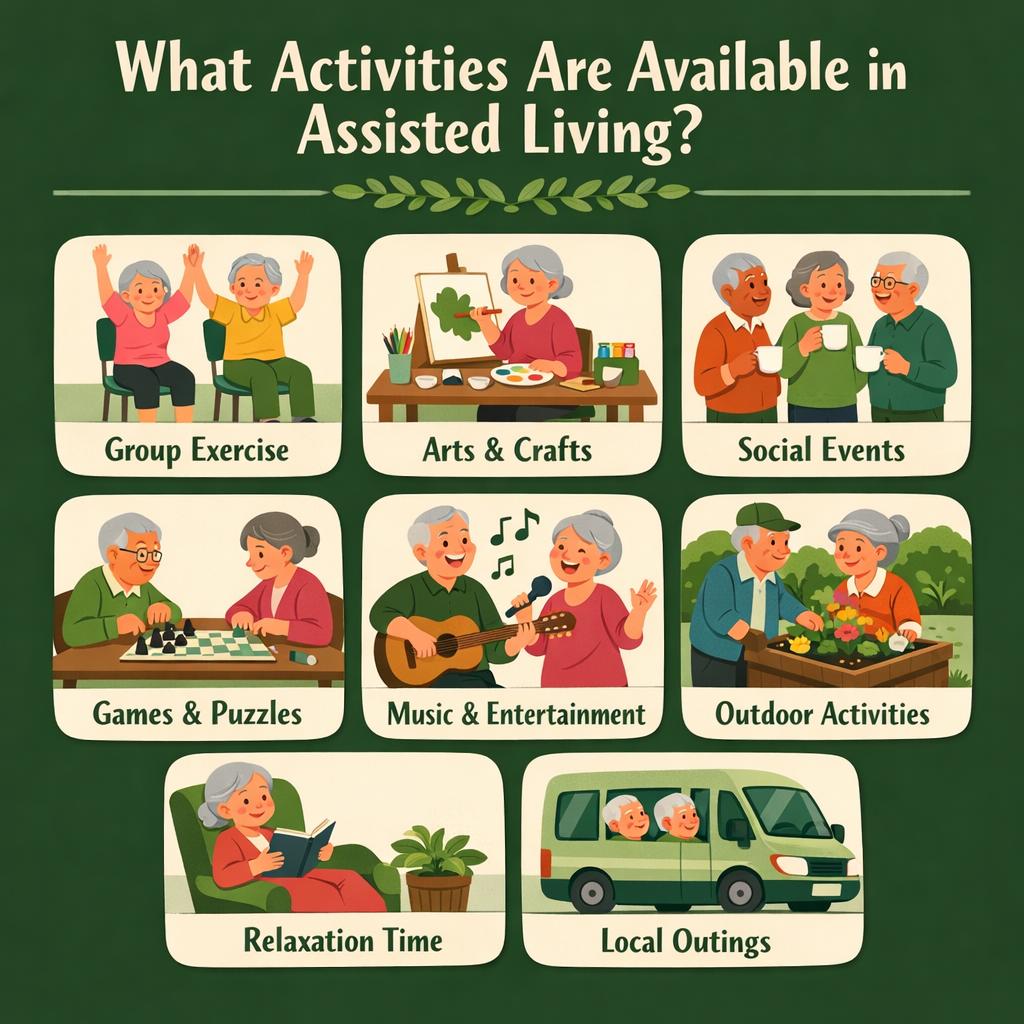
The most commonly offered activities in assisted living include fitness and wellness classes (chair yoga, walking clubs, balance exercises), social events (game nights, happy hours, holiday celebrations), creative programming (art classes, music, crafts), cognitive engagement (trivia, puzzles, brain fitness programs), and spiritual or cultural programming. The quality and depth of these programs varies significantly between communities, which is why evaluating the specific activity culture of any community you’re considering is important.
How many hours per day does a typical assisted living resident spend in activities?
This varies by community and by individual resident. In high-quality communities with robust programming, a resident could participate in structured activities two to four hours per day if they choose to. Most residents balance structured programming with personal time, social dining, one-on-one conversations with staff, family visits, and independent leisure.
What if my loved one has always been a homebody and isn’t interested in group activities?
This is more common than families expect — and good activity directors are trained to work with it. Effective engagement starts where the resident is, not where the program assumes they should be. A dedicated activity professional will spend one-on-one time learning what a reluctant participant actually enjoys and will find low-pressure entry points: a shared interest conversation, an individual project, a small two-person activity before suggesting anything larger. Resident choice and autonomy are always respected.
Are activities included in the cost of assisted living, or are there extra fees?
Most assisted living communities, including Evergreen Cottages, include core activity programming in their standard monthly fee. Specialty outings, ticketed events, or optional classes with outside instructors may involve nominal additional costs. Always clarify this during your tour — ask specifically which activities are included and whether there are any recurring charges for programming you’d expect your loved one to participate in regularly.
How does activity programming change if a resident’s health declines?
In quality communities, activity access is adapted to changing health status rather than reduced. A resident who loses mobility receives programming that works within their new physical reality. A resident experiencing early cognitive changes receives programming adjusted to their current cognitive level. The goal is continued engagement at every stage — not a tiered activity model where sicker residents get less.
Can family members participate in activities with their loved one?
In most assisted living communities, yes — and it’s encouraged. Family participation in activities strengthens social connection for residents, helps families understand daily life in the community, and supports the relationship that matters most to your loved one. Ask about family event programming, open-invitation activities, and any policies around family participation when you tour.
Does Evergreen Cottages offer activities for residents with memory care needs?
Evergreen Cottages provides person-centered programming that is sensitive to a range of cognitive abilities. For specific questions about memory-supportive programming available in Katy, TX, visit www.evergreencottages.com or contact the team directly to discuss your loved one’s specific situation and needs.
Conclusion
Activities in assisted living are not filler between meals and medication management. They are the substance of daily life — the framework through which residents maintain identity, build friendship, preserve ability, and continue to grow.
The communities that understand this — that program with intention, hire specialists, measure participation, and build culture around engagement — produce residents who are healthier, happier, and more connected to the people they love.
When you’re evaluating assisted living options in Katy, TX and the greater Houston area, don’t settle for a calendar. Look for a community where activity is a philosophy, not an afterthought.
Evergreen Cottages was built on that philosophy. Their team would love to show you what it looks like in practice.
Visit www.evergreencottages.com to schedule a tour, ask questions, or simply learn more about what daily life looks like at Evergreen Cottages in Katy, TX.
About the Author: Ivan Urrego is a professional copywriter specializing in the senior living industry. His work has been recognized by Argentum, MALA, and numerous regional and national senior living associations. He brings a combined understanding of clinical context, family psychology, and community storytelling to every piece he creates for senior living providers across the United States.
Sources: National Institute on Aging, 2024 Social Engagement and Cognitive Decline Research Summary; Centers for Disease Control and Prevention, Falls Prevention Data and Statistics; Argentum 2025 Senior Living Consumer Preference Survey; Journal of Aging and Physical Activity, Dance Programming in Senior Living, 2023; University of Exeter, Nature and Mental Health Study; National Certification Council for Activity Professionals (NCCAP) professional standards; Music & Memory program outcomes data; Brigham Young University Social Isolation Mortality Research.