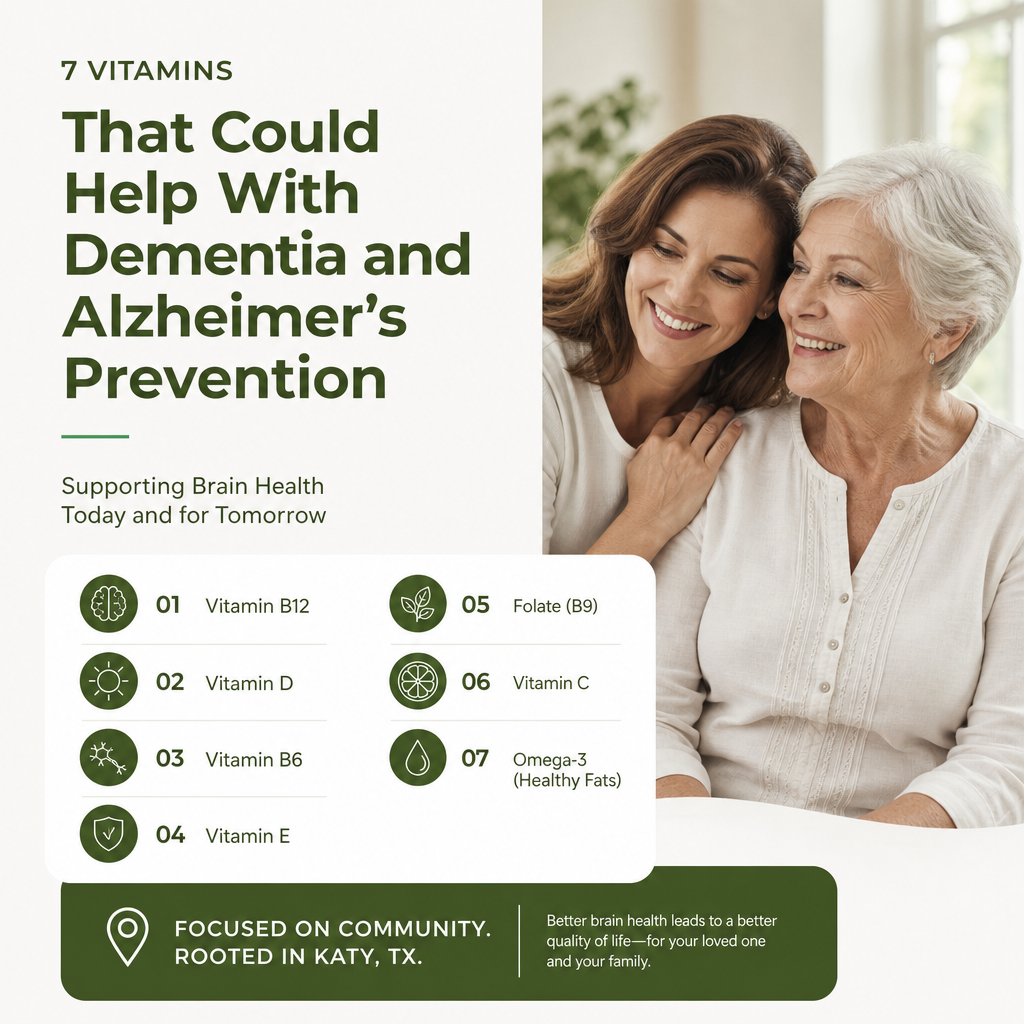
7 Vitamins That Could Help With Dementia and Alzheimer's Prevention in Katy, TX (2026)
A research-backed guide for families navigating cognitive health, supplementation, and the road ahead — written specifically for the Katy, Texas community.
Evergreen Cottages Memory Care · Katy, TX | Last updated: May 2026
Ivan Urrego is an award-winning contributor to Argentum, MALA, and other leading senior living associations, with more than a decade of specialized experience writing for memory care and assisted living communities across the United States. His work helps families in communities like Katy, TX make informed, compassionate decisions during some of the most difficult chapters of their lives.
Quick Summary: If you're a family member in the Katy, TX area researching dementia and Alzheimer's prevention for a loved one, you've likely heard that lifestyle choices matter — but what about specific vitamins? This guide breaks down 7 nutrients backed by peer-reviewed research that may play a meaningful role in protecting the aging brain. We'll explain how each vitamin works, what the science actually says, how much may be appropriate, and how professional memory care communities like Evergreen Cottages factor nutrition into daily care.
📋 Table of Contents
- Why Vitamins Matter for Dementia and Alzheimer's Prevention
- Vitamin D: The Sunshine Nutrient and Brain Health
- B Vitamins (B6, B9, B12): The Homocysteine Connection
- Vitamin E: Antioxidant Defense for the Aging Brain
- Vitamin C: Oxidative Stress and Cognitive Resilience
- Omega-3 Fatty Acids (DHA/EPA): Not a Vitamin, but Vital
- Magnesium: The Overlooked Mineral for Memory
- CoQ10: Mitochondrial Energy and Neuroprotection
- How to Use This Information Safely and Wisely
- Nutrition and Dementia Prevention in Katy, TX: What Families Should Know
- How Evergreen Cottages Integrates Nutrition Into Memory Care
- Frequently Asked Questions
- Conclusion: Small Steps, Big Protection
1. Why Vitamins Matter for Dementia and Alzheimer's Prevention
Emerging research consistently shows that specific nutritional deficiencies are linked to faster cognitive decline, while adequate intake of certain vitamins and nutrients may support brain resilience. Dementia and Alzheimer's prevention is not a single pill or a guaranteed cure — but it is, increasingly, a science that families can act on.
According to the Alzheimer's Association 2025 Facts and Figures report, an estimated 7 million Americans are currently living with Alzheimer's disease, a number projected to nearly double to 13 million by 2050. In Texas alone, over 400,000 individuals aged 65 and older are living with Alzheimer's — making it one of the most critical public health issues facing families in communities like Katy, TX today.
What Is Dementia? (A Quick Definition)
Dementia is an umbrella term — not a single disease — referring to a group of symptoms affecting memory, thinking, and social abilities severely enough to interfere with daily life. Alzheimer's disease is the most common form, accounting for 60–80% of all dementia cases, according to the Alzheimer's Association. Other forms include vascular dementia, Lewy body dementia, and frontotemporal dementia. Understanding this distinction matters when exploring prevention strategies, because different types may respond to different nutritional supports. For more detail, see our post on Alzheimer's Disease or Dementia – What's the Difference?
Can Vitamins Actually Prevent Alzheimer's?
The honest answer is: not definitively, and not alone. No supplement can guarantee prevention. However, a growing body of research — including randomized controlled trials and large longitudinal population studies — suggests that correcting nutritional deficiencies and maintaining optimal levels of certain vitamins can meaningfully reduce risk and slow progression. The key phrase used by leading researchers is "risk reduction," not "cure." That's the frame we use throughout this guide.
Why This Is Especially Relevant for Families in Katy, TX
Katy, TX sits within the greater Houston metropolitan area, a region with one of the fastest-growing senior populations in the country. Many families here are simultaneously managing careers, raising children, and caring for aging parents — often without knowing where to start. Understanding the nutritional side of brain health is one of the most empowering, accessible first steps a family can take. And when professional care becomes the right answer, communities like Evergreen Cottages in Katy are here to provide expert, compassionate support every step of the way.
💡 Key Insight: According to the Alzheimer's Association 2025 Facts and Figures, nearly 1 in 3 seniors dies with Alzheimer's or another dementia — making this one of the most pressing health priorities for families in Katy, TX and across the nation.
2. Vitamin D: The Sunshine Nutrient and Brain Health
Vitamin D deficiency is one of the most common and most consequential nutritional gaps among older adults, and it's increasingly linked to cognitive decline and heightened dementia risk. Multiple large-scale studies show that seniors with low vitamin D levels have significantly higher rates of Alzheimer's disease and other forms of dementia.
The Science Behind Vitamin D and Dementia Prevention
A landmark study published in Neurology (2014) found that adults who were severely deficient in vitamin D had a 122% higher risk of developing Alzheimer's disease compared to those with adequate levels. More recently, a 2023 study in Alzheimer's & Dementia found that regular vitamin D supplementation was associated with a 40% lower incidence of dementia diagnoses in a cohort of more than 12,000 participants tracked over a decade.
Vitamin D receptors are found throughout the brain, particularly in areas associated with memory and cognitive processing. The nutrient appears to help regulate inflammation, support the clearance of amyloid plaques (the protein clusters associated with Alzheimer's), and protect neurons from oxidative damage.
How Much Vitamin D Do Seniors Need?
The National Institutes of Health (NIH) recommends 600–800 IU of vitamin D per day for adults over 70, but many geriatric specialists suggest that 1,000–2,000 IU may be more appropriate for seniors at risk of deficiency — particularly those living in institutional settings or who spend limited time outdoors. Always consult a physician before beginning any supplement regimen.
Vitamin D and the Katy, TX Context
Here's a surprising fact for families in Katy, TX: despite living in one of the sunniest states in the country, many Texas seniors are still vitamin D deficient. Why? Because the extreme heat from May through September pushes older adults indoors during peak sun hours, dramatically reducing natural vitamin D synthesis. At Evergreen Cottages in Katy, outdoor programming is carefully scheduled to take advantage of safe morning sun exposure throughout the year. You can read more about our daily living philosophy on our Daily Living page.
| Vitamin D Level (Blood Test) | Classification | Cognitive Risk Implication |
|---|---|---|
| Below 20 ng/mL | Deficient | Significantly elevated dementia risk |
| 20–29 ng/mL | Insufficient | Moderately elevated risk |
| 30–60 ng/mL | Sufficient | Optimal range for brain health |
| Above 100 ng/mL | Potentially Toxic | Risk of hypercalcemia; consult physician |
3. B Vitamins (B6, B9, B12): The Homocysteine Connection and Dementia Prevention
B vitamins — particularly B6 (pyridoxine), B9 (folate), and B12 (cobalamin) — are among the most extensively studied nutrients for dementia and Alzheimer's prevention, and the evidence for their protective role is compelling. Their primary mechanism involves controlling levels of homocysteine, an amino acid in the blood that, when elevated, is a well-established risk factor for brain atrophy and dementia.
Homocysteine: The Hidden Brain Threat
Homocysteine (pronounced hoh-moh-SIS-teen) is a naturally occurring amino acid produced during normal protein metabolism. When levels remain chronically elevated — a condition called hyperhomocysteinemia — it damages blood vessel walls, promotes inflammation, and accelerates the destruction of brain tissue. The Alzheimer's Association notes that elevated homocysteine levels are associated with up to double the risk of developing Alzheimer's disease.
The good news: B6, B9, and B12 work together to convert homocysteine into harmless byproducts. When any of these three B vitamins is deficient, homocysteine accumulates and becomes toxic to neurons. Studies show that supplementing with all three together produces the greatest protective effect.
The VITACOG Trial: B Vitamins Slow Brain Shrinkage
One of the most important studies in this area is the VITACOG trial, conducted at Oxford University and published in PNAS (2013). Researchers found that high-dose B vitamin supplementation (folic acid, B6, and B12) reduced the rate of brain atrophy in the regions most affected by Alzheimer's disease by an average of 53% over two years in people with mild cognitive impairment. This is a remarkable finding — not a cure, but a significant slowing of the most damaging processes.
Vitamin B12 and Aging: A Particularly Critical Nutrient
Vitamin B12 deficiency is remarkably common in older adults, affecting an estimated 10–30% of seniors over 65, largely because aging reduces the stomach's ability to absorb B12 from food. Symptoms of B12 deficiency can closely mimic dementia — memory loss, confusion, fatigue, and mood changes — making it critical to rule out deficiency before any cognitive decline is attributed to Alzheimer's. Our earlier post on Early Signs of Dementia: The Red Flags to Look Out For covers this overlap in more detail.
| B Vitamin | Brain Health Role | RDA for Seniors (65+) | Best Food Sources |
|---|---|---|---|
| B6 (Pyridoxine) | Neurotransmitter synthesis; homocysteine control | 1.7 mg/day (men); 1.5 mg/day (women) | Chickpeas, tuna, salmon, potatoes |
| B9 (Folate/Folic Acid) | DNA repair; homocysteine methylation | 400 mcg DFE/day | Dark leafy greens, lentils, asparagus |
| B12 (Cobalamin) | Myelin sheath maintenance; neurological function | 2.4 mcg/day (often more needed) | Meat, fish, dairy, fortified cereals |
4. Vitamin E: Antioxidant Defense for the Aging Brain
Vitamin E is a fat-soluble antioxidant that has long been studied for its potential role in dementia and Alzheimer's prevention, particularly because it neutralizes free radicals — unstable molecules that damage brain cells through a process called oxidative stress. While results across clinical trials have been mixed, the overall pattern of evidence suggests meaningful benefit, especially from dietary (food-based) sources.
How Oxidative Stress Connects to Alzheimer's Disease
Oxidative stress (the imbalance between free radicals and the body's antioxidant defenses) is one of the earliest and most consistent features found in Alzheimer's brain tissue. Researchers at the National Institute on Aging have observed elevated markers of oxidative damage in the brains of Alzheimer's patients well before symptoms appear, suggesting it plays a role in the disease's initiation — not just its progression.
Vitamin E, especially in its natural tocopherol and tocotrienol forms, helps stabilize neuronal cell membranes and protect polyunsaturated fatty acids in the brain from oxidative damage. This is particularly important because the brain is one of the most fat-rich organs in the body and highly vulnerable to oxidative attack.
What the Research Actually Says
A major 2002 study published in JAMA found that higher dietary intake of vitamin E was associated with a 67% reduction in Alzheimer's risk among older adults without the APOE ε4 gene (a genetic risk factor). However, high-dose synthetic vitamin E supplements have shown less consistent results, and some studies suggest risks at very high doses. The current scientific consensus favors obtaining vitamin E through whole foods and moderate supplementation rather than megadoses. See our article on The Best Diets to Support Dementia and Alzheimer's Patients for practical meal guidance.
Best Food Sources of Vitamin E for Seniors
- Almonds — 7.3 mg per ounce (one of the richest sources)
- Sunflower seeds — 7.4 mg per ounce
- Wheat germ oil — 20 mg per tablespoon
- Spinach and broccoli — excellent sources of natural gamma-tocopherol
- Avocado — rich in tocotrienols and brain-healthy monounsaturated fats
⚠️ Important Safety Note: High-dose vitamin E supplements (above 400 IU/day) may increase the risk of bleeding, particularly in seniors taking blood thinners like warfarin. Always discuss supplementation with a physician before starting.
5. Vitamin C: Oxidative Stress and Cognitive Resilience
Vitamin C (ascorbic acid) is the body's most abundant water-soluble antioxidant and plays a critical role in protecting the brain from oxidative damage and inflammation — two of the central mechanisms driving Alzheimer's disease and other dementias. Studies consistently show that seniors with higher blood levels of vitamin C perform better on cognitive tests and have lower rates of dementia diagnosis.
Vitamin C Concentration in the Brain
Here's a fascinating fact: the brain concentrates vitamin C at levels up to 15 times higher than in the bloodstream, suggesting the brain places extremely high priority on this nutrient. Vitamin C is required for the synthesis of several key neurotransmitters — including norepinephrine and serotonin — and plays a direct role in myelin maintenance and neurogenesis (the creation of new brain cells).
A 2020 review published in Nutrients found that vitamin C plasma levels were significantly lower in patients with cognitive impairment and dementia compared to age-matched healthy controls. Specifically, patients with Alzheimer's disease had 32–46% lower plasma vitamin C levels than healthy older adults.
Vitamin C and the MIND Diet Connection
The MIND diet — a hybrid of the Mediterranean and DASH diets specifically designed for brain health — emphasizes high intake of vitamin C-rich foods like berries, leafy greens, and brightly colored vegetables. A study from Rush University Medical Center found that people who closely followed the MIND diet had a 53% lower rate of Alzheimer's disease compared to those who didn't follow it, with vitamin C-rich foods among the most beneficial components.
For families in Katy, TX wondering how diet translates into daily care: at Evergreen Cottages, our dietary programs draw from MIND diet principles to ensure residents receive brain-supportive nutrition every day. See more at our Dementia and Alzheimer's Diet Guide.
Recommended Intake and Food Sources
The NIH recommends 90 mg/day for men and 75 mg/day for women — amounts easily achievable through diet. Top sources include:
- Kiwifruit (64 mg per fruit)
- Bell peppers (95 mg per half cup, raw)
- Strawberries (49 mg per half cup)
- Broccoli (51 mg per half cup, cooked)
- Citrus fruits: oranges, grapefruit, tangerines
6. Omega-3 Fatty Acids (DHA/EPA): Not a Vitamin, but Vital for Dementia Prevention
Omega-3 fatty acids are technically not vitamins — they're essential fatty acids — but no discussion of dementia and Alzheimer's prevention would be complete without them. DHA (docosahexaenoic acid) and EPA (eicosapentaenoic acid) are the two omega-3 forms most relevant to brain health, and the evidence for their cognitive benefits is among the strongest in the field of nutritional neuroscience.
Why DHA Is So Critical for the Brain
DHA makes up approximately 30–40% of the fatty acids in the brain's gray matter — the cognitive processing center responsible for memory, language, and judgment. It's a structural component of neuronal cell membranes and plays a key role in how neurons communicate, fire, and regenerate. Without adequate DHA, cognitive decline accelerates at both the cellular and functional levels.
EPA, while less concentrated in the brain, has powerful anti-inflammatory properties that help counteract the neuroinflammation now recognized as a central driver of Alzheimer's pathology. Together, DHA and EPA represent a one-two punch for brain protection.
Clinical Trial Evidence for Omega-3s and Cognitive Health
A 2022 meta-analysis of 22 randomized controlled trials published in Ageing Research Reviews found that omega-3 supplementation produced significant improvements in cognitive function in adults with mild cognitive impairment (MCI) — one of the most common precursors to Alzheimer's disease. In subjects without existing cognitive impairment, regular omega-3 consumption was associated with a 35% reduction in the risk of developing dementia over 10 years, according to data from the Framingham Heart Study (National Heart, Lung, and Blood Institute).
Getting Enough Omega-3s: Dietary vs. Supplement Sources
The American Heart Association recommends eating fatty fish at least twice per week. However, many older adults — especially those with reduced appetite or dental issues common in advanced age — struggle to meet this target through diet alone. Fish oil supplements (typically 1,000–3,000 mg combined DHA+EPA per day) are a well-studied alternative. Plant-based sources like flaxseeds and walnuts provide ALA, which the body converts to DHA/EPA at only about 5–10% efficiency, making fish or algae-based omega-3 supplements the more reliable choice for seniors.
| Source | DHA + EPA Content | Notes |
|---|---|---|
| Wild-caught salmon (3 oz) | ~1,800 mg | Best food source; also provides protein and B12 |
| Sardines in water (3 oz) | ~1,100 mg | Affordable, widely available in Katy grocery stores |
| Mackerel (3 oz) | ~2,000 mg | High in omega-3; watch sodium in canned versions |
| Fish oil supplement (standard capsule) | 500–1,000 mg | Quality varies; look for third-party certified brands |
| Algae-based omega-3 supplement | 400–800 mg DHA | Best plant-based option; suitable for vegetarians |
7. Magnesium: The Overlooked Mineral for Memory and Dementia Prevention
Magnesium is one of the most underappreciated nutrients in the conversation about dementia and Alzheimer's prevention — yet it's critical for over 300 enzymatic reactions in the body, including many directly involved in neurotransmitter function, synaptic plasticity (the brain's ability to form and retain memories), and the regulation of inflammation. Surveys consistently show that a majority of Americans — including most seniors — don't get enough magnesium from diet alone.
Magnesium and the Brain: What the Science Shows
A 2023 study published in the European Journal of Nutrition, involving 6,000 participants aged 40–73 from the UK Biobank, found that people with higher dietary magnesium intake had larger brain volumes and less white matter damage — two biomarkers closely associated with lower dementia risk. Specifically, those who consumed 550 mg/day of magnesium had brains approximately one year younger in biological age compared to those consuming 350 mg/day.
Magnesium also plays a key role in regulating the NMDA receptor — a brain receptor central to learning and memory — and helps protect neurons from excitotoxicity (the harmful overstimulation of neurons, a known contributor to Alzheimer's neurodegeneration).
Magnesium-L-Threonate: A Newer, Brain-Targeted Form
Standard magnesium supplements (oxide, citrate, glycinate) have limited ability to cross the blood-brain barrier. Magnesium-L-threonate, developed by researchers at MIT, was specifically designed to increase magnesium levels in brain tissue and has shown particularly promising results in both animal studies and early human trials for improving memory and cognitive flexibility. While not yet definitively proven in large-scale human trials for dementia prevention, it represents an exciting frontier in nutritional neuroscience.
Best Food Sources of Magnesium
- Pumpkin seeds — 156 mg per ounce (the highest of any food)
- Black beans — 120 mg per half cup
- Spinach (cooked) — 78 mg per half cup
- Almonds — 80 mg per ounce
- Avocado — 44 mg per half fruit
- Dark chocolate (70%+) — 64 mg per ounce (great news for seniors!)
💡 Katy, TX Context: Many popular fast-food and processed foods common in the greater Houston area are essentially devoid of magnesium. Seniors eating primarily processed diets — which is more common than families realize — may be significantly deficient without knowing it. A simple blood magnesium test at a Katy-area physician can identify this quickly.
8. CoQ10: Mitochondrial Energy and Neuroprotection
Coenzyme Q10 (CoQ10) is a naturally occurring compound found in virtually every cell of the human body, playing an essential role in energy production within the mitochondria — the cellular "power plants." While technically a coenzyme rather than a vitamin, CoQ10 behaves like a fat-soluble antioxidant and has gained significant scientific attention for its potential role in protecting brain cells from the energy depletion and oxidative stress that characterize Alzheimer's disease.
Why CoQ10 Levels Decline With Age
The body's natural ability to synthesize CoQ10 begins declining after age 40, and continues to drop steadily with each decade. By the time a person reaches their 70s, CoQ10 levels in brain tissue may be 40–50% lower than in younger adults, according to research published in the Journal of the American Aging Association. Certain medications commonly prescribed to seniors — particularly statins (cholesterol-lowering drugs) — further deplete CoQ10, creating a compounding deficit.
CoQ10 and Alzheimer's Disease: The Mitochondrial Connection
Mitochondrial dysfunction is now recognized as one of the earliest and most significant events in Alzheimer's disease development. The neurons in brain regions most affected by Alzheimer's — particularly the hippocampus and temporal cortex — require enormous amounts of energy and are especially sensitive to mitochondrial failure. Research from Columbia University has shown that restoring CoQ10 levels in aging brain tissue can reduce oxidative damage, improve mitochondrial efficiency, and slow the accumulation of amyloid beta plaques associated with Alzheimer's.
Supplementation Considerations for Seniors
Most research on CoQ10 supplementation has used doses between 100–300 mg/day. Ubiquinol (the reduced form of CoQ10) is significantly better absorbed than the more common ubiquinone form and is particularly recommended for adults over 60. CoQ10 is generally well-tolerated with minimal side effects, though it can interact with blood-thinning medications. As always, physician guidance is essential before adding any new supplement.
9. How to Use This Information Safely and Wisely
Knowledge about vitamins and brain health is empowering — but it's only valuable when applied thoughtfully and safely. Here's a practical framework for families in Katy, TX who want to act on this information without overstepping the bounds of what the current science supports.
Start With a Blood Panel, Not a Shopping Cart
Before purchasing any supplements, the most valuable first step is a comprehensive blood panel that checks levels of vitamin D, B12, folate, magnesium, and a homocysteine test. Many nutritional deficiencies are silent — your loved one may feel "fine" while harboring significant gaps that are quietly affecting brain function. A simple blood test, available at any primary care office or urgent care clinic in Katy, TX, gives you a data-driven starting point rather than guesswork.
Work With a Physician Who Understands Geriatric Nutrition
Not all physicians are equally well-versed in geriatric nutrition. If your loved one's primary care doctor dismisses nutritional questions, consider requesting a referral to a geriatrician or a registered dietitian specializing in older adults. The Houston Medical Center — easily accessible from Katy — has world-class geriatric specialists who can provide personalized guidance. The ALFA (Assisted Living Federation of America) and LeadingAge both publish guidelines supporting integrated nutritional care as part of holistic dementia risk management in senior populations.
Prioritize Food First, Supplements Second
The best delivery mechanism for brain-protective nutrients is always whole food, not pills. Real food delivers nutrients in the forms the body was designed to process, alongside cofactors and phytonutrients that enhance absorption and synergistic function. Supplements are an important safety net for deficiencies that can't be corrected through diet alone — particularly B12 absorption issues common in older adults — but they are not a replacement for nutritious eating. Our guide on The Best Diets to Support Dementia and Alzheimer's Patients is an excellent companion resource.
The Role of Professional Memory Care in Nutritional Support
For families whose loved ones are already experiencing cognitive challenges, managing nutrition at home can become overwhelming. Ensuring a memory-impaired senior is eating adequately, taking the right supplements at the right time, and staying properly hydrated is a significant caregiving burden. This is one area where professional memory care — like the program at Evergreen Cottages in Katy, TX — provides genuine, daily relief. Our care teams ensure each resident receives nutritionally balanced meals, appropriate supplementation as directed by physicians, and consistent monitoring of dietary intake.
10. Nutrition and Dementia Prevention in Katy, TX: What Families Should Know
Katy, TX is a rapidly growing suburban community with a diverse population and a wide range of resources for senior health — but navigating those resources can be overwhelming for adult children juggling their own busy lives. Here's what families in the greater Katy area should specifically know about accessing nutritional support for aging loved ones.
Local Healthcare Access in Katy for Senior Nutritional Health
Katy is well-served by the Houston Methodist West Hospital on Westheimer Parkway, Memorial Hermann Katy Hospital, and a growing network of primary care and specialty clinics. Families seeking geriatric nutritional assessments can start with their loved one's primary care physician and request referrals to registered dietitians through these hospital systems. Houston's Texas Medical Center — about 30 miles east of Katy — also offers specialized memory clinics at institutions like UTHealth and Baylor College of Medicine.
The Grocery Landscape in Katy: Finding Brain-Healthy Foods
Katy residents have excellent access to brain-healthy groceries at local H-E-B, Kroger, Whole Foods (at La Centerra), and Central Market stores. Many of the foods discussed in this guide — fatty fish, leafy greens, nuts, seeds, and berries — are widely available year-round in Katy's grocery ecosystem. For seniors with mobility limitations, grocery delivery services including H-E-B Curbside and Instacart are accessible throughout the Katy area.
When Diet and Supplements Are No Longer Enough
It's important for families to understand that while nutritional strategies can meaningfully reduce risk and potentially slow progression in early stages, there comes a point in the Alzheimer's and dementia journey when specialized professional care becomes the most important protective factor — far more than any individual supplement. According to the NIC (National Investment Center) 2025 Consumer Research Report, families who delay transitioning a loved one to professional memory care often report significant increases in caregiver stress, missed nutritional management, and preventable health complications.
Evergreen Cottages, located right here in Katy, TX, provides a warm, home-like environment with expert memory care, structured programming, and nutritional oversight that simply cannot be replicated at home for someone living with moderate-to-advanced dementia. Learn more about the full continuum of care options in our area at our Complete Guide to Retirement Living in Katy, Texas.
11. How Evergreen Cottages Integrates Nutrition Into Memory Care in Katy, TX
At Evergreen Cottages in Katy, TX, we believe that nutrition isn't a side consideration — it's a cornerstone of quality memory care. Every aspect of our culinary and care programming is designed with brain health in mind, informed by the latest research in nutritional neuroscience and guided by our compassionate, experienced team.
Our Dietary Philosophy: Brain-Supportive Meals Every Day
Our kitchen team prepares fresh, balanced meals that prioritize brain-protective nutrients — including the vitamins and minerals discussed throughout this guide. Menus incorporate omega-3-rich fish twice weekly, dark leafy greens daily, colorful antioxidant-rich vegetables, and minimally processed whole foods. We avoid the ultra-processed, high-sodium, high-sugar items that research has linked to accelerated cognitive decline and increased dementia risk. To learn more about our approach to diet and dementia care, visit our resource on Alzheimer's and Diet.
Personalized Supplementation Support
For residents whose physicians have prescribed specific supplements — vitamin D, B12, magnesium, CoQ10, or omega-3s — our care team manages administration as part of each resident's personalized care plan. We coordinate with prescribing physicians and family members to ensure supplements are given consistently, at the right time and dose, without the confusion or inconsistency that so often happens when cognitively impaired seniors manage their own medications at home.
Hydration: The Nutritional Factor Families Often Miss
One of the most overlooked aspects of brain nutrition in seniors isn't a vitamin at all — it's water. Chronic dehydration is epidemic among older adults and directly impairs cognitive function, accelerates confusion, and can trigger or worsen dementia-like symptoms. At Evergreen Cottages, we implement structured hydration protocols throughout the day, ensuring every resident receives adequate fluid intake. Our guide on Hydration for Seniors: The Complete 2026 Guide offers in-depth information for home caregivers as well.
A Community Built on Compassion and Expertise
Our team at Evergreen Cottages includes licensed nurses, certified dementia practitioners, and dedicated caregivers who receive ongoing training in the latest best practices for Alzheimer's and memory care. We understand that placing a loved one in memory care is one of the hardest decisions a family ever makes — and we honor that difficulty every single day by showing up with expertise, warmth, and unwavering commitment. We'd love to show you our community in person. Our team page introduces the dedicated professionals who make Evergreen Cottages a true home.
12. Frequently Asked Questions About Vitamins and Dementia Prevention
These are the questions families in Katy, TX most commonly ask when researching dementia and Alzheimer's prevention through nutrition. Each answer is designed to give you clear, direct information you can act on today.
Can taking vitamins actually prevent Alzheimer's disease?
No vitamin can guarantee prevention, but research consistently shows that correcting deficiencies in vitamin D, B12, B6, folate, and omega-3s can meaningfully reduce risk and slow early cognitive decline. The term researchers use is "risk reduction" — not cure. Vitamins are one important layer of a broader prevention strategy that includes exercise, sleep, social engagement, and medical care.
Which vitamin deficiency is most linked to dementia?
Vitamin B12 deficiency is the most commonly linked — and most easily reversible — nutritional cause of dementia-like symptoms. Vitamin D deficiency is a close second and is directly correlated with increased Alzheimer's risk in multiple large-scale studies. Both are highly prevalent among seniors over 65 and can be identified with a simple blood test ordered by any physician in Katy, TX.
Is it safe for seniors to take multiple vitamins together?
Many combinations are safe — but not all. Interactions between supplements and common senior medications (blood thinners, statins, blood pressure drugs) are real and can be serious. Always review any new supplement plan with a physician or pharmacist before starting. A geriatric medicine specialist or integrative medicine physician at any major Katy-area hospital system is the ideal resource for this conversation.
At what age should someone start taking brain-protective vitamins?
The research suggests that the earlier, the better — with some studies showing preventive benefit beginning as early as midlife (40s–50s). Alzheimer's disease begins in the brain 15–20 years before symptoms appear, according to the Alzheimer's Association. Families in Katy, TX whose parents are in their 60s or 70s without symptoms should still consider nutritional optimization as a meaningful prevention strategy.
What if my loved one already has dementia — do vitamins still help?
Some evidence suggests that B vitamins and omega-3s can slow progression even in people already diagnosed with mild cognitive impairment or early-stage Alzheimer's — particularly when vitamin deficiencies are present. However, the benefit diminishes significantly in more advanced stages. At this point, the most impactful intervention is often specialized professional memory care, not supplementation alone. Evergreen Cottages in Katy offers expert support for every stage of the journey.
Does the Texas heat affect vitamin D levels in seniors in Katy?
Paradoxically, yes. Despite abundant sunshine, seniors in Katy, TX often avoid outdoor exposure during peak heat hours (10 AM–4 PM), dramatically limiting natural vitamin D synthesis. Sunscreen use — while essential for skin cancer prevention — also blocks UV rays needed for vitamin D production. Many Katy-area seniors need
Related Post