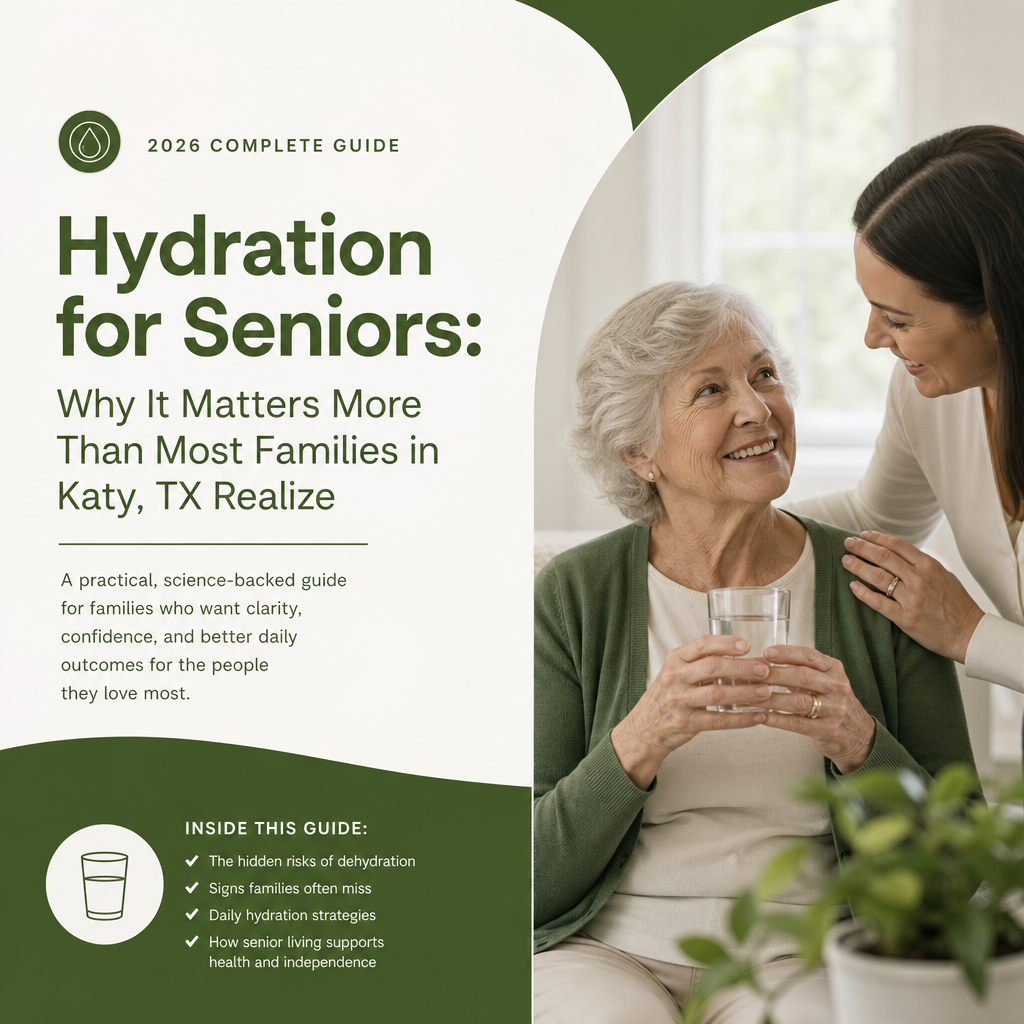
Hydration for Seniors: Why It Matters More Than Most Families in Katy, TX Realize (2026 Complete Guide)
By Ivan Urrego | Last updated: May 2026 | Evergreen Cottages Blog
What This Guide Covers
Hydration for seniors is one of the most underestimated factors in overall health, cognitive function, and fall prevention — yet most older adults in Katy, TX and across the country are chronically dehydrated without ever knowing it. This complete 2026 guide explains why aging changes the body's relationship with water, what the warning signs look like, how dehydration specifically worsens dementia and Alzheimer's symptoms, and exactly what families and professional caregivers can do to protect the people they love most.
Table of Contents
- Why Hydration for Seniors Is a Silent Health Crisis
- How Aging Changes the Body's Relationship With Water
- Warning Signs of Dehydration in Older Adults
- The Dangerous Link Between Dehydration and Dementia
- Why Katy, TX Heat Makes Hydration for Seniors Even More Critical
- How Much Water Do Seniors Actually Need Each Day?
- Dehydration, UTIs, and What Families Must Know
- Hydrating Foods That Support Senior Health
- Practical Hydration Strategies That Actually Work for Seniors
- How Medications Affect Hydration in Older Adults
- How Memory Care Communities Like Evergreen Cottages Manage Hydration
- Frequently Asked Questions About Hydration for Seniors
- Conclusion: Small Habits, Big Protection for Your Loved One
If you are caring for an aging parent or spouse in Katy, TX — whether at home or exploring professional memory care or assisted living options — there is one topic that rarely makes it onto the priority list until something goes wrong: hydration for seniors. That oversight can be costly. Dehydration is one of the leading causes of emergency hospitalizations among adults over 65 in the United States, and it quietly accelerates cognitive decline, worsens Alzheimer's and dementia symptoms, and significantly increases fall risk.
The problem is invisible at first. An older adult does not feel thirsty the way a younger person does. Their body's thirst mechanism — the internal alarm that tells the brain "we need water" — becomes less sensitive with age. By the time a senior reports being thirsty, they may already be meaningfully dehydrated. And in the summer heat that defines life in Katy and the greater Houston metro area, that physiological gap between need and awareness can become genuinely dangerous.
This guide is written for you — the adult child, the spouse, the concerned neighbor who wants to understand the real stakes and walk away with practical steps. We will cover the science, the warning signs, the Katy-specific context, and how Evergreen Cottages approaches hydration as part of our daily care commitment.
Why Hydration for Seniors Is a Silent Health Crisis
Dehydration in older adults is not a minor inconvenience — it is a documented medical emergency that is frequently misdiagnosed, underpublicized, and preventable. Hydration for seniors directly affects every major organ system in the body, from the kidneys and heart to the brain and digestive tract.
According to the Centers for Disease Control and Prevention (CDC), adults aged 65 and older account for a disproportionate percentage of dehydration-related hospital admissions each year. A 2023 study published in the Journal of the American Geriatrics Society estimated that up to 40% of community-dwelling older adults are in a state of chronic mild dehydration at any given time — meaning they are consistently consuming less fluid than their bodies need without showing classic thirst signals.
Why This Is a Crisis, Not a Nuisance
The word "crisis" may feel strong, but consider the downstream effects: dehydration contributes to urinary tract infections (UTIs), kidney stones, constipation, pressure ulcers, medication toxicity, cognitive confusion, dizziness, falls, and hospitalizations. For a senior already managing memory loss or dementia, each of these complications can represent a serious setback in their overall trajectory.
The Prevention Gap
What makes this a crisis is not just the prevalence — it is the preventability. Adequate daily fluid intake is inexpensive, non-pharmaceutical, and entirely achievable with the right systems in place. Yet most families caring for aging loved ones at home in Katy, TX are not tracking fluid intake at all, and many seniors living independently are not either. That gap between what is possible and what is happening is exactly what this guide aims to close.
Why Families Often Miss It
Families miss dehydration in seniors for understandable reasons. The signs — mild confusion, fatigue, constipation, dry mouth — are easy to attribute to aging itself or to side effects of a new medication. Because older adults rarely complain of thirst, caregivers do not receive the obvious signal they would from a child or younger adult. The result is a slow, cumulative deficit that builds quietly before it erupts into something acute.
Evergreen Cottages Perspective: At Evergreen Cottages in Katy, TX, our care team monitors fluid intake as part of every resident's daily care plan — not just when someone looks unwell. We treat hydration as a vital sign, not an afterthought.
How Aging Changes the Body's Relationship With Water
Understanding hydration for seniors requires understanding how the aging body fundamentally changes its relationship with water — because the rules that apply at 40 simply do not apply at 80.
Decreased Total Body Water
The human body is roughly 60% water in young adulthood. By age 75, that percentage has declined to approximately 50–55% in women and 45–50% in men, according to research published in the American Journal of Clinical Nutrition. This means older adults begin with a smaller reservoir, have less physiological buffer when fluid intake drops, and reach a state of meaningful dehydration more quickly than their younger counterparts.
Blunted Thirst Response
The hypothalamus — the brain structure responsible for triggering thirst — becomes less sensitive with age. This is sometimes called hypodipsia (reduced sensation of thirst), and it is one of the most well-documented and dangerous changes in aging physiology. In younger adults, even a 1–2% drop in body water triggers a strong, clear thirst sensation. In older adults, that same deficit may produce no noticeable thirst at all, or only a vague sense of dryness long after the deficit has accumulated.
Reduced Kidney Efficiency
Healthy kidneys conserve water when the body needs it. Aging kidneys are less effective at this task — they are more likely to allow fluid to be lost through urine even when the body would benefit from retaining it. This means that even when an older adult drinks an adequate volume of fluid, their kidneys may excrete more of it than a younger person's would. The net result is that the effective hydration benefit per glass of water decreases with age.
Mobility and Access Barriers
Beyond pure physiology, many older adults limit their fluid intake deliberately — because getting up to use the bathroom requires effort, because incontinence is an embarrassing concern, or because mobility limitations make reaching a glass of water more challenging. These behavioral patterns compound the physiological changes above, creating a perfect storm for chronic dehydration.
| Physiological Change | Effect on Hydration | Risk Level |
|---|---|---|
| Decreased total body water | Smaller fluid reserve; faster deficit accumulation | High |
| Blunted thirst mechanism | Older adults don't feel thirsty even when dehydrated | Very High |
| Reduced kidney efficiency | More fluid lost in urine; less retained | Moderate–High |
| Medication side effects | Diuretics, laxatives, and others increase fluid loss | High |
| Mobility / incontinence concerns | Intentional fluid restriction to avoid bathroom trips | Moderate |
Warning Signs of Dehydration in Older Adults
Recognizing dehydration in seniors requires knowing what to look for beyond thirst — because thirst is often the last signal that arrives, if it arrives at all. Families in Katy, TX should learn to treat the following signs as potential red flags warranting immediate attention.
Physical Warning Signs
The most observable physical signs of dehydration in older adults include:
- Dark yellow or amber urine — Pale, straw-colored urine indicates good hydration; dark urine indicates concentrated waste and fluid deficit
- Dry mouth and cracked lips — Particularly noticeable in the morning or after long periods without drinking
- Reduced skin elasticity (skin turgor) — Gently pinch the skin on the back of the hand; if it stays "tented" rather than snapping back, dehydration may be present
- Sunken eyes — A visible sign of significant fluid deficit
- Rapid or weak pulse — Dehydration reduces blood volume, which the heart compensates for by beating faster but less forcefully
- Dizziness or lightheadedness — Especially when standing up (orthostatic hypotension), which dramatically increases fall risk
- Constipation — The colon pulls water from stool when the body is dehydrated, leading to hard, difficult-to-pass bowel movements
Cognitive and Behavioral Warning Signs
This category is the one most commonly missed — and the most dangerous in seniors with Alzheimer's or dementia. Dehydration mimics and amplifies cognitive decline:
- Sudden increase in confusion or disorientation
- Unusual irritability, agitation, or mood changes
- Decreased alertness or unusual drowsiness during the day
- Difficulty concentrating on familiar tasks
- Speech that seems more slurred or slower than usual
Important: In seniors with Alzheimer's or dementia, a sudden unexplained worsening of cognitive symptoms should always prompt caregivers to check hydration status and rule out a UTI — two of the most common reversible causes of acute confusion. Learn more about UTIs in seniors and how they connect to cognitive changes.
When to Seek Emergency Help
Severe dehydration in a senior is a medical emergency. Call 911 or go to the nearest emergency room if your loved one is unable to keep fluids down, is extremely confused or unresponsive, has not urinated in more than 8 hours, or has a rapid heartbeat combined with severe dizziness. In the Katy, TX area, Houston Methodist Katy Hospital and Memorial Hermann Katy Hospital are both equipped to treat dehydration emergencies.
The Dangerous Link Between Dehydration and Dementia
For families managing a loved one with Alzheimer's disease or another form of dementia, hydration for seniors takes on an added layer of urgency. The relationship between dehydration and cognitive impairment is bidirectional — dehydration worsens dementia symptoms, and dementia makes it harder for a person to recognize and communicate thirst.
How Dehydration Worsens Cognitive Symptoms
The brain is approximately 73% water. Even mild dehydration — a loss of just 1–2% of total body water — has been shown to impair memory recall, attention, psychomotor speed, and executive function in healthy adults. For someone already experiencing neurological decline from Alzheimer's or another dementia, those impairments stack on top of an already compromised system. What might look like a "bad day" or a "step backward" in dementia progression may in fact be a treatable dehydration episode.
The Alzheimer's Association 2025 Facts and Figures report highlights physical health management — including hydration and nutrition — as a key component of comprehensive dementia care planning, noting that unmanaged comorbid conditions can dramatically accelerate behavioral and cognitive symptom progression.
Why People With Dementia Are at Greater Risk
People living with Alzheimer's and dementia face multiple compounding dehydration risks that go beyond normal aging:
- Communication barriers: They may not be able to express thirst verbally, especially in moderate to advanced stages
- Forgetting to drink: A person with memory loss may simply forget to drink between meals, even if water is in front of them
- Difficulty recognizing cups or glasses: Visual-spatial impairments associated with some dementias can make it hard to identify or use drinking vessels
- Swallowing difficulties (dysphagia): Dysphagia is common in advanced dementia and can make drinking liquids uncomfortable or unsafe
- Agitation related to bathroom anxiety: Some dementia patients resist drinking because they fear incontinence accidents
Dehydration and Sundowning
If you have noticed that your loved one's confusion and agitation tend to peak in the late afternoon and early evening — a phenomenon known as sundowning — dehydration is one of the contributing physiological factors worth addressing. Ensuring your loved one has been adequately hydrated throughout the day may help reduce the severity of sundowning episodes.
Hydration and Brain Health Over the Long Term
Emerging research suggests that chronic mild dehydration may contribute to the formation of amyloid plaques — the protein clusters associated with Alzheimer's disease. While this relationship requires more longitudinal study, it adds weight to the argument that consistent lifelong hydration is a form of dementia prevention, not just symptom management. For more on proactive brain health strategies, explore our guide on 7 Ways to Decrease Your Risk of Alzheimer's.
Why Katy, TX Heat Makes Hydration for Seniors Even More Critical
Living in Katy, TX comes with many gifts — a vibrant community, excellent healthcare infrastructure, beautiful parks along Buffalo Bayou's western tributaries, and a genuine sense of small-town warmth inside a growing city. It also comes with one undeniable challenge: heat. And for seniors, heat and dehydration are a dangerous partnership that families here need to understand specifically.
The Katy Climate Reality
Katy sits in the humid subtropical climate zone of Southeast Texas. Average summer high temperatures regularly exceed 95°F from June through September, and the combination of heat and high humidity means that the body's primary cooling mechanism — sweat evaporation — is significantly less efficient. Seniors lose fluid through sweating even when they are sitting still in the shade. Indoors without adequate air conditioning, the risk compounds rapidly.
According to the Texas Department of State Health Services, heat-related illness disproportionately affects adults aged 65 and older, who are less physiologically efficient at regulating body temperature and less likely to recognize when they are overheating. In Harris County — which encompasses Katy — heat-related hospitalizations spike significantly each July and August.
Heat, Humidity, and Fluid Loss
In high-humidity environments like Katy's summer, the body continues to sweat even when that sweat cannot evaporate effectively. This means seniors can be losing meaningful amounts of fluid without the visible cue of dripping sweat that might prompt them or their caregivers to hydrate. The fluid loss is invisible; the dehydration is real.
Air Conditioning and Indoor Dehydration
Here is an important counterintuitive point: air-conditioned environments — like the indoor spaces where many Katy seniors spend most of the summer — are actually dehydrating environments. Air conditioning removes humidity from the air, which dries out mucous membranes and increases insensible fluid loss (fluid lost through respiration and skin evaporation without sweating). A senior spending the day in a well-air-conditioned home may still be quietly losing more fluid than they are replacing.
Katy, TX Tip: During the months of June through September in Katy, consider increasing your loved one's daily fluid intake target by 8–16 oz above baseline recommendations — even if they are spending most of their time indoors. Consult with their physician for personalized guidance.
Outdoor Activities and Field Trips
Many seniors in the Katy area enjoy morning walks at Mary Jo Peckham Park, attending community events at the Katy Mills area, or simply sitting on a porch during what feels like a "cooler" morning. Even 20–30 minutes of outdoor activity at 8 a.m. in a Katy summer can produce meaningful fluid loss. Families and caregivers should establish a habit of offering water before, during, and after any outdoor time — not waiting for a senior to ask.
How Much Water Do Seniors Actually Need Each Day?
One of the most common questions families ask is: how much water does my loved one actually need? The answer involves more nuance than the familiar "eight glasses a day" advice — and for seniors specifically, the calculation matters.
The Standard Recommendation
The National Academies of Sciences, Engineering, and Medicine recommends a total daily fluid intake of approximately 2.7 liters (91 oz) for women and 3.7 liters (125 oz) for men from all sources — including beverages and food. This is total fluid, not just water consumed from a glass. For most older adults in typical indoor conditions, a practical target is often cited as 6–8 cups (48–64 oz) of fluid per day from beverages, with the remainder coming from food.
Factors That Increase the Need
These baseline recommendations increase with:
- High heat or humidity (such as Katy, TX summers)
- Physical activity or exercise
- Fever or active illness
- High-protein diets
- Use of diuretic medications
- Diarrhea or vomiting
- High-sodium diets
Factors That May Require Adjustment
Certain medical conditions require fluid restriction rather than increased intake — including congestive heart failure (CHF), certain kidney diseases, and some fluid-retention conditions. It is essential that families work with the senior's primary care physician to establish a personalized fluid intake target. Never dramatically increase fluid intake for a medically complex senior without medical guidance.
| Situation | Daily Fluid Target (Beverages) | Notes |
|---|---|---|
| Healthy senior, indoor, temperate | 48–64 oz (6–8 cups) | Baseline recommendation |
| Katy, TX summer (outdoor activity) | 64–80 oz (8–10 cups) | Increase for heat and humidity |
| Senior with active UTI or kidney stones | 80–96 oz (10–12 cups) | Physician guidance required |
| Senior with CHF or kidney disease | Restricted (physician-set limit) | Do NOT increase without medical direction |
| Senior with fever or diarrhea | Increase by 8–16 oz per degree of fever | Medical monitoring recommended |
Practical Daily Intake Planning
Rather than asking a senior to track ounces — which is unrealistic — the most effective approach is to build hydration into daily routine anchors: a glass of water with each meal, a glass with each medication administration, a glass mid-morning, and a glass mid-afternoon. For most seniors, that structure alone achieves 40–48 oz before accounting for soups, fruits, and other hydrating foods. The goal is a system, not a math problem.
Dehydration, UTIs, and What Families Must Know
If there is one specific dehydration complication that families of seniors in Katy, TX need to understand in depth, it is the connection between poor fluid intake and urinary tract infections (UTIs) — because this connection is both extremely common and extremely consequential, especially for seniors with Alzheimer's or dementia.
Why Dehydration Causes UTIs
The urinary tract is naturally protected from bacterial infection by the regular flushing action of urine flow. When a senior is dehydrated, they urinate less frequently and in smaller volumes. Bacteria — most often Escherichia coli — that would otherwise be flushed out of the urethra and bladder are allowed to linger, multiply, and ascend, eventually causing an infection. Concentrated, low-volume urine is an ideal breeding ground for bacterial growth.
UTI Symptoms in Seniors Are Often Invisible
In younger adults, UTIs typically present with burning urination, urgency, and pelvic discomfort. In older adults — and especially in those with dementia — these "typical" symptoms are frequently absent. Instead, the infection manifests as:
- Sudden, dramatic worsening of confusion or disorientation
- Agitation, restlessness, or unusual combativeness
- New-onset incontinence in someone previously continent
- Falls without an obvious mechanical cause
- Fever (though this is also often absent in seniors)
Critical point for dementia families: A sudden change in your loved one's behavior or cognitive status should prompt immediate evaluation for a UTI — even before assuming cognitive decline has progressed. This is one of the most important things families can learn. Read our full guide on Understanding and Managing UTI in Seniors.
Prevention Through Hydration
The single most effective non-pharmaceutical strategy for preventing UTIs in older adults is consistent, adequate fluid intake. Research published in JAMA Internal Medicine found that increasing daily fluid intake by 1.5 liters in women with recurrent UTIs reduced the average number of UTIs per year by nearly 50%. For seniors in Katy, TX — especially women, who account for a disproportionate share of UTI diagnoses — this is a powerful, actionable finding.
Cranberry Products: What the Evidence Says
Families frequently ask about cranberry juice or cranberry supplements for UTI prevention. The evidence is mixed. Some studies show a modest reduction in recurrence risk; others show no significant benefit. Current consensus from the American Urological Association suggests cranberry products may have a modest preventive role for some individuals but should never replace adequate fluid intake or substitute for antibiotic treatment of an active infection. Always consult the senior's physician before adding supplements.
Hydrating Foods That Support Senior Health
Not all hydration has to come from a glass of water. In fact, food accounts for approximately 20–30% of total daily fluid intake for most people — and for seniors who resist drinking enough water, strategically hydrating foods can be a meaningful supplement to beverage-based intake.
Top Hydrating Foods for Seniors
The following foods are among the highest in water content and also offer nutritional benefits particularly relevant to older adults and those with cognitive concerns:
| Food | Water Content (%) | Additional Benefits |
|---|---|---|
| Cucumber | 96% | Anti-inflammatory, low calorie, easy to eat |
| Celery | 95% | High in potassium, supports blood pressure |
| Watermelon | 92% | Lycopene, Vitamin C, naturally appealing flavor |
| Strawberries | 91% | Antioxidants, fiber, brain-protective flavonoids |
| Cantaloupe | 90% | Beta-carotene, Vitamin A, potassium |
| Peaches | 89% | Soft texture, suitable for swallowing difficulties |
| Broth-based soups | 92–95% | High fluid, electrolytes, comforting |
| Yogurt | 85–88% | Probiotics, calcium, protein |
| Lettuce / leafy greens | 94–96% | Folate, Vitamin K, cognitive support |
Hydrating Foods and Dementia-Friendly Eating
For seniors with Alzheimer's or dementia who struggle with drinking, high-water-content foods offered frequently throughout the day can provide a meaningful hydration contribution without requiring the coordination involved in drinking from a cup. Soft fruits like watermelon and peaches are particularly effective because they are easy to manage, pleasant, and high in fluid content.
For a deeper exploration of diet and cognitive health, read our companion guide on The Best Diets to Support Dementia and Alzheimer's Patients.
What to Limit: Foods That Worsen Dehydration
Just as some foods hydrate, others dehydrate. High-sodium processed foods pull water out of cells and increase urinary fluid loss. Excessive caffeine — from coffee, strong tea, or caffeinated sodas — has mild diuretic effects. High-sugar beverages may be consumed enthusiastically but contribute little net hydration and can increase urinary frequency. A diet rich in whole foods, fruits, vegetables, and broth-based dishes supports hydration status naturally.
Practical Hydration Strategies That Actually Work for Seniors
Knowing that hydration for seniors matters is one thing. Building habits and systems that actually make it happen — especially for a resistant or cognitively impaired loved one — is another. Here are the strategies that professional caregivers and family members report as most effective.
Strategy 1: Make Water Visible and Accessible
The most powerful single environmental change families can make is to place filled water glasses or bottles in every location where the senior spends time. Bedside table, kitchen counter, living room end table, bathroom shelf — wherever the person sits or rests, water should be within arm's reach and already filled. The barrier of "having to get up and get water" is often enough to prevent drinking entirely.
Strategy 2: Use Scheduled Hydration Instead of Spontaneous Drinking
Rather than relying on a senior to self-initiate drinking, build hydration into existing daily schedule anchors. Offer a glass:
- When the senior wakes up (the body is always mildly dehydrated after overnight sleep)
- With each meal
- With each medication administration
- Mid-morning (approximately 10 a.m.)
- Mid-afternoon (approximately 3 p.m.)
- Before bed (a small amount to avoid overnight bathroom trips)
This structure alone can reliably deliver 48–64 oz of fluid daily without requiring any memory or self-monitoring from the senior.
Strategy 3: Flavor and Variety Increase Acceptance
Many seniors simply do not enjoy drinking plain water — particularly those whose taste perception has changed with age, which is extremely common. Options that increase palatability and acceptance include:
- Water infused with cucumber, lemon, mint, or berries
- Herbal teas (hot or iced) — chamomile, peppermint, hibiscus
- Diluted 100% fruit juice (not sugary cocktails)
- Broth (low-sodium chicken or vegetable)
- Sparkling water with a splash of fruit juice
- Milk or plant-based milks (also provide calcium and Vitamin D)
Strategy 4: Small, Frequent Amounts Beat Large Volumes
Placing a large 32-oz water bottle in front of a senior and asking them to "drink more" often backfires — the volume feels overwhelming and they may drink nothing. Smaller cups offered more frequently are far more effective. A 6-oz cup of flavored water every hour or two is psychologically manageable and adds up to meaningful daily intake.
Strategy 5: Technology Reminders
For seniors with smartphones or smart devices, simple reminders set at hourly intervals can prompt drinking. Voice assistant devices like Amazon Echo can be set to say "It's time to drink some water!" at regular intervals — a non-intrusive, effective nudge. Family caregivers can also use shared apps to track whether reminders were acted upon.
Strategy 6: Involve the Senior in the Choice
Autonomy matters deeply to older adults, many of whom feel their independence has been progressively diminished. Rather than handing a glass of water, ask: "Would you like lemon water or peppermint tea?" The choice itself increases engagement and the likelihood of actually drinking. This is especially effective in assisted living and memory care environments where person-centered care philosophy places resident preference at the center of every interaction.
How Medications Affect Hydration in Older Adults
Hydration for seniors cannot be fully understood without addressing one of the most significant but least-discussed contributors to dehydration risk: the medications that millions of older adults take every single day. Polypharmacy — the simultaneous use of multiple medications — is extremely common among seniors, and several of the most widely prescribed drug classes directly affect fluid balance.
Diuretics: The Most Direct Culprit
Diuretics — commonly called "water pills" — are prescribed for conditions including high blood pressure, congestive heart failure, and edema. They work by prompting the kidneys to excrete more water and sodium through urine. While therapeutically necessary, they also dramatically increase daily fluid loss. Seniors on diuretics need meaningfully higher fluid intake than those who are not — and their physicians need to monitor hydration status actively.
Common diuretics include furosemide (Lasix), hydrochlorothiazide (HCTZ), and spironolactone. These are among the most commonly prescribed medications in seniors aged 65+, according to the American Geriatrics Society Beers Criteria 2023 Update.
Other Medications That Affect Fluid Balance
| Medication Class | Examples | Effect on Hydration |
|---|---|---|
| Diuretics | Furosemide, HCTZ | Increases urinary fluid loss significantly |
| ACE inhibitors | Lisinopril, Enalapril | Can cause dry cough; affect kidney fluid regulation |
| Laxatives | Bisacodyl, Senna | Increases GI fluid loss |
| Antihistamines | Diphenhydramine (Benadryl) | Anticholinergic drying effects, reduces thirst perception |
| Antidepressants (some) | SSRIs, SNRIs | SIADH risk (abnormal water retention or loss) |
| Diabetes medications | SGLT2 inhibitors (Jardiance) | Increase urinary glucose and fluid loss |
What Families and Caregivers Should Do
Every time a new medication is prescribed for an older adult, families should ask the prescribing physician two specific questions: "Does this medication affect fluid balance?" and "Should we increase fluid intake because of this prescription?" These are reasonable, important questions that are often not volunteered without prompting. In a professional care setting like Evergreen Cottages, our care team reviews medications in the context of overall health management, including hydration monitoring.
Medication-Related Dry Mouth
Xerostomia — chronic dry mouth — is a side effect of more than 400 commonly prescribed medications, according to the American Dental Association. Dry mouth not only affects comfort and oral health; it also signals that salivary gland activity is reduced, which can affect appetite, swallowing, and the subtle physiological cues that prompt drinking. Seniors with medication-induced dry mouth often need additional encouragement to drink because their discomfort suppresses appetite and beverage desire simultaneously.
How Memory Care Communities Like Evergreen Cottages Manage Hydration
One of the most meaningful advantages of professional memory care and assisted living — a factor that families in Katy, TX often underestimate when comparing home care to community care — is the systematic, consistent approach to fundamental health management. Hydration for seniors is a perfect example. In a well-run memory care community, hydration is not left to chance, willpower, or a senior's ability to remember to drink. It is embedded into every part of the daily routine.
Structured Hydration Protocols
At Evergreen Cottages in Katy, TX, hydration is integrated into our daily care protocols as a clinical priority. Residents receive fluids with each meal, during structured snack times, and through the intentional provision of beverage options throughout the day. Our care team is trained to recognize dehydration warning signs — not just the obvious ones, but the subtle behavioral and cognitive signals that often precede a clinical crisis.
This is not simply "making sure people drink water." It involves monitoring, documentation, individualized preferences, and the kind of attentive daily presence that is genuinely difficult to replicate in a home environment where a caregiver has many competing demands.
Person-Centered Hydration
Different residents have different preferences, sensory profiles, and medical needs. Some residents enjoy warm herbal teas; others prefer cold sparkling water with a twist of lemon; some respond better to soups and broths as their primary fluid source. Our care team learns each resident's individual preferences and meets them there — not offering one standard option but adapting to what each person will actually consume.
For residents with dementia who have difficulty with standard cups, we use adaptive equipment — weighted cups, two-handled cups, cups with lids and straws, and flexible straws — to make drinking physically easier and less anxiety-provoking. Our activities and dining approach is described in more detail on our Daily Living page.
Hydration and Mealtimes
Research on senior care communities shows that mealtime-associated fluid consumption accounts for the majority of daily intake for most residents. At Evergreen Cottages, our dining experience is designed not just for nutrition but for the social engagement that encourages longer, more relaxed mealtimes — which in turn increases fluid consumption naturally. Residents who eat in a calm, familiar environment with people they recognize consistently consume more food and fluid than those eating in unfamiliar, institutional settings.
This is one of the reasons our small, home-like community model matters so much. You can explore this philosophy in our post on The Science of Belonging: Why Small, Home-Like Communities Reduce Stress for Seniors.
When Home Care Becomes Inadequate
Many families in Katy, TX begin as home caregivers for a loved one with Alzheimer's or dementia — and many do extraordinary, loving work in that role. But dehydration is one of the areas where the structural limitations of home caregiving often become apparent. A solo caregiver cannot offer fluids every hour while also managing medications, handling behavioral challenges, preparing meals, and attending to personal care. The result is that hydration — a fundamental, non-negotiable health need — gets attention only intermittently.
If you are wondering whether the level of care your loved one needs has exceeded what is safely deliverable at home, we encourage you to read our honest guide on Memory Care vs. Home Care: Which Is Better for Dementia?
Frequently Asked Questions About Hydration for Seniors
These are the questions families most commonly bring to us when they are learning about hydration for seniors. We have kept each answer direct and concise — because when you are already overwhelmed, you need information you can act on quickly.
How do I know if my elderly parent is dehydrated if they can't communicate well?
Look for dark yellow urine, dry mouth, skin that stays "tented" when pinched, and any sudden increase in confusion or agitation. In seniors with dem