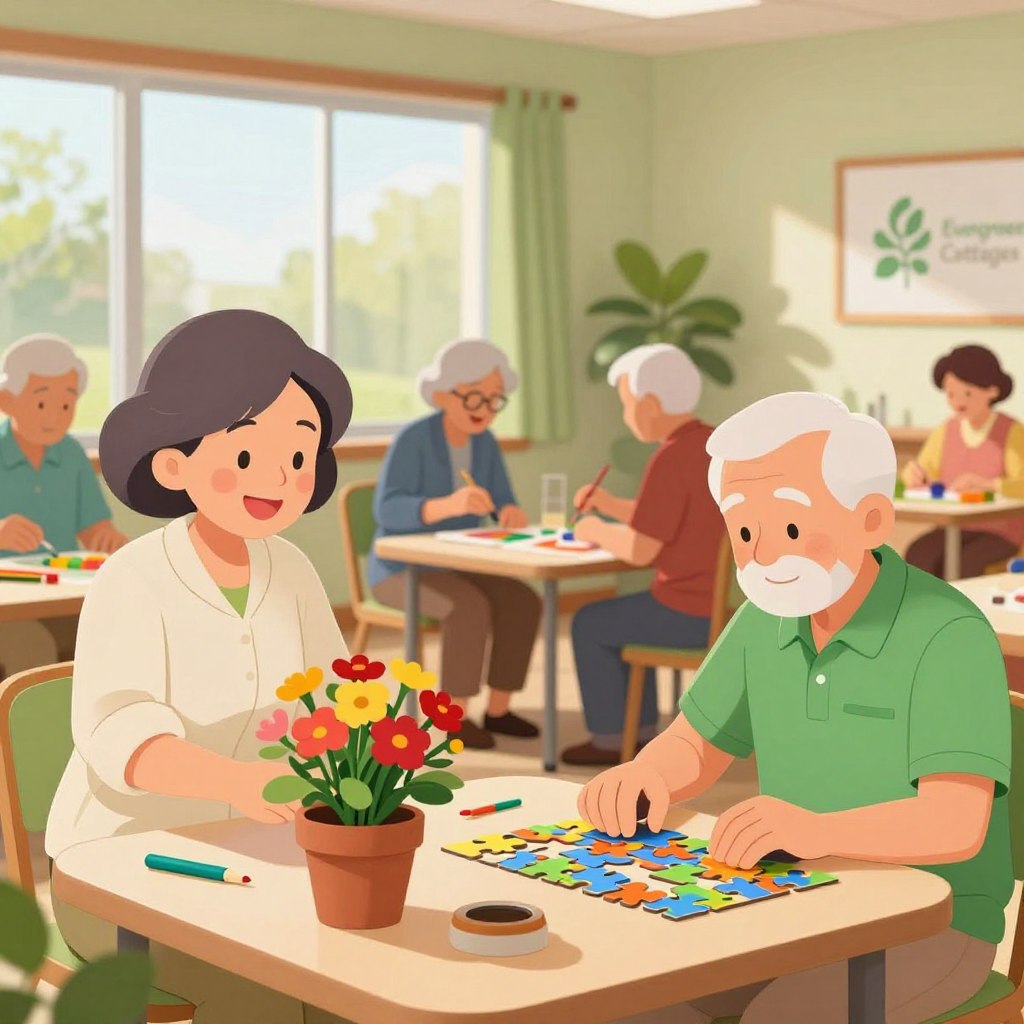
We believe offering clear, expert-led choices is the first step in our clinical stewardship of your loved one. Our approach pairs curated engagement with neuro-supportive intent—each activity honors history and identity while aiming to preserve memory and calm during the present moment.
Caregivers and family often face fatigue and doubt. We design a compassionate, evidence-informed plan so you can spend time in true connection rather than worry. This way of care reduces burden and creates a sanctuary for daily life.
Key Takeaways
- Curated engagement supports cognition and dignity.
- Caring plans ease strain on caregivers and the family.
- Simple, routine activities can boost mood and memory.
- Expert guidance turns care into a sanctuary of connection.
- We center each loved one’s story in every care decision.
Understanding the Role of Engagement in Memory Care
When memory fades, purposeful engagement becomes the bridge to identity.
We believe engagement is more than passing time; it is a neuro-supportive way to preserve selfhood for your loved one. Solace provides one-on-one support so families can match daily tasks to evolving abilities.
Offering a tailored activity that fits current cognitive skills reduces anxiety and restores a sense of purpose. Our team trains each caregiver to use small moments—a favorite song, a brief routine—as meaningful cues to unlock memory and calm.
“Purposeful engagement stabilizes mood and sustains identity—this is clinical stewardship in practice.”
- Personalized routines align with disease stage and strengths.
- Music and structure create a calm, predictable day.
- One-on-one attention makes each interaction restorative.
| Approach | Primary Benefit | Best For |
|---|---|---|
| Structured Routine | Reduces anxiety through predictability | Early to mid-stage dementia |
| Music-Based Reminiscence | Triggers autobiographical memory | All stages; especially mid-stage |
| One-on-One Task Matching | Preserves dignity and ability | Progressive decline with variable abilities |
Cognitive Stimulation Activities for Mental Sharpness
Small daily mental exercises can sharpen attention and lift mood for a loved one with memory decline.
Word and Picture Matching
Simple matching games preserve focus and sequencing—skills essential to daily function.
Use photos of family or familiar household objects to make the activity personal and meaningful.
Keep each session short and celebratory so the person feels successful.
Daily Orientation Exercises
Quick rituals—reading a weather note, announcing the day, or pointing to a clock—ground people in the present.
These brief orientation cues provide structure to the day and reduce confusion. In addition, jigsaw puzzles and gentle word games stimulate the brain and sustain cognitive abilities.
- Short, consistent sessions lower frustration for caregivers and boost confidence for your loved one.
- Personal photos and simple word prompts maintain connection to family and identity.
- These activities also help slow decline by preserving core sequencing and attention.
“Curated, neuro-supportive practice—delivered with warmth—creates moments of clarity and calm.”
Creative Expression as a Tool for Connection
Creative expression opens a nonverbal door to feelings when language fades.
We use art and song as a neuro-supportive way to reach a loved one across stages of dementia. Music engagement activates parts of the brain that remain intact far into disease progression, making melody a reliable bridge to memory and mood.
Painting with broad strokes lets your loved one take part in an activity without the stress of fine detail. Our caregiver team guides each session to reduce anxiety and lower stress during the day.
“Every step of the creative process is designed to foster connection—so the person feels seen and heard.”
- Nonverbal expression allows feelings beyond words.
- Music therapy unlocks memories and stabilizes mood.
- Simple art offers dignity and a safe way to process emotion.
| Creative Outlet | Primary Effect | Best For Stages |
|---|---|---|
| Music | Memory cues; mood regulation | All stages |
| Painting (broad strokes) | Agency; reduced stress | Early to mid stages |
| Collage & tactile art | Sensory engagement; calm | Mid to late stages |
Physical Activities to Improve Mobility and Mood
Movement—when guided with care—becomes a calming ritual for many families. Gentle physical routines preserve joint range and support basic function while offering a predictable pause in the day.
Chair yoga and stretching are a low-risk way to keep muscles limber and reduce stiffness at home. We teach short sequences that fit into daily time slots so the loved one can join without fatigue.
Chair Yoga and Stretching
These simple exercises form part of our neuro-supportive plan. They reduce restlessness and lift mood for people living with dementia.
- We weave chair yoga and stretching into routine to maintain joint flexibility and physical function.
- Guided movement uses music to add structure and a clear sense of accomplishment.
- Accessible exercises let one participate regardless of mobility or current ability.
- Consistent movement lowers anxiety and smooths transition times for family and caregiver alike.
“Physical therapy through movement is a cornerstone of quality care—sustaining health and dignity.”
Sensory Engagement for Comfort and Calm
Familiar smells and textures often reach a person more directly than conversation. We use sensory engagement as a neuro-supportive way to soothe the mind and steady the day.
Aromatherapy and scents can reinforce routine and signal rest. Lavender and citrus—used in brief, supervised moments—offer a calming cue that becomes part of daily care.
Aromatherapy and Scents
Short sessions with a single scent reduce stress and limit overstimulation. Caregivers introduce aroma in a predictable order—before nap time or during quiet reading—to build a gentle ritual.
Tactile Boards and Textures
Tactile boards give hands something safe to explore. Soft fabrics, smooth stones, and raised patterns lower anxiety and prevent fidgeting during later stages of dementia.
- Sensory engagement provides a way to reach your loved one in nonverbal ways during stressful times of the day.
- These activities also soothe the brain, offering a gentle, non‑invasive therapy when speech is limited.
- We introduce one sensory experience at a time so your family member feels secure and supported.
“Focusing on the senses creates a quiet sanctuary—small cues that restore calm and presence.”
| Tool | Primary Effect | Best For |
|---|---|---|
| Lavender scent wipes | Promotes relaxation; signals rest | All stages; particularly mid to late |
| Citrus or mint scent | Boosts alertness during day | Early to mid stages |
| Tactile boards | Reduces fidgeting; calming focus | Mid to late stages with reduced verbal output |
| Weighted lap pad | Grounding pressure; lowers anxiety | Those prone to agitation or restlessness |
Outdoor and Social Activities for Quality of Life
Outdoors and small social rituals offer a practical route to better days for a loved one. We prioritize simple, predictable outings because they restore rhythm and reduce worry.
Gardening reconnects people to nature and gives a clear, meaningful task. Tending a pot, watering herbs or arranging flowers provides gentle responsibility and sensory pleasure.
A brief daily walk in fresh air improves mood and circulation. Short routes, familiar paths and steady pacing make each walk safe and calming for those living with dementia.
Social time—small groups, memory cafes or guided games—keeps isolation at bay. We structure visits so conversations and shared tasks stay focused and comfortable.
- Integrate outdoor moments into the home routine to build a steady day.
- Choose simple games or shared chores to ease awkward social times.
- We coach family and caregivers to make each outing purposeful and joy‑filled.
“Social engagement and nature-based routines are a core part of dignified, neuro-supportive care.”
Reminiscence Activities to Honor Personal History
Reminiscence invites a loved one to step back into stories that shaped their life. We frame these moments as clinical stewardship—purposeful, gentle and rooted in identity.
Using Family Photo Albums
Looking through old albums—each photo labeled with a name and date—can trigger vivid storytelling and calm. We prompt with simple cues: “Who is this?” or “Where was this taken?” to spark narrative without pressure.
- Reminiscence activities like family albums honor history and support memory in dementia.
- We pair familiar music from younger years to amplify recall; the brain often stays responsive to song cues.
- Memory boxes and painting provide tactile and visual anchors—offering continuity and comfort for your loved one.
- These moments are a form of cognitive therapy that help maintain brain function and a sense of self.
- Sharing things from the past validates experience and strengthens family bonds during disease.
- We guide you in choosing reminiscence games and gentle exercises so each interaction stays meaningful and respectful.
“Reminiscence—when curated with care—becomes a restorative ritual that preserves dignity and connection.”
We recommend short, regular sessions and one familiar person leading the activity. Small steps keep engagement positive and make every memory-centered encounter a true act of care.
Household Chores That Provide Purpose
Everyday domestic tasks—when coached gently—become meaningful moments of connection.
Folding towels or sorting socks taps into procedural memory and offers clear, achievable steps. These simple chores create structure in the home and a steady way for a loved one to take part in daily life.
We find that a short, guided task helps the person feel useful rather than dependent. This feeling supports quality of life and preserves dignity across stages of dementia.
Our team helps you choose safe, appropriate household chores and adapts each activity to current ability. We focus on the process—celebrating effort and routine rather than a perfect outcome.
- Sense of purpose: Chores give a valued role within the family and day.
- Anxiety reduction: Familiar tasks calm and steady mood during the day.
- Practical guidance: We match chores to ability so your loved one remains engaged and capable.
“Small, familiar tasks are a neuro-supportive way to keep agency and connection alive.”
7 Activities That Actually Help Alzheimer’s Patients and Finding Professional Support
A clear plan and expert advocates restore calm to families navigating complex benefits and care services.
We provide comprehensive support to put these activities into practice while handling Medicare Part B assessments and outpatient therapy referrals. Our team guides family members through paperwork and connects you to memory care services that match need and dignity.
In addition to activity planning—gardening, painting, word games, jigsaw puzzles and gentle exercise—we arrange professional therapy and trained caregiver support. This combined approach preserves brain function and improves quality life for your loved one.
Let us shoulder the logistics so you can return to being family—present, patient and at peace.