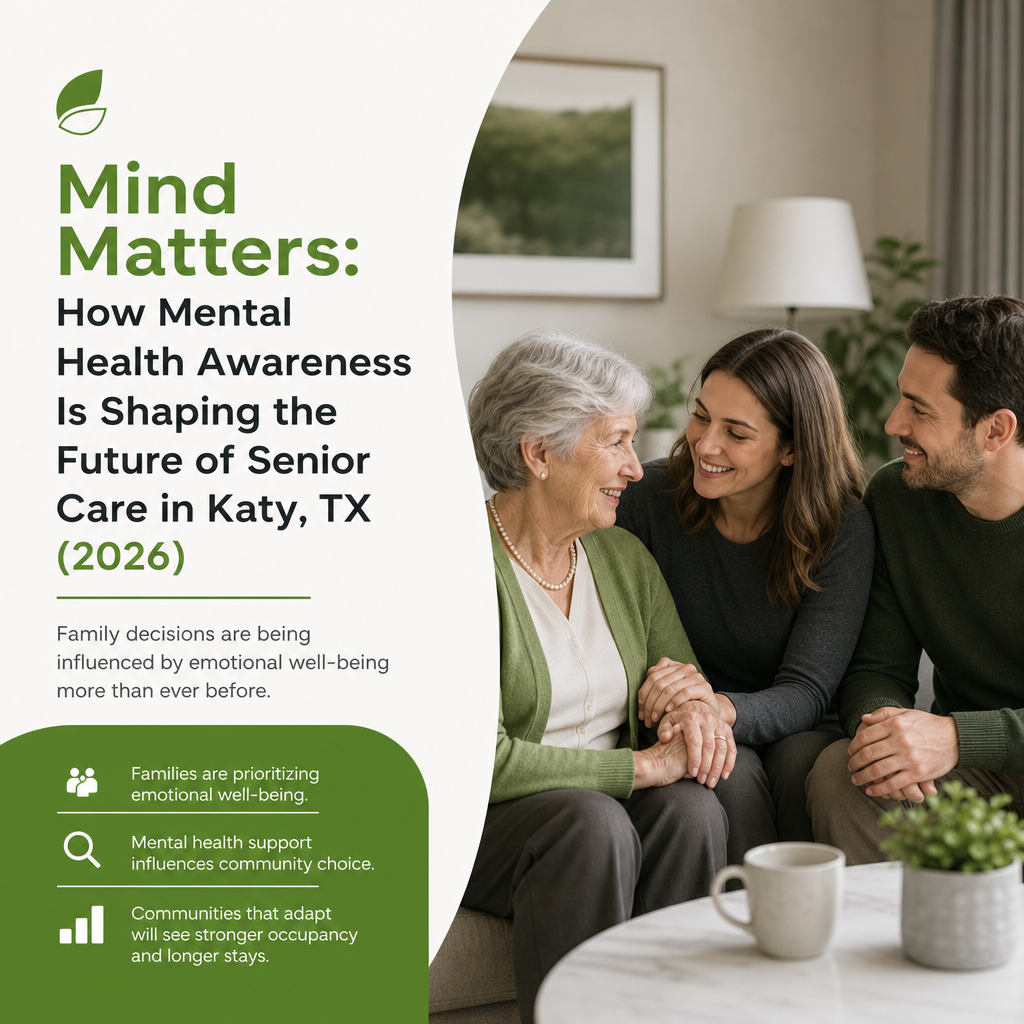
Mind Matters: How Mental Health Awareness Is Shaping the Future of Senior Care in Katy, TX (2026)
By Ivan Urrego | Last updated: May 2026 | Evergreen Cottages Blog
1. Why Mental Health Awareness Matters More Than Ever in Senior Care
Mental health awareness is no longer a peripheral conversation in senior living — it is the central conversation. For families in Katy, TX who are beginning to research care options for a parent, grandparent, or spouse, understanding the mental and emotional dimensions of aging may be the single most important thing you can do to protect your loved one's quality of life.
For decades, the senior care industry focused primarily on physical safety: fall prevention, medication management, chronic disease support. Those things matter enormously. But a growing body of research confirms what compassionate caregivers have always intuitively known — that emotional wellbeing, psychological safety, and mental stimulation are just as vital to longevity and quality of life as any physical intervention.
The Shift in How Senior Care Is Defined
The World Health Organization (WHO) defines health as "a state of complete physical, mental, and social well-being" — not merely the absence of disease. Yet for years, mental health in older adults was systematically undertreated, dismissed as a natural part of aging, or overlooked entirely by healthcare systems. That is changing rapidly. According to the Alzheimer's Association 2025 Facts and Figures report, emotional health interventions — including structured social engagement, mindfulness programs, and therapeutic activities — are now formally recognized as evidence-based components of quality dementia care.
What This Means for Katy, TX Families
If you are evaluating Assisted Living, Memory Care, Alzheimer's Care, or Dementia Care communities in the Katy, Texas area, you should be asking specific questions about how each community approaches mental wellness — not just how many nurses are on staff or whether the meals are nutritious. At Evergreen Cottages, mental health awareness is woven into every layer of daily life, from the intentional design of our cottage spaces to the structured activities calendar to the way our caregivers are trained to communicate.
Mental Health Awareness as a Quality-of-Care Benchmark
The NIC 2025 Consumer Research Report found that families who rated a senior living community as "excellent" were significantly more likely to cite emotional atmosphere, staff warmth, and visible resident happiness as key factors — above room size, amenities, or even cost. In other words, families are already using mental wellness as a quality benchmark, even when they don't use that exact language. This guide will give you the vocabulary, the data, and the practical framework to make that assessment confidently.
💡 Key Insight: According to the NIC 2025 Consumer Research Report, more than 70% of families who selected a senior living community cited "emotional atmosphere and resident happiness" among their top three deciding factors — outranking amenities and proximity to family.
2. The Hidden Mental Health Crisis Among Older Adults
Depression, anxiety, and social isolation among seniors represent one of the most underreported public health crises of our time. Understanding the scope of this problem is the first step toward protecting your loved one from it.
Depression in Older Adults: The Data
Depression is not a normal part of aging — but it is devastatingly common. The Centers for Disease Control and Prevention (CDC) estimates that approximately 7 million American adults age 65 and older live with depression, and yet fewer than half ever receive any formal diagnosis or treatment. The reasons are complex: older adults are less likely to report emotional symptoms, primary care appointments are brief, and there remains significant cultural stigma around mental health discussions in older generations.
Seniors living at home experience significant symptoms of depression or anxiety, according to the National Council on Aging (NCOA) — yet most never receive a formal diagnosis.
Anxiety and the "Invisible" Burden
Anxiety disorders are equally prevalent and equally undertreated. For seniors with early-stage dementia or Alzheimer's disease, anxiety is often one of the first behavioral symptoms to emerge — manifesting as increased agitation, repetitive questioning, sleep disturbances, or what clinicians refer to as sundowning (a pattern of increased confusion and distress during late afternoon and evening hours). If you have noticed these patterns in your loved one, our resource on What Is Sundowning? provides a thorough explanation and practical guidance.
The Cost of Untreated Mental Health Conditions in Seniors
Untreated depression and anxiety in older adults are not simply uncomfortable — they are medically dangerous. Research published in the Journal of the American Geriatrics Society found that untreated depression in seniors is associated with:
- Accelerated cognitive decline and increased dementia risk
- Reduced adherence to medication and treatment plans
- Greater risk of falls and physical deterioration
- Higher hospitalization rates and longer recovery times
- Significantly reduced life expectancy
| Mental Health Condition | Estimated Prevalence (65+) | % Who Receive Treatment |
|---|---|---|
| Depression | ~7 million (CDC) | Less than 50% |
| Anxiety Disorders | ~6 million (NIMH) | Less than 40% |
| Grief/Complicated Bereavement | ~3 million (AAGP) | Less than 25% |
| Social Isolation (clinical) | ~28% of seniors (AARP) | Rarely addressed |
Why This Is Especially Relevant in the Katy, TX Area
The Katy-Houston metropolitan area is one of the fastest-growing regions in Texas, with a rapidly expanding senior population. While suburban communities like Katy offer beautiful neighborhoods, many seniors find themselves increasingly isolated as family members' schedules become busier and driving becomes unsafe. This geographic reality makes mental health awareness in local senior care communities not just a clinical priority — it is a community imperative.
3. The Deep Connection Between Mental and Cognitive Health
The relationship between mental health and cognitive health is bidirectional, deeply intertwined, and profoundly important for anyone navigating an Alzheimer's or dementia diagnosis in their family. Mental health awareness, in this context, is inseparable from understanding how the brain itself ages.
How Depression and Anxiety Accelerate Cognitive Decline
Research from the Alzheimer's Association 2025 Facts and Figures report confirms that depression is not only a symptom of dementia — it is also a risk factor for its development. People with a history of depression are approximately twice as likely to develop Alzheimer's disease later in life. The mechanisms are still being studied, but leading theories point to elevated cortisol levels (the primary stress hormone) causing neuroinflammation and hippocampal shrinkage — the hippocampus being the brain region most responsible for memory formation.
The Dementia-Mental Health Feedback Loop
Once dementia has been diagnosed, the interaction with mental health becomes even more complex. A person living with Alzheimer's disease may experience profound grief over their own cognitive losses, fear of the future, frustration with communication difficulties, and disorientation that generates intense anxiety. Without targeted emotional support, these psychological responses can accelerate behavioral changes, reduce engagement with caregivers, and ultimately shorten the window of meaningful daily functioning.
💡 Clinical Note: The Alzheimer's Association now recommends that every person diagnosed with dementia receive a simultaneous mental health assessment and that ongoing emotional support be considered a core component of their care plan — not an optional add-on.
What Integrated Mental and Cognitive Care Looks Like
At communities like Evergreen Cottages Memory Care in Katy, TX, integrated care means that every resident's daily schedule, social interactions, physical environment, and communication protocols are designed with both cognitive and emotional wellness in mind. There is no separation between "memory care" and "mental health care" — they are understood as two dimensions of the same whole-person approach.
You can learn more about how cognitive health and daily activities interact in our resource on The Aging Brain: When Memory & Activity Decline.
4. How Mental Health Awareness Has Transformed Senior Living Environments
The physical environment of a senior living community is not a backdrop — it is an active participant in mental health. Environmental design informed by mental health awareness is now considered one of the most powerful non-pharmacological tools available in senior care.
The Science of Therapeutic Spaces
Decades of research in environmental psychology confirm that physical surroundings profoundly influence mood, cognition, and behavior. For seniors — particularly those living with dementia — environmental factors including lighting, noise levels, spatial layout, access to nature, and even color choices can meaningfully reduce anxiety, decrease agitation episodes, and improve sleep quality. This is not a soft science; it is evidence-based design practice now endorsed by LeadingAge, the national association representing nonprofit senior care providers.
Small-Scale, Home-Like Communities: A Mental Health Advantage
One of the most consistent findings in senior living research is that smaller, home-like communities produce better mental health outcomes than large institutional facilities. The reasons are intuitive: a smaller environment is less overwhelming, more familiar, easier to navigate, and allows for the kind of personal relationships with staff that reduce anxiety and build emotional security. Our post on Why Less Is More: The Mental Health Perks of Smaller Senior Living Communities explores this in depth.
Evergreen Cottages was built on this very philosophy. Our Katy, TX campus is intentionally designed to feel like a home, not a hospital — with warm, residential-scale spaces that honor residents' dignity and reduce the institutional anxiety that many seniors experience in larger facilities.
Access to Nature and Outdoor Spaces
Research consistently shows that access to natural light, outdoor gardens, and green space reduces cortisol levels, improves mood, and even slows cognitive decline in older adults. Texas's warm climate makes this especially accessible, and communities in the Katy area that prioritize outdoor programming are offering residents a genuine mental health benefit that is backed by science.
| Environmental Feature | Mental Health Benefit | Evidence Level |
|---|---|---|
| Natural light (full-spectrum) | Improved sleep, reduced depression | Strong (multiple RCTs) |
| Outdoor garden access | Reduced anxiety, improved mood | Strong (LeadingAge endorsed) |
| Residential scale spaces | Lower agitation, greater comfort | Moderate-Strong |
| Reduced noise/visual clutter | Decreased confusion & sundowning | Strong (dementia-specific) |
| Personalized room décor | Improved identity & wellbeing | Moderate |
5. Mental Health Awareness in Memory Care and Dementia Care
Memory Care and Dementia Care require the most sophisticated and nuanced approaches to mental health of any senior living setting. Understanding how mental health awareness specifically shapes these specialized programs will help you evaluate options in Katy, TX with much greater clarity.
The Emotional Experience of Living with Dementia
It is easy to focus on the cognitive symptoms of Alzheimer's disease and dementia — the memory loss, the confusion, the communication challenges. But beneath those symptoms, the person you love is still emotionally present, still experiencing fear, joy, loneliness, love, and grief. Research from the Alzheimer's Association 2025 Facts and Figures report affirms that emotional memory — the ability to feel and respond to emotional experiences — often persists long after episodic memory has deteriorated. This means that how your loved one feels in their care environment matters profoundly, even when they can no longer articulate it.
Person-Centered Care as a Mental Health Strategy
Person-centered care (a philosophy in which care plans are built around the individual's life history, preferences, personality, and values rather than a clinical diagnosis) is now considered the gold standard for dementia care by both LeadingAge and the Alzheimer's Foundation of America (AFA). At Evergreen Cottages in Katy, TX, this means our team takes time at move-in to understand each resident's story: What did they love? What frightened them? What music moves them? What routines gave their life structure? That knowledge then shapes every interaction, every activity, and every care protocol.
Non-Pharmacological Interventions for Behavioral Symptoms
Behavioral symptoms of dementia — including agitation, repetitive behaviors, wandering, and emotional outbursts — are often expressions of unmet psychological needs: the need for safety, connection, stimulation, or comfort. Mental health-aware dementia care programs prioritize non-pharmacological interventions — approaches that address those underlying needs rather than simply suppressing symptoms with medication. These include:
- Music therapy — shown to reduce agitation and improve mood in numerous clinical trials (see our resource on Music Therapy for Alzheimer's and Dementia)
- Reminiscence therapy — structured storytelling that activates long-term memory and creates emotional connection
- Sensory engagement activities — tactile, olfactory, and visual stimulation that grounds residents in the present moment
- Validation therapy — a communication approach that acknowledges the emotional reality of the person rather than correcting their confusion
💡 Important Distinction: Not all dementia care communities in the Katy, TX area use the same approach. When touring communities, ask specifically whether their behavioral support protocols are primarily pharmacological (medication-based) or whether they actively use non-pharmacological, mental health-informed strategies first. The answer reveals a great deal about the community's philosophy.
6. The Role of Social Connection in Senior Mental Health
Social isolation is not just loneliness — it is a clinically documented health risk that rivals smoking 15 cigarettes a day in terms of its impact on mortality. Mental health awareness in senior care begins with recognizing that belonging, connection, and community are not luxuries. They are medical necessities.
Loneliness as a Public Health Emergency
In 2023, U.S. Surgeon General Dr. Vivek Murthy declared loneliness a public health epidemic, with older adults among the most affected populations. The AARP Public Policy Institute estimates that approximately 28% of American seniors age 65 and older live alone, and a significant portion report rarely or never having meaningful social contact on a given day. In suburban communities like Katy, TX, where car dependence limits mobility and adult children often live busy, schedule-constrained lives, this isolation can deepen rapidly after a health event or a spouse's passing.
Of Americans age 65+ live alone, with many experiencing clinical levels of social isolation — a risk factor for depression, dementia, and premature death. (AARP Public Policy Institute)
How Senior Living Communities Combat Isolation
A well-designed senior living community is, at its core, a social health intervention. By placing your loved one in an environment where meaningful human interaction is built into every hour of the day — at meals, in activities, during care routines, in hallway conversations — you eliminate the primary driver of senior depression: the experience of invisibility and irrelevance.
At Evergreen Cottages in Katy, TX, our intentionally small community size means that every resident knows every other resident and every caregiver by name. That familiarity is not incidental — it is the foundation of psychological safety. It is what allows residents to relax, engage, and experience genuine joy rather than the quiet dread that so many isolated seniors carry.
The Difference Between Proximity and Connection
It is important to note that simply being around other people is not the same as experiencing meaningful social connection. A large senior living campus with 200 residents can feel profoundly lonely to someone who does not know their neighbors, whose caregivers change every shift, and whose days lack structure or shared purpose. Authentic connection requires consistency, familiarity, and mutual recognition — all of which are more achievable in smaller, community-oriented environments.
7. Purpose-Driven Activities and Their Mental Health Impact
Activities are not entertainment fillers between meals and medication times. When designed thoughtfully, they are among the most powerful mental health interventions available in a senior living setting. Mental health awareness means recognizing the difference between an activities calendar that keeps residents busy and one that genuinely promotes purpose, joy, and cognitive engagement.
The Psychology of Purpose in Later Life
Research from Rush University Medical Center, published in the journal Psychological Science, found that older adults with a strong sense of purpose had a 2.4 times lower risk of developing Alzheimer's disease and experienced significantly slower cognitive decline. Purpose — the feeling that one's existence contributes something meaningful — is a fundamental psychological need that does not diminish with age. When an activities program consistently offers residents opportunities to create, contribute, teach, and connect, it is actively protecting their mental and cognitive health.
What a Mental Health-Informed Activities Calendar Includes
At Evergreen Cottages, our activities programming is carefully designed to engage residents at multiple levels of need and ability. Our structured activities calendar includes a mix of:
- Creative expression — painting, music, crafting, storytelling
- Physical movement — gentle exercise, chair yoga, walking programs tailored to individual ability
- Cognitive engagement — word games, trivia, life history projects
- Social rituals — shared meals, group conversations, celebrations and community events
- Spiritual and reflective time — for residents for whom faith, meditation, or quiet reflection is meaningful
- Sensory activities — particularly for residents in later stages of memory loss, where connection through touch, music, and scent remains meaningful
Activities and Alzheimer's: A Special Note
For residents living with Alzheimer's disease or other forms of dementia, the goal of activities is not cognitive rehabilitation — it is emotional presence, dignity, and joy. The right activity at the right moment can reduce anxiety, interrupt agitation cycles, and reconnect a person to their sense of self in ways that no medication can replicate. Our blog on 7 Activities That Actually Help Alzheimer's Patients provides specific, research-backed examples you can apply both at home and when evaluating communities.
8. Family Caregiver Mental Health: The Often-Forgotten Crisis
Mental health awareness in senior care cannot stop at the resident's door. If you are researching care options for a loved one in Katy, TX, there is a significant chance that you — or someone close to you — is also carrying the invisible weight of family caregiving. That weight deserves direct acknowledgment and serious attention.
The Caregiver Burden: Real Data on a Real Crisis
The Alzheimer's Association 2025 Facts and Figures report estimates that more than 11 million Americans provide unpaid care for someone with Alzheimer's or another form of dementia. These caregivers report significantly elevated rates of depression (up to 50% among dementia family caregivers), anxiety, physical health deterioration, and social isolation — a constellation of consequences that researchers refer to as caregiver burden.
Among family caregivers in Texas, the financial and emotional pressures are compounded by the state's limited Medicaid coverage for home care and the geographic sprawl of suburban communities like Katy that make accessing respite services difficult.
The Guilt That Stands Between Families and the Right Decision
One of the most common and most heartbreaking things we hear from families considering Memory Care or Assisted Living for a loved one is: "I feel like I'm giving up on them." This guilt — though completely understandable — is built on a false premise: that love is measured by personal sacrifice rather than by the quality of care your loved one receives. Our resource on Is Guilt Preventing You from Placing Your Loved One in Professional Care? addresses this directly with both compassion and clarity.
Why Transitioning to Professional Care Is Often an Act of Love
Here is the clinical reality: a burned-out family caregiver cannot provide the level of attentive, consistent, professionally trained care that a well-staffed senior living community can. That is not a failure of love — it is a statement of human limitation. When families choose Evergreen Cottages, they often describe feeling an enormous sense of relief — not just for themselves, but for their loved one, who now has consistent care, structured mental health support, meaningful social engagement, and professional oversight 24 hours a day.
💡 For Family Caregivers: Your mental health matters too. If you are experiencing burnout, depression, or anxiety as a result of caregiving responsibilities, please reach out to the Caregiver Action Network at caregiveraction.org or speak with your primary care provider. You cannot pour from an empty cup — and your loved one needs you to be well.
9. Nutrition, Sleep, and Mental Wellness in Senior Living
Mental health awareness in senior care extends well beyond therapy and activities into the fundamental biological needs that underpin emotional and cognitive stability: nutrition and sleep. Both are frequently disrupted in older adults and both have profound, well-documented effects on mental health and cognitive function.
The Nutrition-Mental Health Connection in Seniors
Nutritional deficiencies are disturbingly common in older adults, particularly those living alone or managing chronic conditions that affect appetite. Deficiencies in vitamin D, vitamin B12, folate, and omega-3 fatty acids are each independently associated with increased depression risk and accelerated cognitive decline, according to research cited by the Alzheimer's Association.
Beyond individual nutrients, overall dietary pattern matters enormously. The MIND diet (Mediterranean-DASH Intervention for Neurodegenerative Delay) — a hybrid of the Mediterranean and DASH dietary patterns — has been shown in multiple studies to reduce Alzheimer's disease risk by up to 53% in those who follow it strictly. You can explore this in detail through our resource on The Best Diets to Support Dementia and Alzheimer's Patients.
At Evergreen Cottages in Katy, TX, our meal programs are designed with both nutritional adequacy and sensory pleasure in mind — because eating is not just fuel, it is one of life's great daily joys, and mealtimes are among the most socially and emotionally significant moments in a resident's day.
Sleep Disorders in Seniors: A Silent Mental Health Disruptor
Sleep disruptions are both a symptom and a driver of mental health challenges in older adults. Seniors with dementia are particularly vulnerable to disrupted circadian rhythms, which can manifest as sundowning, nighttime wandering, and daytime somnolence that interfere with engagement, learning, and emotional regulation. Sleep disorders in seniors living at home are often unmanaged and dangerous.
In a professional senior living setting with trained staff available overnight, sleep disruptions can be monitored, patterns identified, and evidence-based interventions applied — from adjusted lighting schedules to structured evening routines — without resorting immediately to sedating medications that carry significant cognitive risks for older adults.
Hydration and Brain Health
Dehydration is another frequently overlooked contributor to senior mental health challenges. Even mild dehydration — which older adults are disproportionately vulnerable to due to reduced thirst sensation — can cause confusion, mood disturbances, and fatigue that mimic or worsen psychiatric symptoms. Our comprehensive guide to Hydration for Seniors explains why this matters and how professional care communities address it systematically.
10. Recognizing Mental Health Red Flags in an Aging Loved One
One of the most practical applications of mental health awareness for families in Katy, TX is learning to recognize when a loved one's behavior has shifted in ways that signal a mental health concern — and understanding the difference between normal aging and something that requires professional attention.
Warning Signs That Demand Attention
Many families dismiss early mental health symptoms in aging parents or grandparents as personality quirks, stubbornness, or simply "getting older." But the following changes — particularly when they represent a departure from your loved one's baseline — deserve prompt evaluation by a physician:
- Persistent sadness, tearfulness, or emotional flatness lasting more than two weeks
- Withdrawal from activities and relationships that previously brought joy
- Increased irritability, agitation, or anger that is out of character
- Expressions of hopelessness, worthlessness, or thoughts of death
- Significant changes in appetite or sleep patterns
- Increased confusion, disorientation, or paranoia
- Neglect of personal hygiene or household management
- Increased alcohol use or over-reliance on sleep aids
- Repetitive questioning, hoarding behavior, or dramatic personality changes
When Behavioral Changes Signal Dementia
Many of the behaviors listed above can also be early indicators of Alzheimer's disease or another form of dementia — which is precisely why mental health awareness and dementia awareness are so closely linked. Our resource on Recognizing the Early Signs of Dementia at Home provides a detailed guide to distinguishing between depression, normal cognitive aging, and early-stage dementia, with practical guidance on when and how to seek evaluation.
Having the Conversation: Honoring Dignity While Addressing Concern
One of the most challenging aspects of recognizing mental health red flags in a loved one is knowing how to raise your concern without triggering defensiveness, shame, or a rupture in the relationship. A few principles that can help:
- Lead with love and specific observation rather than diagnosis or judgment: "I've noticed you seem quieter lately, and I've been thinking about you. How are you really feeling?"
- Avoid minimizing or rushing to reassure: "Don't worry, everyone feels that way" — though well-intentioned — dismisses real suffering.
- Involve their physician as a trusted third party when direct conversations become difficult.
- Explore care options together when appropriate, framing professional support as an expansion of their life, not a reduction of it.
11. How to Choose a Katy, TX Senior Living Community That Truly Prioritizes Mental Health Awareness
Armed with a deeper understanding of mental health's role in senior wellbeing, you are now better positioned to evaluate care communities in the Katy, TX area with the discernment your loved one deserves. Here is a practical framework for making that assessment.
Questions to Ask During Your Tour
When touring any Assisted Living, Memory Care, Alzheimer's Care, or Dementia Care community in Katy, TX, the following questions will quickly reveal whether mental health awareness is a genuine operational priority or a marketing phrase:
- How do you assess a new resident's emotional and psychological baseline at move-in?
- What does your team do when a resident is having an emotionally difficult day?
- How do you approach behavioral symptoms — do you try non-pharmacological interventions first?
- What is your staff-to-resident ratio, and does it allow for meaningful personal interaction?
- How do you involve families in supporting a resident's mental and emotional wellness?
- What mental health supports or partnerships (with therapists, counselors, or psychiatric consultants) does your community have?
- How do you handle grief — when residents lose a fellow resident or experience a personal loss?
What to Look For Beyond the Words
Tour marketing is easy to craft. What you observe beyond the scripted talking points tells the real story. During your visit to any community, pay attention to:
- The faces of the residents — do they look engaged, at ease, and treated with dignity?
- The nature of staff-resident interactions — are they warm, personal, and unhurried?
- The noise and energy level of the environment — does it feel calming or chaotic?
- Whether residents appear to know and be known by their caregivers
- Whether the activities area looks actively used or merely decorative
| Evaluation Category | What to Look For | Red Flag |
|---|---|---|
| Staff interaction quality | Warm, personal, resident knows staff by name | Rushed, task-focused, transactional |
| Activities programming | Structured, varied, person-centered | TV on all day, infrequent or passive activities |
| Behavioral support approach | Non-pharmacological first, individualized | Medication as primary behavioral tool |
| Environment | Calm, homelike, well-lit, outdoor access | Institutional, noisy, confined |
| Family involvement | Regular communication, family welcomed | Limited access, infrequent updates |
| Community size | Small enough for staff to know each resident | Large-scale, residents are room numbers |
Why Evergreen Cottages Stands Apart in Katy, TX
At Evergreen Cottages, our approach to mental health awareness is not a program we added to our existing care model — it is the philosophy from which our entire community was built. Our small, home-like setting in Katy, TX means our team can provide the kind of individually attentive, emotionally intelligent care that genuinely transforms the daily lived experience of seniors with memory loss, anxiety, or depression. We invite you to see this for yourself.
12. Frequently Asked Questions About Mental Health Awareness in Senior Care
What is mental health awareness in the context of senior living?
Mental health awareness in senior living refers to the active recognition, assessment, and support of older adults' emotional and psychological wellbeing — not just their physical health. It encompasses depression and anxiety screening, non-pharmacological behavioral support, purposeful social programming, therapeutic environments, and training caregivers to respond to emotional needs with skill and compassion. In communities like Evergreen Cottages in Katy, TX, it is embedded into every aspect of daily operations.
Is depression in seniors a normal part of aging?
No. Depression is not a normal or inevitable part of aging, though it is extremely common and frequently undertreated in older adults. The CDC and American Association for Geriatric Psychiatry (AAGP) both affirm that late-life depression is a treatable medical condition, not an expected consequence of growing older. When recognized and addressed — which professional care communities are better positioned to do than isolated home environments — seniors can experience significant improvement in mood, energy, and quality of life.
How does moving into Assisted Living or Memory Care affect a senior's mental health?
The transition itself can involve a period of adjustment and grief over the loss of independence. However, research consistently shows that seniors who move into well-designed senior living communities — particularly those with small-scale, homelike environments and high staff engagement — experience improved mental health outcomes within months of transitioning, compared to those who remain isolated at home. Social connection, structured purpose, and consistent care are the key variables. See our guide on Helping Older Adults Move Into Assisted Living.
Can mental health care slow the progression of Alzheimer's or dementia?
While no intervention has been shown to reverse Alzheimer's disease, robust evidence supports the conclusion that mental health interventions can slow cognitive decline and extend the period of meaningful daily functioning. Reducing chronic stress, maintaining social engagement, ensuring quality sleep, providing structured cognitive stimulation, and addressing depression all contribute to better cognitive outcomes. The Alzheimer's Association 2025 Facts and Figures report includes this evidence in its review of lifestyle and care interventions.
What should I look for in a Katy, TX senior living community when it comes to mental health support?
Look for: a small-scale, homelike environment that minimizes institutional stress; a structured, varied activities program with clearly defined emotional and social goals; trained staff who use person-centered communication and non-pharmacological behavioral support; clear policies on depression and anxiety screening; and a community culture where residents appear genuinely engaged, comfortable, and known by name by their caregivers. Evergreen Cottages in Katy, TX is built around all of these principles — schedule a tour to see them in practice.