Senior Apartments vs. Cottage Living: Pros, Cons & Which Option Truly Fits Your Loved One
By Ivan Urrego | Last updated: May 2026
Table of Contents
- What Is a Senior Apartment?
- What Is Cottage-Style Senior Living?
- Why Size Matters More Than You Think
- Care Levels: Assisted Living and Memory Care
- Side-by-Side: Pros and Cons Compared
- The Perks of Cottage Living for Dementia Care
- The Perks of Senior Apartments for Independent Seniors
- Cost: What Families Actually Pay
- Safety, Security, and Cognitive Decline
- Social Life and Daily Engagement
- A Decision Framework for Families
- Frequently Asked Questions
- Conclusion: What the Right Choice Looks Like
1. What Is a Senior Apartment?
A senior apartment is an age-restricted rental residence — typically 55 or 62 and older — designed for adults who can manage daily life on their own. Think of it as a conventional apartment complex built around the preferences and mobility needs of older adults.
Key Characteristics
Senior apartments offer private units with full kitchens, in-unit laundry, and standard amenities like pools, fitness centers, and community rooms. Residents pay rent and handle their own meals, medications, and daily routines. Staff are available for maintenance and events, not personal care.
Who They Serve
These communities work best for seniors who are fully independent — no cognitive decline, no daily assistance needed. According to the NIC 2025 Consumer Research Report, 61% of seniors who move into age-restricted apartments are 70 or younger and in good health at the time of move-in.
The Gap
The moment a resident needs help with bathing, medication management, or shows signs of memory loss, a senior apartment is no longer equipped to help. There's no care team, no clinical oversight, and no dementia-safe environment. That gap is exactly where assisted living and memory care communities step in.
2. What Is Cottage-Style Senior Living?
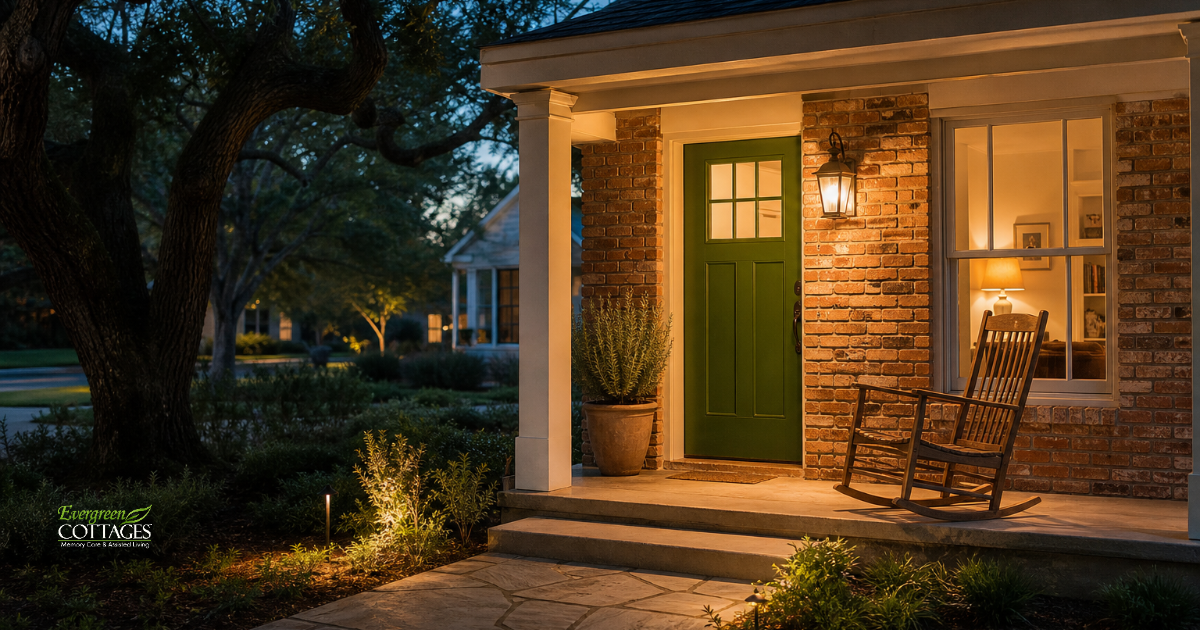
Cottage-style senior living is a residential care model that intentionally looks and feels like a home — not a facility. Instead of long corridors and institutional common areas, residents live in small, house-scale settings with shared living rooms, dining tables, and outdoor spaces.
The Model at Evergreen Cottages
At Evergreen Cottages in Katy, TX, the cottage model means a purposefully small resident count, home-cooked meals served family style, and caregivers who know each resident by name — not by room number. It's a senior living community designed around belonging, not efficiency.
How It Differs from Traditional Senior Living
Large assisted living communities can house 80 to 200+ residents. A cottage community typically serves 12 to 20 residents per home. That smaller scale changes everything: the noise level, the staff-to-resident ratio, the familiarity of the routine, and the emotional safety residents feel daily.
Why Families Choose It
LeadingAge research consistently shows that smaller, home-like environments reduce anxiety, improve orientation, and support dignity for residents with dementia and Alzheimer's. The environment itself is part of the care.
3. Why Size Matters More Than You Think
The physical scale of a senior living community has a direct, measurable effect on resident wellbeing — especially for those with memory impairment. Bigger is not better when cognition is declining.
Overstimulation and Dementia
Large communities with dozens of residents, busy dining halls, and rotating staff create sensory overload for someone with Alzheimer's or dementia. The Alzheimer's Association notes that overstimulating environments accelerate disorientation and agitation, two of the most distressing symptoms families watch their loved ones experience.
Staff Consistency
In a cottage community, the same two or three caregivers are present each shift. Residents with memory loss learn those faces, those voices, those routines — and that consistency is therapeutic. In a larger apartment-style senior community, high staff turnover and rotating schedules make genuine familiarity rare.
The Data
4. Care Levels: Assisted Living and Memory Care
One of the most important distinctions between senior apartments and cottage living is the type and depth of care available. Understanding these levels protects your family from a costly, emotionally draining move later.
Senior Apartments Offer No Personal Care
By design and by Texas state licensing, a senior apartment community is not authorized to provide personal care, medication management, or dementia support. If your loved one needs help getting dressed or has started wandering at night, an apartment setting is the wrong fit — regardless of how appealing the amenities are.
Assisted Living: Daily Help With Dignity
Assisted living provides support with activities of daily living (ADLs) — bathing, dressing, grooming, meals, and medications — while preserving as much independence as possible. It's state-licensed in Texas and staffed around the clock.
Memory Care: Specialized 24/7 Support
Memory care is a specialized level of assisted living designed specifically for residents with Alzheimer's, dementia, or other cognitive conditions. At Evergreen Cottages, our memory care program uses structured routines, dementia-trained caregivers, and a secure, home-like environment to reduce confusion and support quality of life every single day.
| Care Setting | Personal Care | Memory Care | 24/7 Staff | Secured Environment |
|---|---|---|---|---|
| Senior Apartment | No | No | No | No |
| Assisted Living | Yes | Sometimes | Yes | Varies |
| Cottage Memory Care | Yes | Yes | Yes | Yes |
5. Side-by-Side: Pros and Cons Compared
Here's the honest comparison families deserve before making this decision. No spin — just the real trade-offs of each senior living model.
| Factor | Senior Apartment | Cottage Senior Living |
|---|---|---|
| Independence | Maximum — full autonomy | Supported independence |
| Personal care | Not available | Included, individualized |
| Memory care | Not available | Core service |
| Staff-to-resident ratio | Maintenance/admin only | High; small team per cottage |
| Social connection | Neighbor-driven, variable | Built into daily structure |
| Dementia safety | None | Secure, dementia-friendly design |
| Cost predictability | Rent only; add-ons extra | Bundled care pricing |
| Homelike feel | Apartment-style | Residential home scale |
| Best for | Fully independent seniors | Assisted living, memory care needs |
6. The Perks of Cottage Living for Dementia Care
For families managing a dementia or Alzheimer's diagnosis, cottage-style communities offer specific, evidence-backed advantages that apartment-style senior living simply cannot replicate.
Familiar, Calm Environments Reduce Agitation
The Alzheimer's Association's 2025 Facts and Figures report confirms that environmental design directly influences behavioral symptoms of dementia. Cottage-style homes — with natural light, calm color palettes, and residential-scale spaces — reduce sundowning episodes and help residents feel oriented and safe.
Home-Cooked Meals, Together
Meals at Evergreen Cottages are prepared in a home kitchen and served at a shared dining table — not a cafeteria line. For residents with memory loss, the smell of a familiar meal, the warmth of a shared table, and consistent mealtimes are powerful anchors to the present moment.
Personalized Care Plans
Every resident receives an individual care plan that evolves with their needs. In a cottage community, caregivers notice changes — in appetite, sleep, mood — because they are truly present, not managing dozens of residents spread across a large building.
Never Lost Design
Our Never Lost design approach ensures the physical layout of every cottage supports orientation and safe movement for residents with cognitive decline. Clear sightlines, secure outdoor spaces, and intuitive room placement reduce the anxiety of feeling lost — something apartment corridors with numbered doors and elevators cannot offer.
7. The Perks of Senior Apartments for Independent Seniors
Fairness matters here: senior apartments are genuinely excellent for the right person. If your loved one is independent, healthy, and not showing any signs of cognitive decline, an apartment-style community has real advantages.
Full Autonomy and Privacy
A senior apartment gives older adults total control over their schedule, meals, social calendar, and living space. For someone who values independence above all else — and doesn't need daily assistance — that autonomy is meaningful and dignity-affirming.
Lower Monthly Cost (for Now)
Senior apartments typically carry a lower base price than assisted living or memory care, because they don't include personal care services. Rent in the greater Houston area for age-restricted communities generally ranges from $1,200 to $2,500 per month depending on amenities and unit size.
Vibrant Social Scenes
Many senior apartment communities host events, fitness classes, and hobby groups that attract active adults. For a healthy 68-year-old who wants community without care, that social energy can be a genuine asset.
The Important Caveat
The risk families underestimate: health changes quickly. When a parent in a senior apartment begins to need help, the transition to assisted living is abrupt, emotionally difficult, and often delayed too long because no one is monitoring daily needs. Planning ahead — even while a loved one is still independent — saves enormous heartache later.
8. Cost: What Families Actually Pay
Cost is never just a number — it's a question about what that number includes and what happens when needs change. The comparison between senior apartments and cottage living often surprises families once they do the full math.
Senior Apartment Costs
Base rent covers housing. Everything else — home care aides, medication management, meal delivery, transportation — is added separately, and those costs accumulate quickly. A senior who needs two hours of home care daily adds roughly $1,500 to $2,500 per month on top of rent.
Assisted Living and Memory Care Costs
According to our local guide on assisted living costs in Katy, TX, monthly fees for assisted living in this area range from $3,500 to $5,500, with memory care typically starting around $4,500. Those fees generally include housing, meals, personal care, activities, and 24/7 staff — bundled into one predictable number.
The True Cost Comparison
| Scenario | Estimated Monthly Cost |
|---|---|
| Senior apartment (no care needed) | $1,200 – $2,500 |
| Senior apartment + part-time home care aide | $3,500 – $4,500 |
| Senior apartment + full daily home care | $5,000 – $7,000+ |
| Assisted living cottage (all-inclusive) | $3,500 – $5,500 |
| Memory care cottage (all-inclusive) | $4,500 – $6,500 |
Financial Resources Available
Veterans' Aid & Attendance benefits, long-term care insurance, and certain Medicaid waiver programs can offset costs significantly. Our complete guide to paying for assisted living walks families through every option.
9. Safety, Security, and Cognitive Decline
When a loved one has dementia or Alzheimer's, safety becomes the non-negotiable priority. This is where senior apartments and cottage memory care communities diverge most sharply.
Wandering and Elopement Risk
The Alzheimer's Association estimates that 6 in 10 people with dementia will wander at some point. In a senior apartment building — with open lobbies, elevators, and unsecured exits — that risk is unmanageable without a dedicated caregiver present around the clock.
Medication Safety
Managing medications independently is challenging even for cognitively sharp seniors. For someone with memory loss, missed doses, double-doses, or confusion between medications can cause serious medical events. Cottage communities with trained staff and medication management protocols eliminate that risk entirely.
Falls and Emergency Response
In a senior apartment, a fall at 2 a.m. may not be discovered for hours. In a cottage community, awake-and-alert nighttime staff — not call buttons and cameras — are the safety net. That human presence is irreplaceable.
10. Social Life and Daily Engagement
Isolation is one of the most damaging conditions for aging adults — cognitively and physically. Both senior apartments and cottage communities address this, but in very different ways.
Structured vs. Self-Directed Connection
In a senior apartment, socializing is entirely self-directed. Residents initiate, arrange, and maintain their own friendships and activities. For independent, social seniors, that's fine. For someone with declining cognition or mobility challenges, that model leads to isolation.
Built-In Community at the Cottage
Cottage living integrates social connection into the daily rhythm — shared meals, morning routines, group activities, and small celebrations. Residents don't have to seek out connection; it's woven into the day. ALFA research shows that structured daily engagement in smaller communities is associated with reduced depression and slower cognitive decline.
Meaningful Activities for Memory Care Residents
At Evergreen Cottages, our activities program is designed specifically for residents with dementia — music therapy, sensory gardening, reminiscence conversations, and gentle movement. These aren't generic programs; they're intentional therapeutic interventions that bring joy and reduce anxiety.
11. A Decision Framework for Families
The right choice depends entirely on where your loved one is right now — and where they're likely to be in 12 to 24 months. Here's a practical way to think through it.
Choose a Senior Apartment If:
- Your loved one is fully independent, cognitively intact, and wants minimal structure
- They are under 75 and in good health with no chronic conditions requiring daily monitoring
- They want a private, autonomous lifestyle with optional social activities
- There is a solid plan in place for when needs change
Choose Cottage-Style Assisted Living or Memory Care If:
- Your loved one needs help with bathing, dressing, medications, or meals
- You've noticed memory lapses, confusion, personality changes, or wandering behavior
- They've had a fall, a medical event, or a close call at home
- You are providing care yourself and feeling overwhelmed or worried about safety
- An Alzheimer's or dementia diagnosis has already been given or is suspected
The Honest Conversation
Most families who choose a senior apartment do so because it feels less like a transition. But if care needs already exist or are on the horizon, choosing an apartment delays an inevitable — and harder — move later. Choosing a cottage community now means your loved one settles into a safe, caring home before a crisis forces the decision.
12. Frequently Asked Questions
What is the main difference between a senior apartment and a senior living community?
A senior apartment is an age-restricted rental with no personal care services — residents manage daily life independently. A senior living community like Evergreen Cottages provides 24/7 care, meals, activities, and specialized support for assisted living, memory care, and dementia care needs.
Can someone with dementia live in a senior apartment?
Generally no. Senior apartments are not licensed or staffed to provide dementia care. Without secure environments, trained caregivers, and structured routines, a resident with dementia faces serious safety risks. Memory care in a cottage community is the appropriate, safer setting for anyone with a cognitive diagnosis.
Are cottage-style communities more expensive than senior apartments?
The base monthly cost is typically higher, but the comparison changes when you factor in what's included. A cottage community bundles housing, meals, care, and activities into one fee. A senior apartment with added home care services can easily exceed the cost of assisted living — with less consistency and safety.
What perks does cottage living offer that senior apartments don't?
Cottage living offers 24/7 caregiving, home-cooked meals, personalized care plans, structured engagement activities, secure dementia-safe environments, and a deeply familiar daily routine. For families navigating Alzheimer's or assisted living needs, these aren't perks — they're essentials that apartment settings simply cannot provide.
How do I know when it's time to move from a senior apartment to memory care?
Watch for: missed medications, wandering or getting lost, weight loss, falls, hygiene decline, or increased confusion. If you're worried about safety when you're not present, that instinct is worth trusting. Our team is always available to help you assess the right moment and level of care.
Does Evergreen Cottages offer both assisted living and memory care?
Yes. Evergreen Cottages provides assisted living, memory care, dementia care, and Alzheimer's care — all within a small, home-like cottage setting. Each resident receives an individualized care plan tailored to their current needs, with the ability to adjust care as those needs evolve over time.
13. Conclusion: What the Right Choice Looks Like
There's no universally right answer between senior apartments and cottage living — but there is a right answer for your loved one, right now. Senior apartments serve independent older adults beautifully. But when memory loss, daily care needs, or safety concerns are part of the picture, a cottage-style senior living community isn't just a better option — it's a protective one.
At Evergreen Cottages, we've built our entire community around the belief that the final chapters of life deserve to be lived with warmth, dignity, and genuine human connection. Our small cottage model means your loved one is never a room number. They're a neighbor, a friend, a member of a family we've built together — one shared meal, one morning routine, one meaningful moment at a time.
If you're weighing these options for someone you love, we'd be honored to walk through it with you. Come see what cottage living looks and feels like in person. We think it will surprise you — in the best way.
Explore Evergreen Cottages
Found this helpful? Share it with someone who needs it.
About the Author: Ivan Urrego
Ivan Urrego is a professional copywriter specializing exclusively in senior living, with award-winning contributions to Argentum, MALA, and other leading senior care associations. He writes for Evergreen Cottages to help families across the greater Houston area navigate memory care, assisted living, and dementia care decisions with clarity, compassion, and confidence.
Sources
- NIC 2025 Consumer Research Report — National Investment Center for Seniors Housing & Care. Data on consumer satisfaction, community size preferences, and senior housing trends.
- Alzheimer's Association, 2025 Facts and Figures — Annual statistical report on Alzheimer's and dementia prevalence, caregiving, behavioral symptoms, and environmental design impact.
- ALFA (Assisted Living Federation of America) — Research on structured daily engagement, depression rates, and quality of life outcomes in residential care settings.
- LeadingAge — Research and policy reports on small-scale residential care models, home-like environments, and dementia care best practices.
- Evergreen Cottages — What Does Assisted Living Cost in Katy, TX? — evergreencottages.com/what-assisted-living-costs-in-katy-tx/
- Evergreen Cottages — How to Pay for Assisted Living: Medicaid, VA Benefits, and More — evergreencottages.com/how-to-pay-for-assisted-living-katy-tx/